
Light
Full Sun
Full sun; requires intense, direct sunlight throughout the day.
 Reference image
Patagonian Cushion Cactus
Maihueniopsis hickenii is a cushion-forming, low-growing succulent shrub belonging to the Cactaceae family, highly adapted to the harsh conditions of Patagonia 1. It is known for its remarkable cold tolerance and compact growth habit.
The species belongs to the genus Maihueniopsis. The specific epithet \"hickenii\" honors the prominent Argentine botanist Cristóbal María Hicken. It has historically been classified under Opuntia due to its segmented growth, but phylogenetic studies place it firmly within Maihueniopsis 2.
This species is native to southern Argentina, particularly in the Patagonian provinces of Santa Cruz, Chubut, and Río Negro 1. It thrives in arid, wind-swept gravelly plains and rocky slopes at moderate to high elevations, enduring extreme temperature fluctuations.
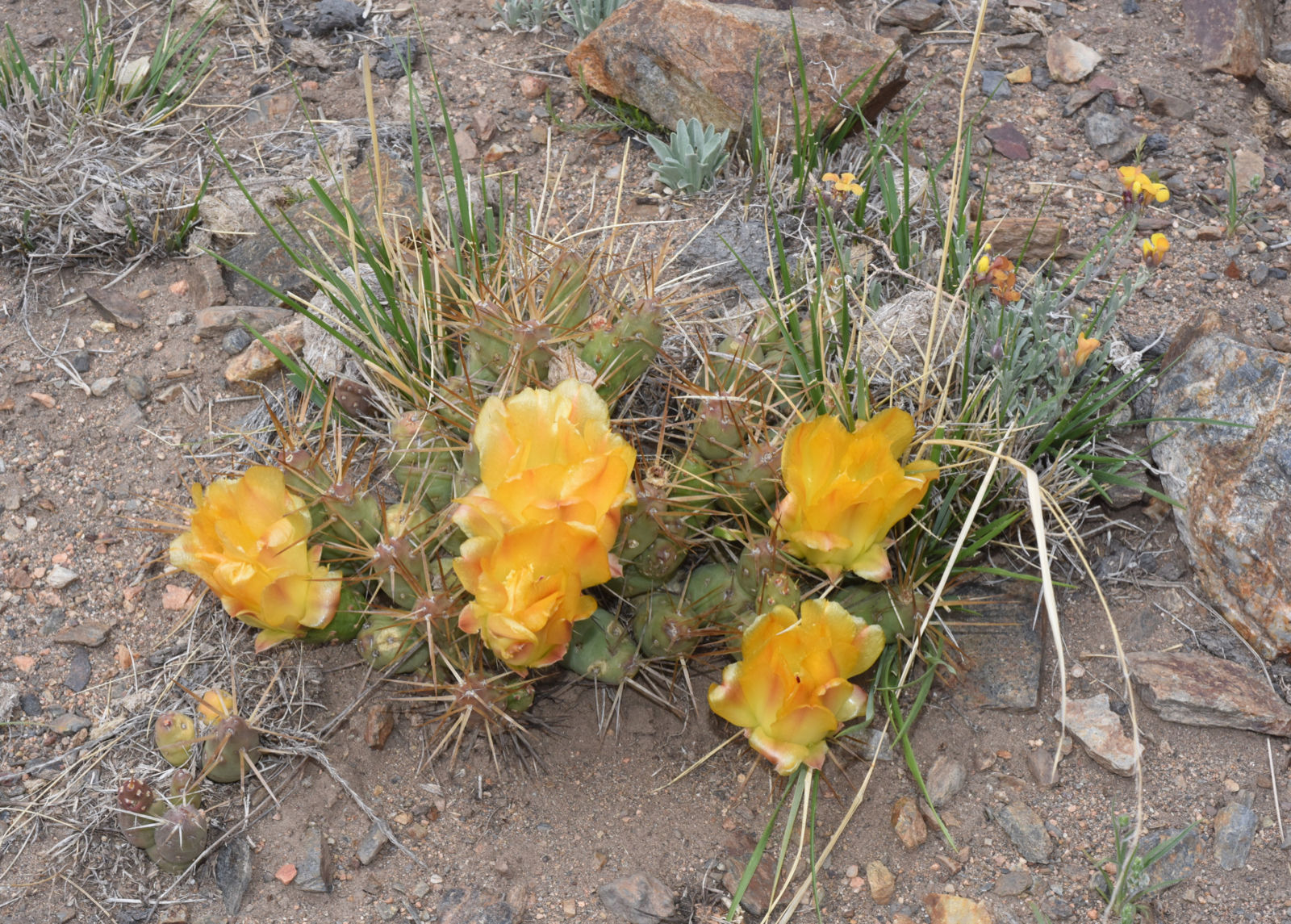
It forms dense, flat cushions composed of small, egg-shaped to cylindrical segments. The segments are dull greyish-green, bearing prominent areoles with sturdy, yellowish-brown, flattened spines. In late spring or summer, it produces beautiful, bright yellow cup-shaped flowers at the branch tips.
In cultivation, Maihueniopsis hickenii requires full sun and exceptionally well-drained, mineral-rich soil 2. Given its Patagonian origin, it is extremely cold-hardy, tolerating temperatures down to -15°C, provided the substrate is kept entirely dry during the winter resting period. Watering should be deep but infrequent in summer.
The most common pitfall is overwatering, especially during winter. A combination of cold temperatures and wet soil quickly leads to root and stem rot. Insufficient sunlight will cause weak, elongated growth.
Full sun; requires intense, direct sunlight throughout the day.
Water only when soil is completely dry in summer; keep bone-dry in winter.
Extremely gritty, stony soil mix rich in pumice and coarse sand.
Armed with sharp, sturdy spines. Handle with thick protective gloves.
Extremely cold-hardy but highly vulnerable to excess moisture and winter wetness.
Native to the windswept, cold, and arid gravelly plains and rocky slopes of southern Argentina\'s Patagonian region.
