
Light
Filtered Sun
A very bright position with gradually introduced morning or late-afternoon sun is suitable. Low light can cause stretching and wider spine spacing that complicate identification.
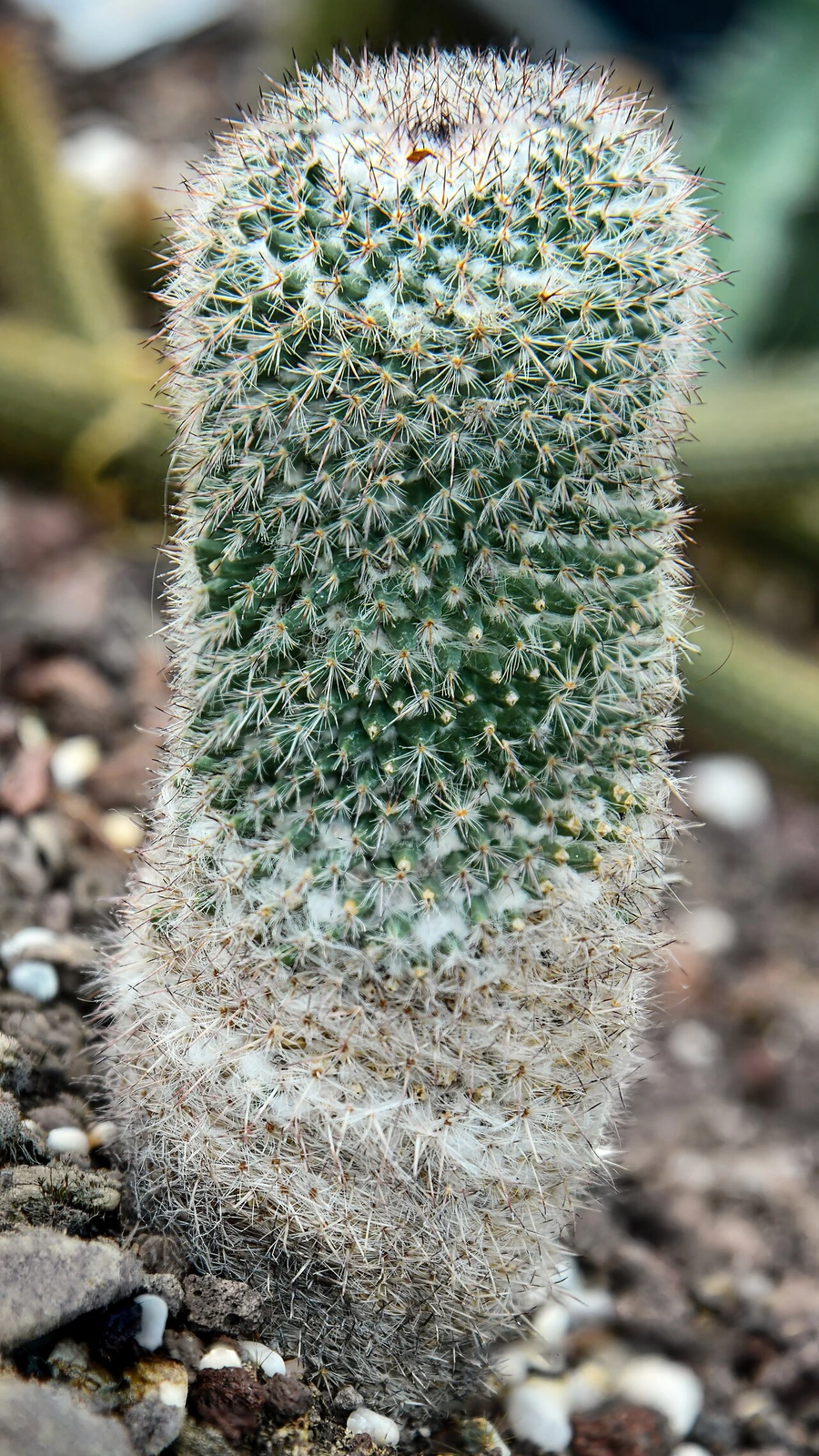
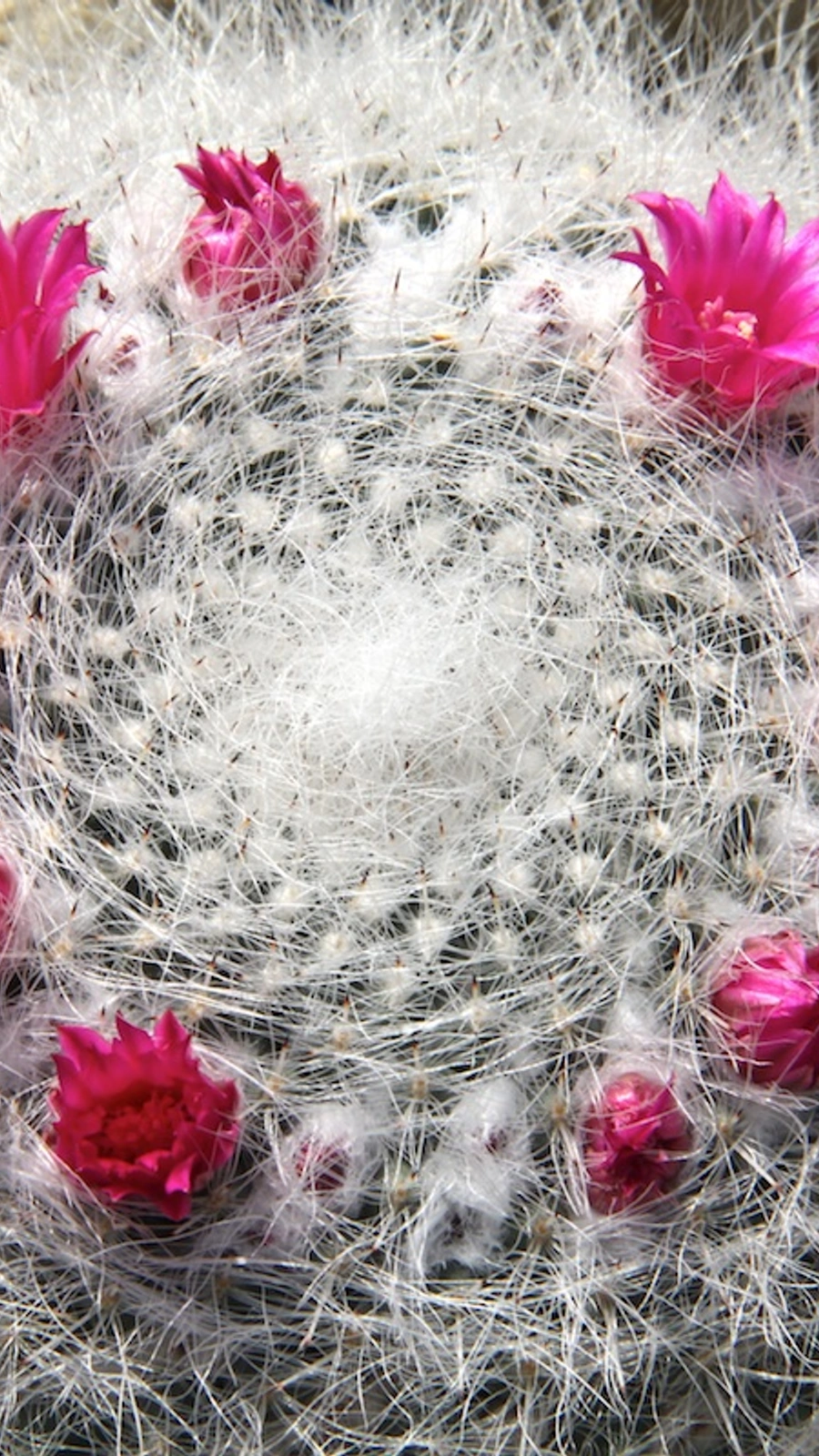
 Reference image
Old Man Cactus
Mammillaria hahniana is a natural species from north-eastern Mexico to Jalisco, recognized for its white woolly appearance and four accepted subspecies. The species may have a globose to short-cylindrical stem, dense white wool and hair-like radial spines, stronger central spines, and usually pink-to-magenta flowers. Wool density varies in cultivation and is not a complete diagnosis on its own. Unlike the taxonomy article, the botanical-dictionary layer explains the living plant's morphology, habitat context, and cultivation requirements.
The verified native range is north-eastern Mexico to Jalisco.1 POWO records the species as a succulent subshrub of desert and dry-shrubland biomes. The four accepted subspecies show why one densely woolly commercial specimen cannot represent all variation within the species. Cultivation should provide fast oxygen return to the root zone, a controlled wet-dry cycle, and sufficient light rather than copying a landscape as decoration.
A very bright position with gradually introduced morning or late-afternoon sun is suitable. Low light can cause stretching and wider spine spacing that complicate identification. A plant raised under lower light should not be moved abruptly into harsh sun; increase exposure over several weeks. Wet roots during cool weather are generally more dangerous than controlled dry coolness.
Do not use a fixed-day calendar. During active growth, water thoroughly only after the mix has dried throughout and let every excess drain away. Drying slows during cool or low-light periods, so watering naturally becomes less frequent. Use an airy, coarse, mineral-forward, fast-draining mix and do not let fine organic media retain water for long around the stem base or between tubercles.
Dense white wool is a strong visual cue but not an infraspecific boundary. The child taxa bravoae, hahniana, mendeliana, and woodsii are not moved into the parent species synonym list. Stem colour, spine density, offsetting, and flowering time vary among living specimens; a product photograph alone is neither a scientific diagnosis nor a record of a wild population.
The best-supported household concern is mechanical injury from the spines rather than a claim of chemical toxicity. Restrict access for children and pets. The IUCN assessment assigns Near Threatened, so the previous live LC field should be corrected to NT. Nursery availability does not cancel pressure on wild populations.
A very bright position with gradually introduced morning or late-afternoon sun is suitable. Low light can cause stretching and wider spine spacing that complicate identification.
Do not use a fixed calendar. Water deeply after complete drying and reduce frequency during cool or low-light periods.
A coarse, mineral-forward, airy, fast-draining cactus mix.
Spines present a mechanical injury risk. The IUCN assessment assigns Near Threatened, so the previous live LC field should be corrected to NT. Nursery availability does not cancel pressure on wild populations.
It is manageable when overwatering and inadequate light are avoided, but dense spines or wool can conceal stem problems and reward close inspection.
north-eastern Mexico to Jalisco.[^1] [^1]: Plants of the World Online. “Mammillaria hahniana.” Accessed: 2026-08-04. https://powo.science.kew.org/taxon/urn:lsid:ipni.org:names:151068-2
