
Light
Bright Indirect Light
Bright indirect light or filtered sun; avoid scorching afternoon direct sunlight.
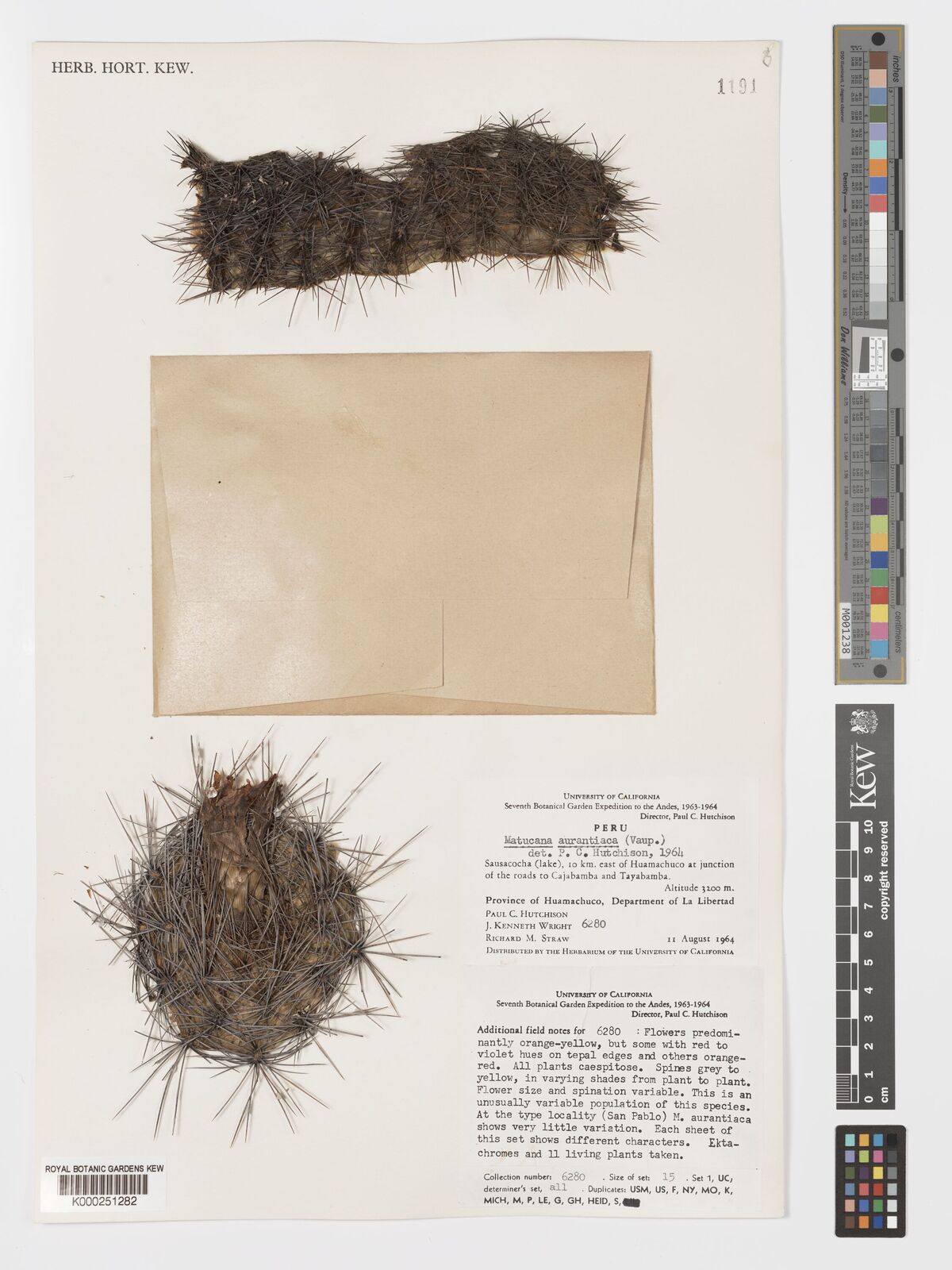 Reference image
Orange Matucana Cactus
Matucana aurantiaca is an attractive, globular to short-cylindrical cactus species native to the high-altitude Andean regions of Peru. Belonging to the family Cactaceae, it is highly sought after by succulent collectors for its dramatic, bright orange to golden flowers 1.
Originally described under the genus Cactus, it was later transferred to the genus Matucana by Friedrich Ritter. The specific epithet "aurantiaca" translates to "orange-colored" in Latin, reflecting the vibrant hue of its prominent blooms 2.
This species is endemic to northern and central Peru (predominantly in Cajamarca and Ancash), growing at elevations of 2,000 to 3,000 meters above sea level. It thrives in montane tropical biomes, typically clinging to steep, rocky slopes and gravelly grasslands 1.
The plant body is solitary or slowly offsetting at the base, reaching up to 15 cm in height and 12 cm in diameter. It features 11 to 16 low, tuberculate ribs. Spines are yellowish-brown, slightly curved, and variable in length. The diurnal, zygomorphic flowers appear in late spring and summer, showcasing stunning brilliant orange to fiery red petals 2.
It prefers a sunny, well-ventilated position with protection from intense midday sun. Cultivation requires a highly porous, mineral-based soil mix. Watering should be thorough during the active growing season but only when the medium is completely dry.
The most critical mistake is overwatering, especially during low temperatures, which quickly leads to root rot. Insufficient light exposure will result in etiolation, causing the cactus to stretch and lose its beautiful compact shape 1.
Bright indirect light or filtered sun; avoid scorching afternoon direct sunlight.
Water thoroughly when the soil is completely dry in summer; keep dry in winter.
Extremely porous mineral-based mix with high proportion of pumice, perlite, and coarse sand.
Non-toxic to pets, but has sharp spines that can cause physical injury.
Very easy to care for if overwatering is avoided and a cool winter rest is provided.
Hailing from the high elevations of the Peruvian Andes, this species is adapted to rugged, rocky terrains with intense sunlight, cool nights, and well-draining mineral soils.
