
Light
Bright Indirect Light
Requires bright, indirect light; protect from scorching afternoon sun.
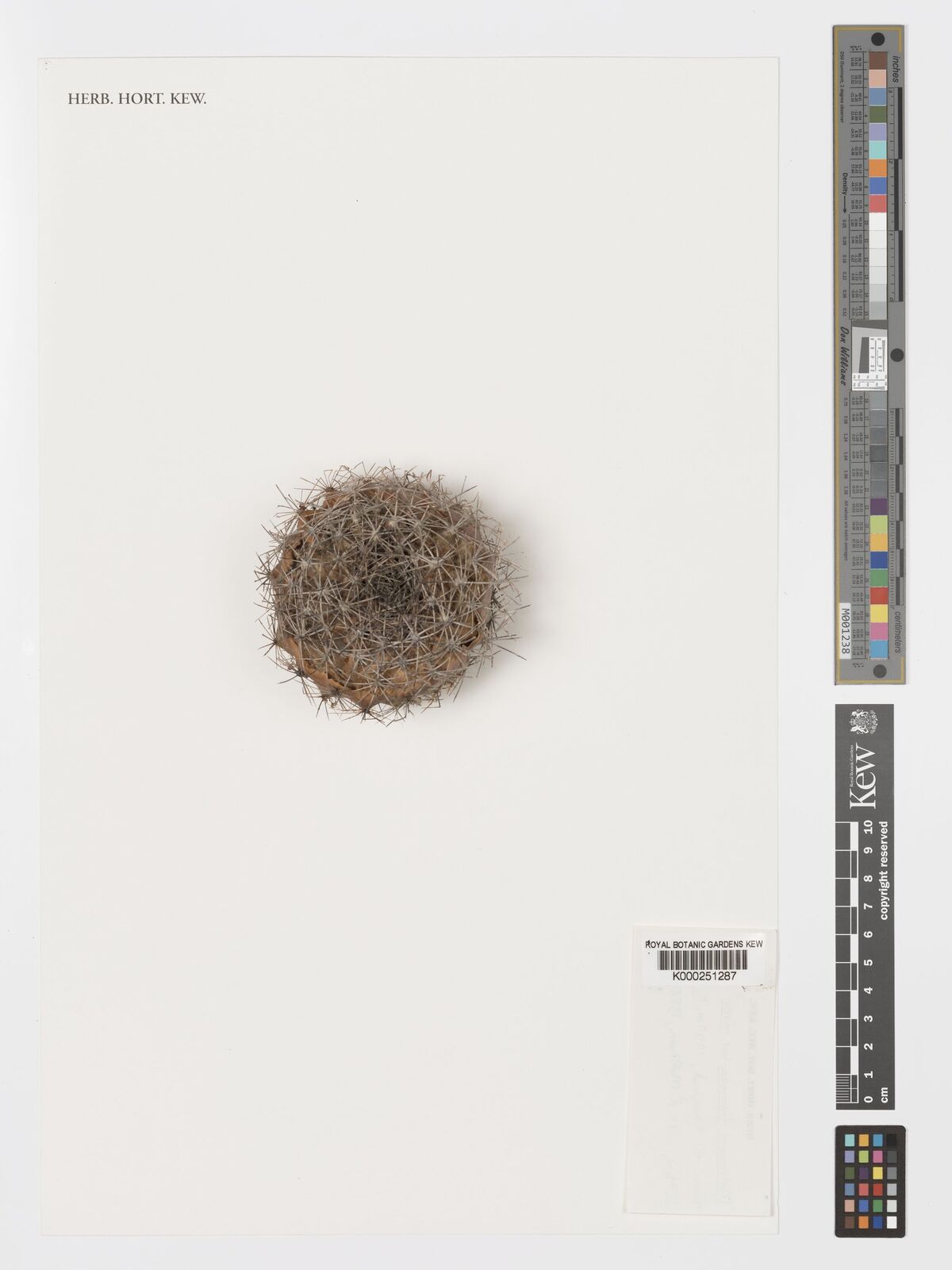 Reference image
Beautiful Matucana
Matucana formosa is a slow-growing, highly prized succulent subshrub in the Cactaceae family. Known for its symmetrical, globular to shortly cylindrical stem and striking floral displays, it is a gemstone for specialized succulent collections 1.
Originally described by Friedrich Ritter, the species is placed in the genus Matucana. Synonyms include Submatucana formosa. The specific epithet formosa derives from Latin, meaning 'beautiful' or 'well-formed', highlighting the plant's attractive geometry and vibrant blossoms 2.
This species is endemic to Peru, specifically restricted to the Marañón River basin within the Cajamarca and La Libertad regions 3. It thrives on steep, rocky cliffs and dry valley walls at elevations of 1,000 to 1,500 meters, growing in mineral-rich, organic-poor soils.
The stem is grayish-green to dark green, reaching up to 15 cm in diameter. Typically solitary, it may clump from the base as it matures. It features 20 to 30 distinct ribs lined with felted areoles bearing curved, yellowish-brown spines. In summer, it produces funnel-shaped, brilliant red-to-orange flowers from the crown.
It requires plenty of bright, indirect sunlight, with shade from intense midday summer sun. Highly susceptible to overwatering, the substrate must dry out completely between waterings. During winter, it should be kept cool and almost entirely dry to induce dormancy 1.
The most prevalent issue is root rot caused by poorly draining soil or excessive watering. Keeping the plant in humid, warm indoor drafts during winter can also prevent flowering and lead to fungal infections.
Requires bright, indirect light; protect from scorching afternoon sun.
Allow soil to dry out fully before watering. Keep completely dry in winter.
Excellently draining mineral mix with high pumice or perlite content.
Features sharp spines. Non-toxic to pets, but poses physical hazard.
Moderate care; sensitive to excess moisture and winter rot.
Found exclusively in the arid, high-altitude canyons of the Marañón River system in northern Peru, clinging to rocky crevices and mineral-heavy cliffs.
