
Light
Bright Indirect Light
Very bright, filtered sunlight. Protect from scorching mid-day summer sun.
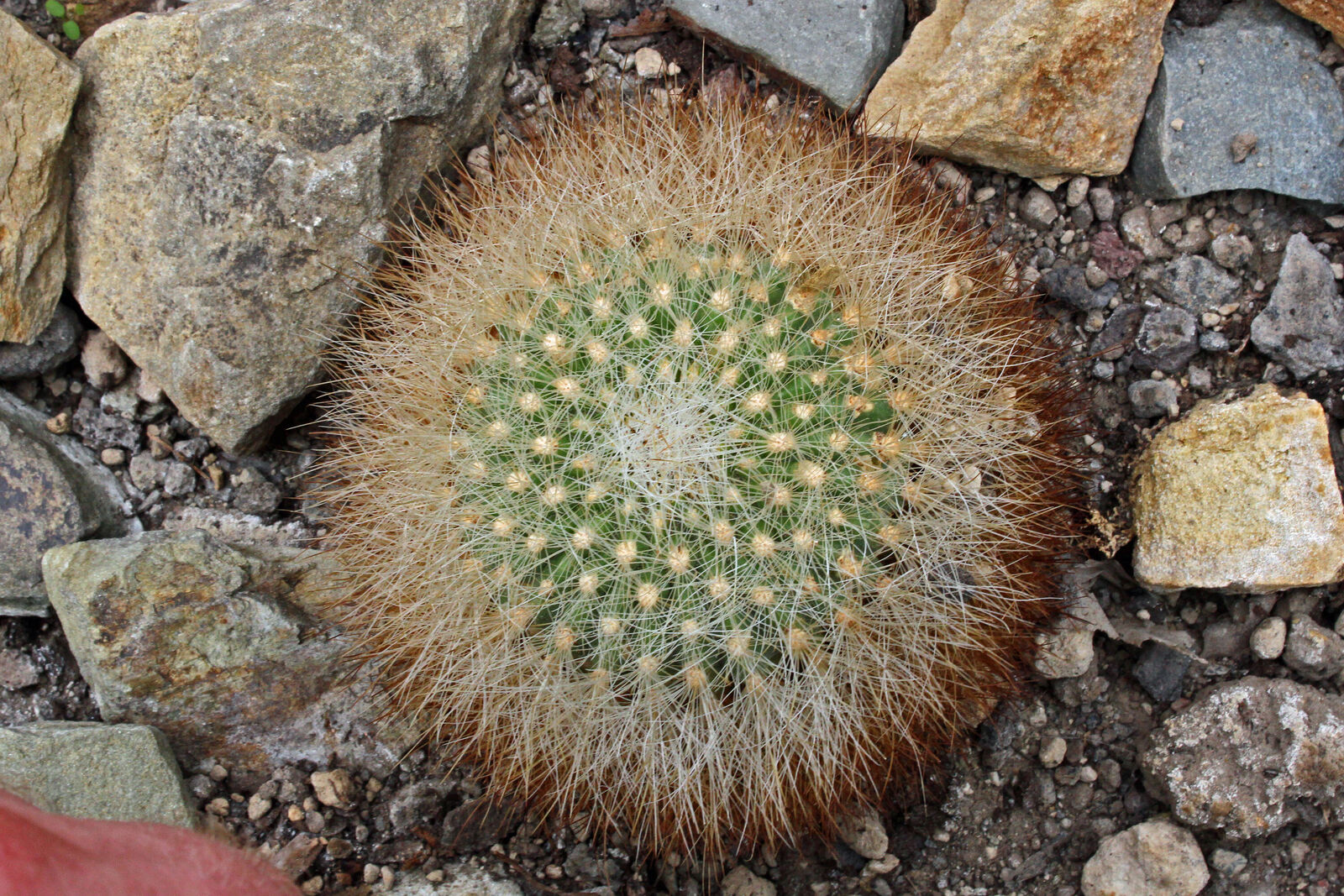 Reference image
Haynii Cactus
Matucana haynii is a highly sought-after globular cactus species native to the high-elevation regions of the Peruvian Andes. It belongs to the genus Matucana, which is celebrated for its brilliantly colored zygomorphic flowers.
The species was named in honor of Heinrich Hayne, a German botany enthusiast. The generic name refers to the town of Matucana in Peru, located east of Lima, where many species in this genus were historically documented 1.
This species is naturally distributed in Peru, where it thrives at high elevations ranging from 2,000 to 4,000 meters above sea level 2. Inhabiting dry, rocky, montane tropical environments, it is adapted to high ultraviolet light intensity, sharp temperature drops at night, and mineral-heavy, gravelly soils.
Matucana haynii possesses a spherical to shortly cylindrical stem that can grow up to 15 cm in diameter. The epidermis is covered with dense, needle-like spines varying from white to greyish-brown, which serve to shield the plant from harsh high-altitude sunlight. Its trumpet-shaped flowers are typically bright red, crimson, or orange, emerging from the crown in spring and summer 1.
Replicating its montane climate is key to successful cultivation. It requires bright, filtered sunlight and excellent air circulation. The potting medium must be extremely porous to ensure rapid drainage. Water deeply during the warm growing season but allow the soil to dry out completely between waterings. In winter, maintain a cool and completely dry dormancy phase.
Overwatering is the primary cause of failure. The delicate root system of Matucana haynii is highly susceptible to rot if kept in soggy, poorly aerated soil 2. Lack of a cool winter rest can also prevent the plant from producing its spectacular summer blooms.
Very bright, filtered sunlight. Protect from scorching mid-day summer sun.
Water only after the substrate has dried out completely. Suspend watering in winter.
Highly inorganic, gritty mix with excellent drainage (pumice, perlite, gravel).
Non-toxic, but the dense, sharp spines can cause physical injury; handle with care.
Moderate. Requires discipline with watering and temperature regulation.
Native to the Western South American region, specifically endemic to the high-altitude rocky slopes of the Peruvian Andes at elevations between 2,000 and 4,000 meters.
