
Light
Filtered Sun
Requires bright, filtered sunlight. Protect from intense, direct midday summer sun to prevent scorching.
 Reference image
 Reference image
Krahn's Matucana
Matucana krahnii is a distinctive and highly sought-after cactus species in the family Cactaceae, famous for its globose form, prominent curving spines, and magnificent crimson flowers 1.
Named in honor of the German cactus collector Wolfgang Krahn, who discovered the species. It belongs to the genus Matucana, which is characterized by diurnal, zygomorphic or tubular flowers adapted for hummingbird pollination 2.
This species is endemic to Peru, specifically restricted to the Amazonas region in the Marañón River valley. It typically grows on steep, calcareous rocky cliffs and dry shrublands at elevations between 1500 and 1800 meters above sea level 1. Due to habitat loss and narrow distribution, it is listed as Vulnerable (VU) on the IUCN Red List.
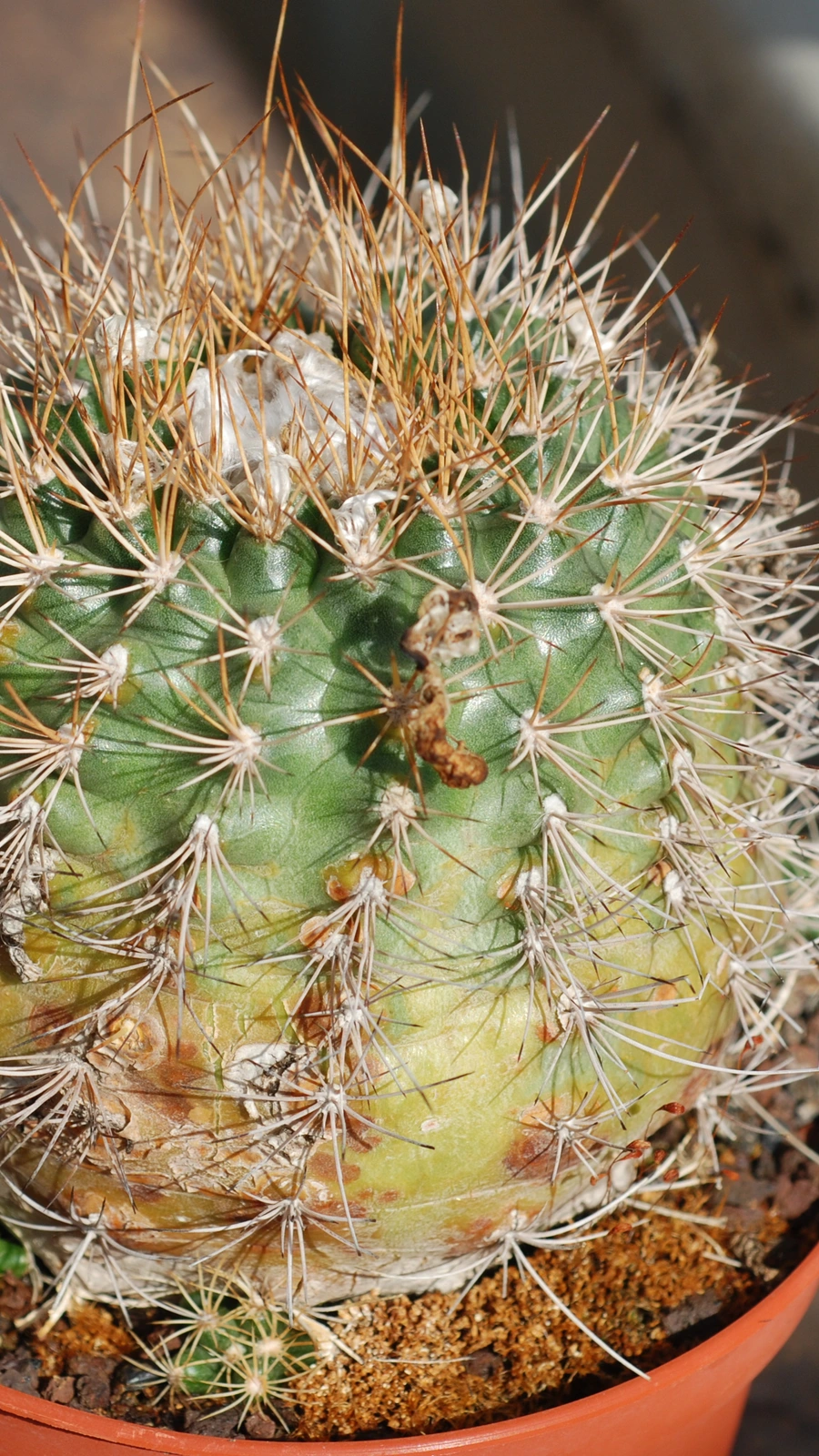
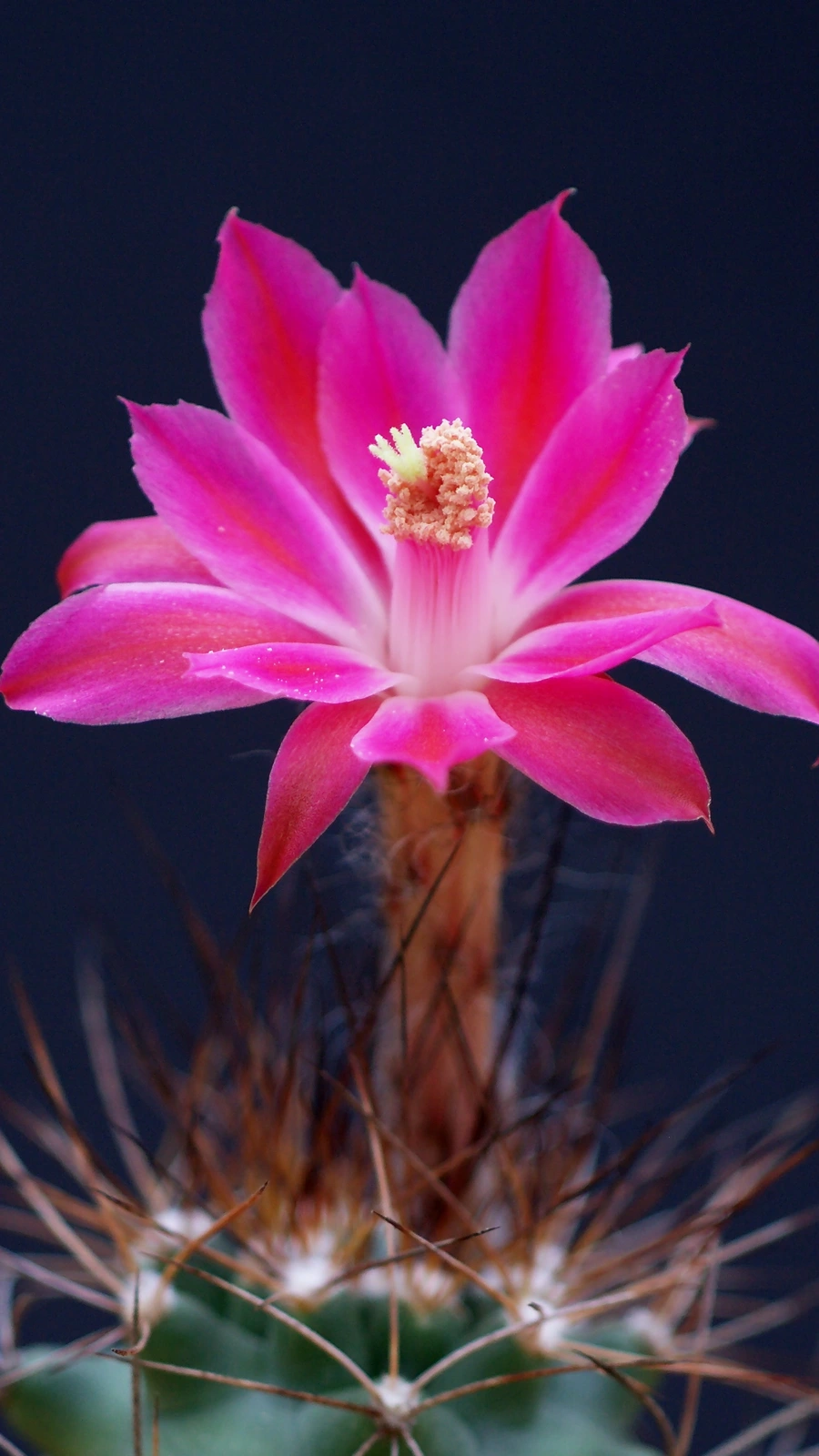
The stem is solitary, flattened-globose to shortly cylindrical, reaching up to 10-15 cm in diameter, and possesses a greyish-green hue. Spines are formidable, pale yellow to dark brown, curved, and up to 5 cm long. Its diurnal, funnel-shaped flowers emerge near the stem apex, reaching 7-8 cm in diameter, displaying a vibrant carmine or deep red color.
It requires a highly porous mineral substrate with minimal organic material to thrive. Water deeply during the spring and summer only when the substrate is fully dry 2. Bright, filtered sunlight is optimal for inducing flowering and maintaining a compact spine structure.
Overwatering, using heavy clay soils, and exposing the plant to cold, damp conditions during winter are the main causes of root rot and plant loss.
Requires bright, filtered sunlight. Protect from intense, direct midday summer sun to prevent scorching.
Allow soil to dry out completely before watering again. Keep almost entirely dry during the winter season.
Requires an extremely porous mineral mix consisting of pumice, lava rock, and coarse sand.
Non-toxic, but features sharp, curved spines that can cause physical injury to pets and children.
Moderately difficult due to its sensitivity to excess moisture and root rot.
Originates from the steep limestone slopes of the Marañón River canyon in northern Peru, growing in arid and semi-shaded microhabitats.
