
Light
Bright Indirect Light
Requires bright, indirect sunlight or filtered sun. Protect from intense, scorching afternoon sun to prevent epidermal burns.
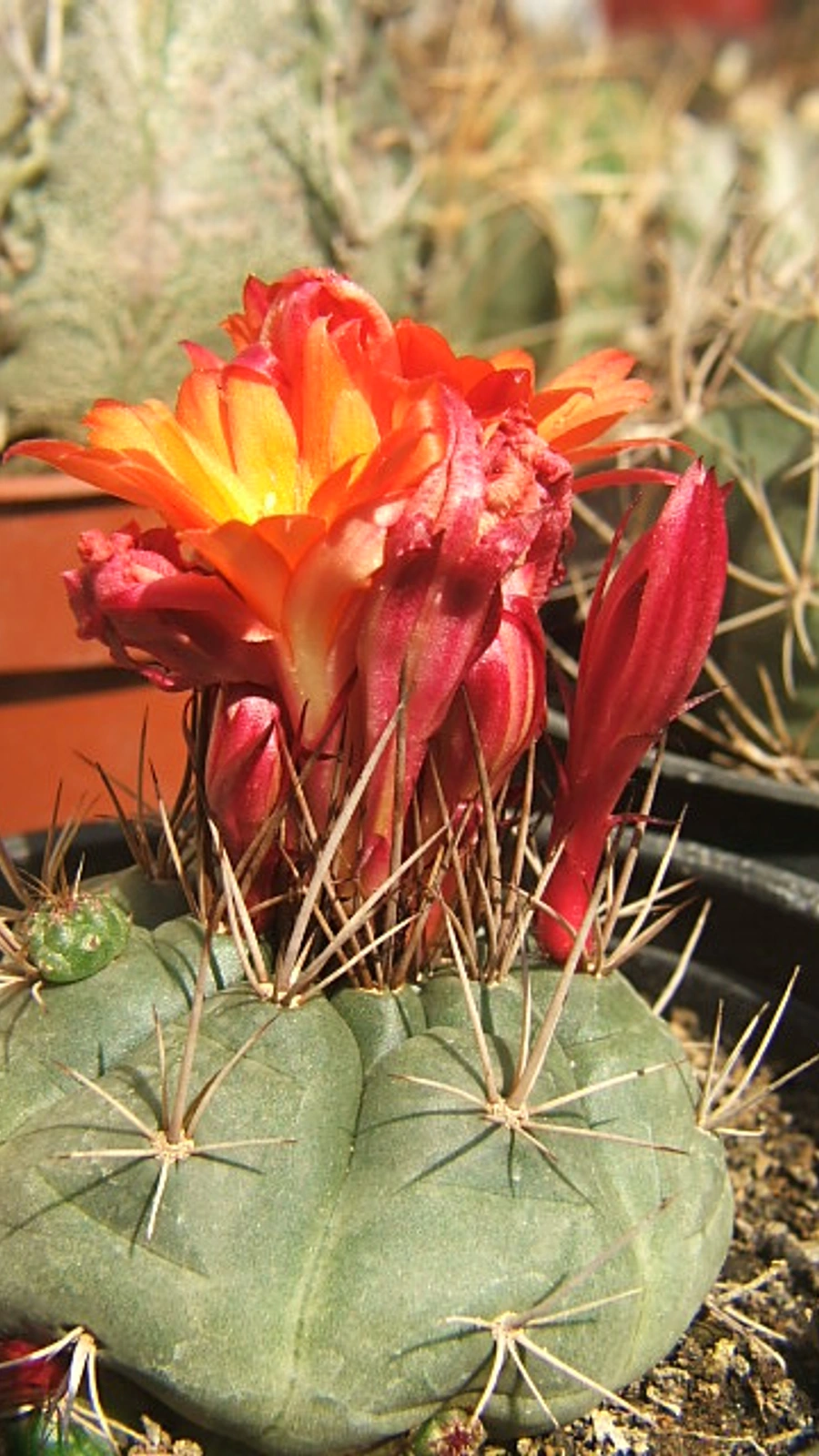 Reference image
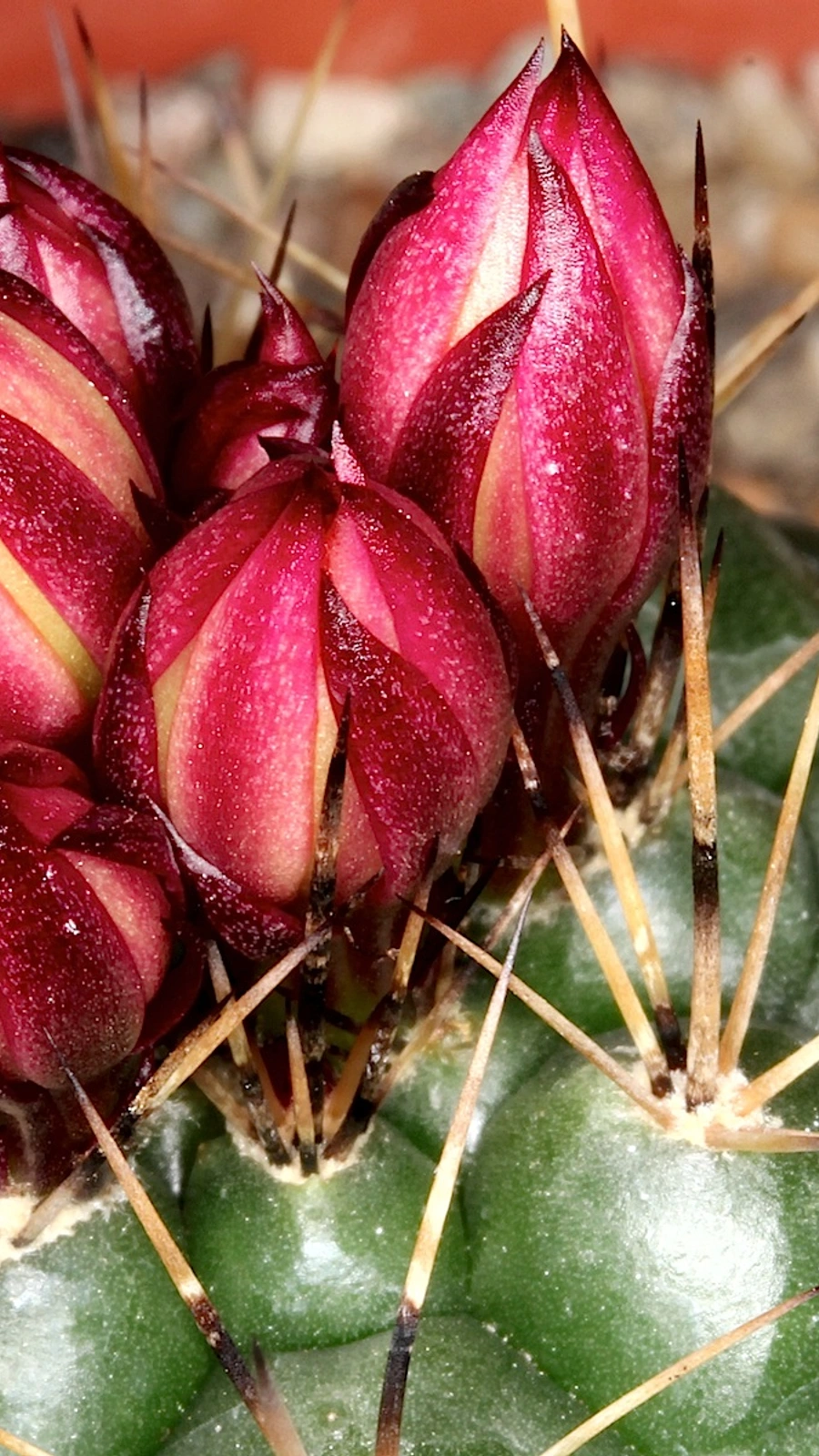 Reference image
Mountain Glory Matucana
Matucana oreodoxa is a small, globose, and highly sought-after cactus species endemic to the high-altitude regions of Peru. It is appreciated by succulent enthusiasts for its solitary growth habit, attractive golden spination, and vibrant funnel-shaped flowers that appear during the warmer months 1.
The species was formally described by the German botanist Friedrich Ritter in 1965 2. The genus name "Matucana" refers to the Peruvian town of Matucana near Lima. The specific epithet "oreodoxa" derives from the Greek words 'oros' (mountain) and 'doxa' (glory or praise), translating to "glory of the mountains."
Matucana oreodoxa is native to the Ancash region of Peru, restricted to steep, rocky canyon walls and cliffs in dry shrublands at elevations ranging from 2,800 to 3,000 meters above sea level 1. It thrives in mineral-rich, stony soils under intense sunlight.
The stem is solitary, globose to slightly flattened-globose, light green to dark green, and reaches up to 8 cm in diameter. It features 7 to 15 broad, flattened ribs. The radial spines are needle-like, flexible, and vary from yellow to brownish-grey. Its striking flowers are diurnal, funnelform, and showcase brilliant shades of yellow, orange, or red.
In cultivation, it requires a very gritty, porous soil mix and excellent ventilation. Watering should be done thoroughly but only when the substrate is completely dry. During the winter, it must be kept entirely dry and in a cool environment to encourage dormancy and subsequent blooming 2.
The most prevalent issue is root rot caused by overwatering or poorly draining soil. Keeping the plant in stagnant air or high humidity can also trigger fungal infections. Lack of a cool winter rest period often prevents the plant from flowering in spring.
Requires bright, indirect sunlight or filtered sun. Protect from intense, scorching afternoon sun to prevent epidermal burns.
Drench thoroughly then allow to dry completely. Keep 100% dry during the cold winter months.
Highly mineral substrate containing pumice, perlite, and coarse sand with very little organic matter.
Non-toxic to pets and humans, but the sharp needle-like spines can cause physical injury; handle with care.
Moderate. It is easy if watering is strictly controlled, but highly sensitive to waterlogged soils.
Native to the steep rocky slopes and high-altitude valleys of the Ancash region in Peru, where it grows in cracks of mineral-rich cliffs under dry mountain climates.
