
Light
Bright Indirect Light
Requires bright indirect light or morning sun; avoid scorching afternoon rays.
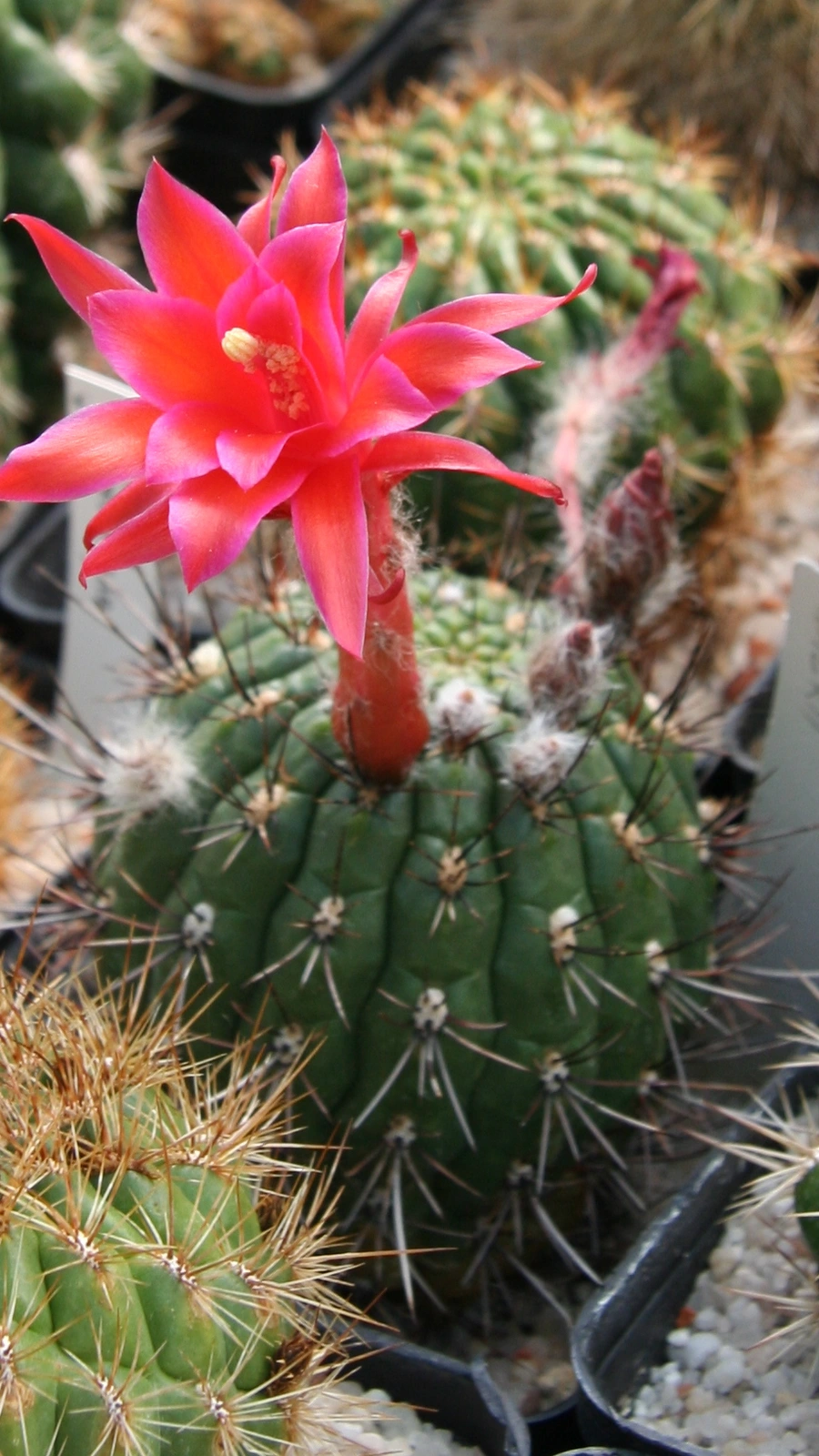 Reference image
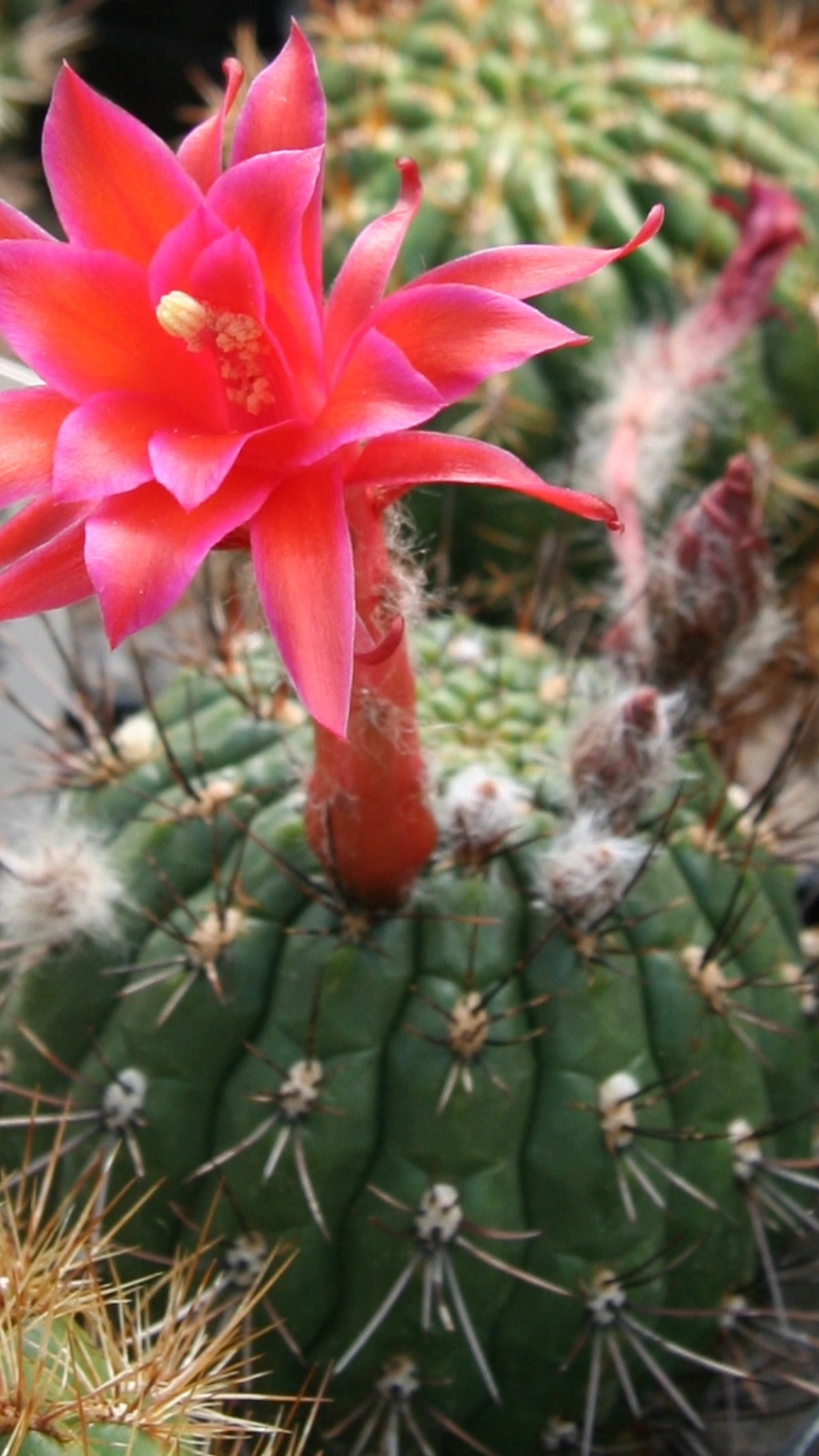 Reference image
Ritter's Matucana
Matucana ritteri is a rare, globose cactus species belonging to the Cactaceae family. Highly prized by succulent enthusiasts, it is renowned for its low-slung, glossy green stem and vibrant red-orange flowers that bloom during the warm seasons.
Belonging to the genus Matucana, named after the Peruvian town of Matucana, the species epithet ritteri honors the prominent German botanist and cactus specialist Friedrich Ritter. The species was formally described in the mid-20th century 1.
This species is narrowly endemic to the steep, rocky slopes of Peru, particularly around the Cajamarca region at elevations between 1000 and 2000 meters 2. Due to agricultural expansion and habitat degradation, its wild populations are extremely limited, placing it in the Critically Endangered (CR) category of the IUCN Red List.
The stem is solitary, flattened-globose to short cylindrical, reaching up to 10 cm in diameter with a glossy dark green epidermis. Its ribs are broad, divided into low tubercles. The spines are strong, curved, initially yellowish-brown to dark brown, turning grey with age. It produces spectacular, asymmetrical (zygomorphic) tubular carmine-red flowers.
Matucana ritteri requires a highly porous, mineral-based potting mix to survive. During the active growth period in spring and summer, it should be watered thoroughly only after the substrate has completely dried. In winter, keep it completely dry at cooler temperatures.
The most frequent pitfall is overwatering, which quickly leads to root rot due to the plant's sensitive root system. Lack of sufficient indirect light will also lead to etiolation.
Requires bright indirect light or morning sun; avoid scorching afternoon rays.
Allow soil to dry fully between waterings in summer; keep completely dry in winter.
Use a porous, mineral-rich cactus soil containing pumice, perlite, and gravel.
Armed with sharp spines; handle with care and keep away from pets and children.
Moderate difficulty; requires strict moisture control and proper winter dormancy.
Native to the high-altitude, rocky slopes of Cajamarca, Peru, where it grows in cracks and crevices of steep cliffs under intense mountain sunlight.
