
Light
Bright Indirect Light
Bright indirect light or filtered sun; shield from intense mid-day direct sunlight.
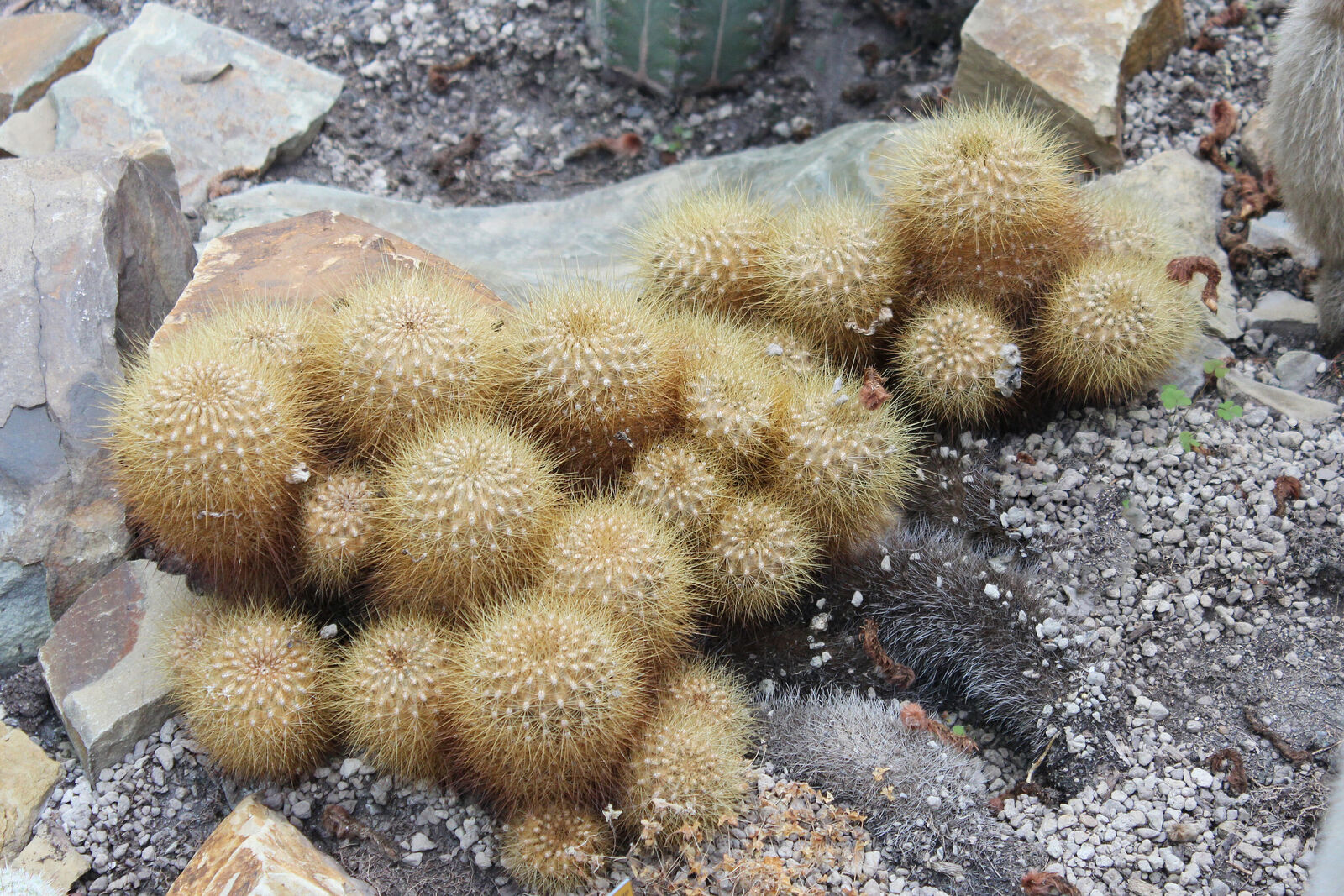 Reference image
Weberbauer's Matucana
Matucana weberbaueri is a highly sought-after, solitary to slowly clustering globose cactus native to the high-altitude valleys of Peru. It is prized by succulent enthusiasts for its striking, symmetrical spination and vibrant golden-yellow to orange zygomorphic flowers 1.
Named in honor of the prominent German botanist and Andean explorer August Weberbauer, this species belongs to the genus Matucana, named after the Peruvian town of Matucana. Synonyms include Borzicactus weberbaueri and Submatucana weberbaueri 1.
This species is endemic to Peru, specifically restricted to the Marañón River basin in the Amazonas region, occurring at elevations between 2,000 and 2,100 meters above sea level 2. It thrives in seasonally dry tropical biomes, growing on steep, rocky andesite cliffs and gravelly slopes where drainage is instantaneous 2.
The stem is globose, eventually becoming short-cylindrical with age, reaching up to 20 cm in height and 12 cm in diameter. It has 18 to 30 ribs divided into low tubercles. The areoles bear 15 to 30 thin, needle-like, golden-yellow to dark brown spines. Its spectacular, daily-opening flowers are tubular, up to 6 cm long, and exhibit a rich yellow or orange hue 1.
Matucana weberbaueri requires bright, filtered sunlight to retain its dense spination and compact form. During the spring and summer growing season, water thoroughly but allow the potting medium to dry out completely between waterings. It requires a cool, completely dry winter rest at temperatures ideally around 8–10°C to encourage spring flowering 3.
Excessive watering, especially during the winter dormancy, is the primary cause of root rot. Lack of adequate light results in etiolation, causing the stems to stretch, lose their rich green coloration, and produce weaker spines 3.
Bright indirect light or filtered sun; shield from intense mid-day direct sunlight.
Water only after soil dries out entirely; withhold water completely during winter.
Highly porous, low-organic mineral mix with high ratios of pumice, gravel, and sand.
Non-toxic to pets, but has sharp spines that can cause mechanical injury; handle with care.
Moderately easy, provided you avoid overwatering and protect from freezing temperatures.
Native to the Marañón River valley in the Amazonas region of Peru, where it grows on high-altitude rocky cliffs within seasonally dry tropical scrublands.
