
Light
Bright Indirect Light
Requires bright, indirect sunlight or filtered sun. Protect from intense, direct midday sun to prevent scorching.
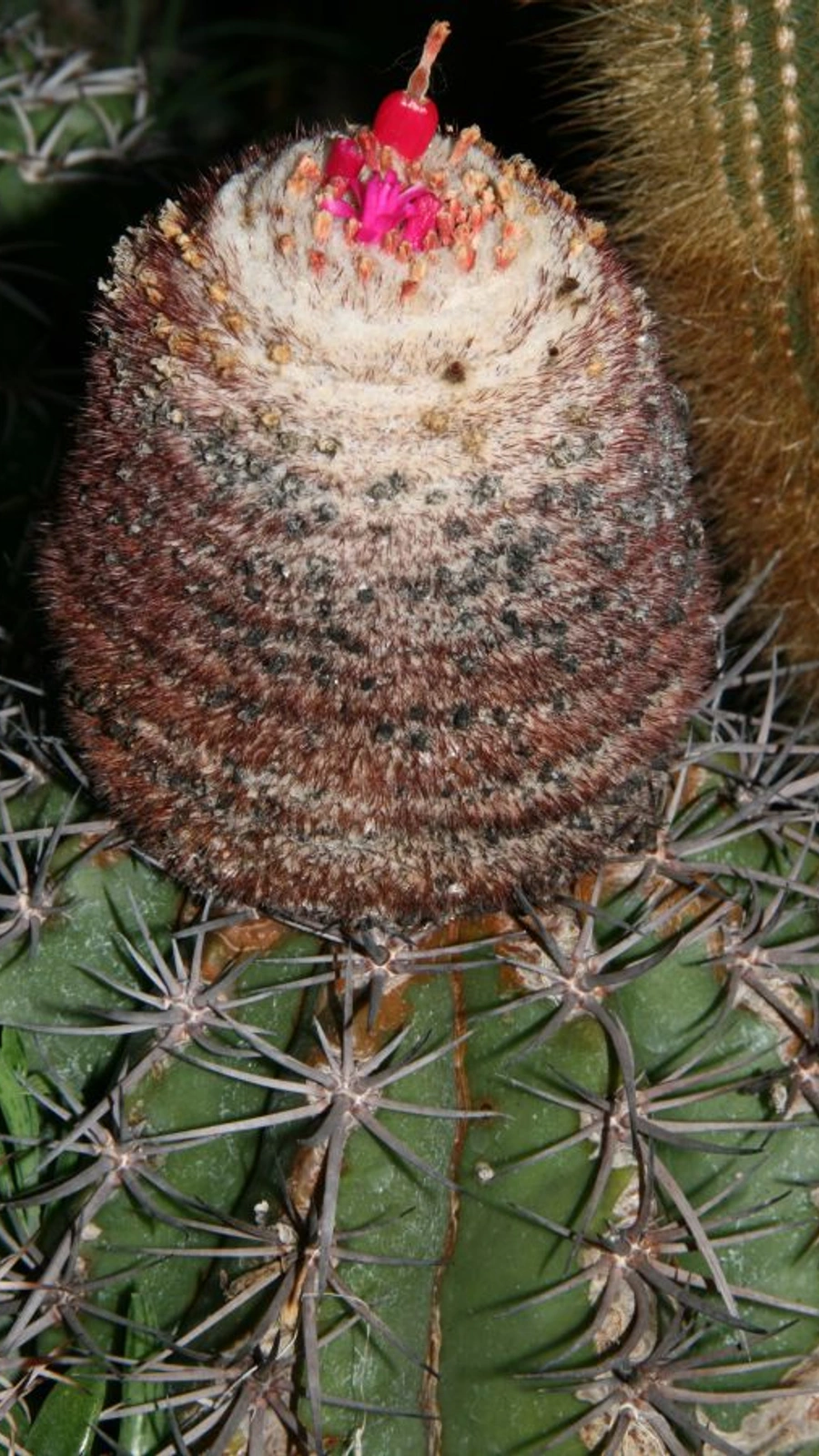 Reference image
White-Headed Melon Cactus
Melocactus × albicephalus is a fascinating natural hybrid succulent subshrub belonging to the Cactaceae family. Like other members of its genus, it is highly prized for its cephalium—a specialized woolly and bristly flowering cap that develops at the apex of mature plants 1.
This taxon represents a natural hybrid between Melocactus ernestii and Melocactus glaucescens. The botanical epithet albicephalus translates from Latin to mean "white-headed", directly referencing the distinctive pale wool of its cephalium. The "×" in its scientific name denotes its hybrid origin 2.
It is native to Northeast Brazil, specifically within the state of Bahia. Its habitat consists of seasonally dry tropical biomes, where it typically grows on rocky outcrops, granite domes (inselbergs), and sandy pockets within the semi-arid Caatinga vegetation 1.
The plant is a solitary succulent with a globose to short cylindrical green stem marked by prominent ribs and strong, sharp spines. Upon reaching maturity, it stops growing stem tissue and produces a striking apical cephalium covered in dense white wool and reddish bristles. Small, pinkish flowers emerge from this structure, followed by fleshy fruits 2.
Unlike typical desert cacti, this tropical species requires relatively warm temperatures year-round and higher ambient humidity. It thrives in bright, indirect or filtered sunlight. Water thoroughly when the growing medium dries out, and ensure flawless drainage to prevent root rot 1.
Subjecting the plant to temperatures below 12°C can trigger cold damage or rot. Overwatering, especially during the winter dormant phase, is the most common cause of failure.
Requires bright, indirect sunlight or filtered sun. Protect from intense, direct midday sun to prevent scorching.
Water thoroughly once the substrate is dry. Reduce watering in winter, but do not let the roots dry out completely.
Requires excellent drainage. Use a mix of pumice, perlite, and coarse sand with minimal organic matter.
Equipped with sharp, rigid spines. Handle with thick gloves. Non-toxic to domestic pets.
Moderate care level due to its sensitivity to cold temperatures and specific watering needs.
Native to the semi-arid Caatinga ecoregion of Bahia, Brazil. It thrives in gravelly soils and rock crevices on sunny inselbergs.
