
Melocactus
Melocactus
Auto-generated taxonomy record for Melocactus.

Child Taxa
Plants In This Group
Melocactus acunae
Melocactus acunae
Melocactus acunae is a highly specialized and rare cactus species belonging to the Cactaceae family, renowned for the distinctive reddish-wooly structure known as a cephalium on its apex. Like other members of its genus, once the cephalium develops, the main green body ceases vegetative growth and diverts all energy into this reproductive structure, which bears flowers and fruits .
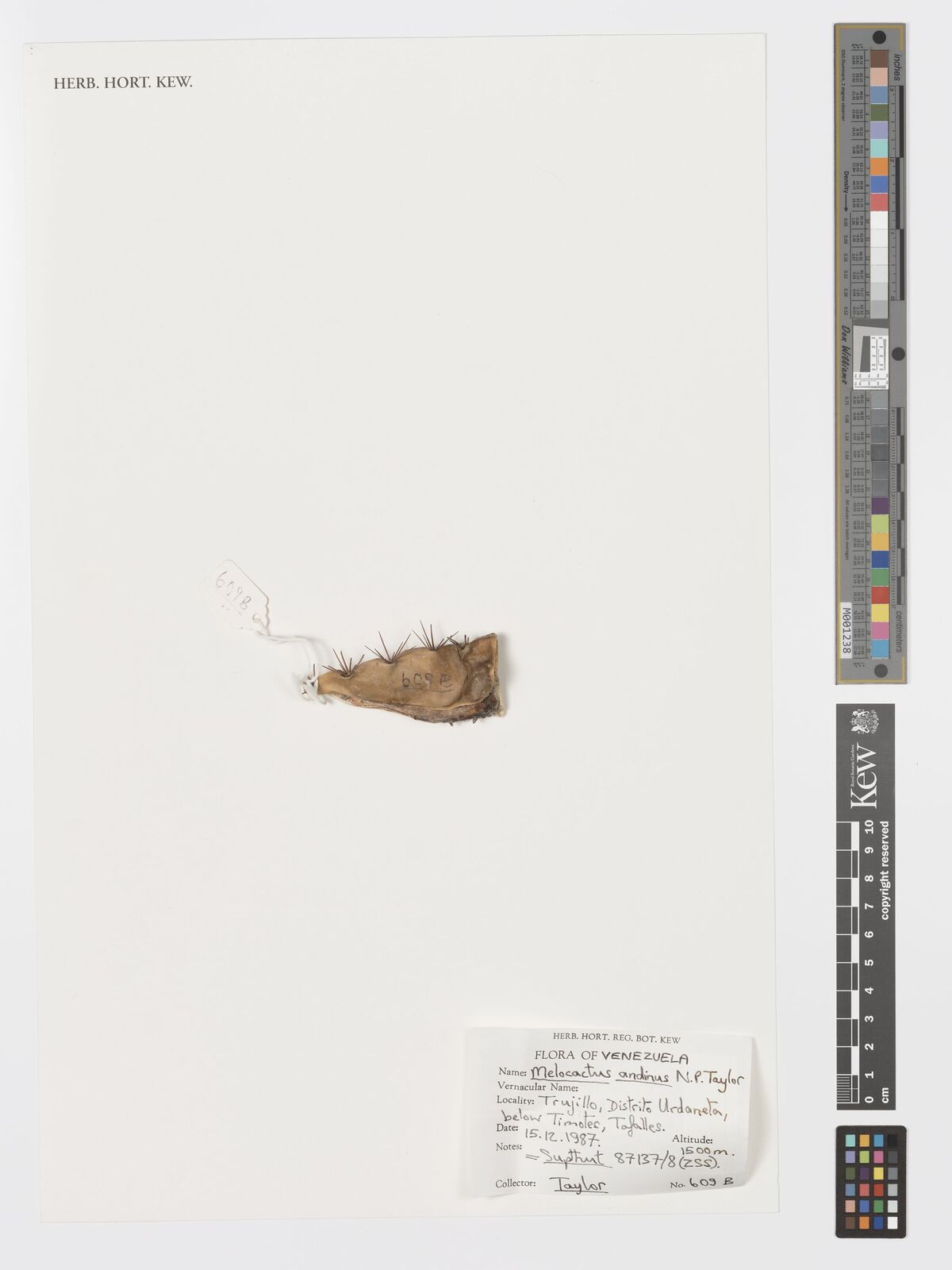
Melocactus andinus
Melocactus andinus
Melocactus andinus is a unique member of the Cactaceae family, renowned for the distinctive cephalium that develops at its apex upon maturity. Unlike many of its lowland coastal relatives, this species has adapted to the montane environments of the Andes, making it highly sought after by succulent enthusiasts.
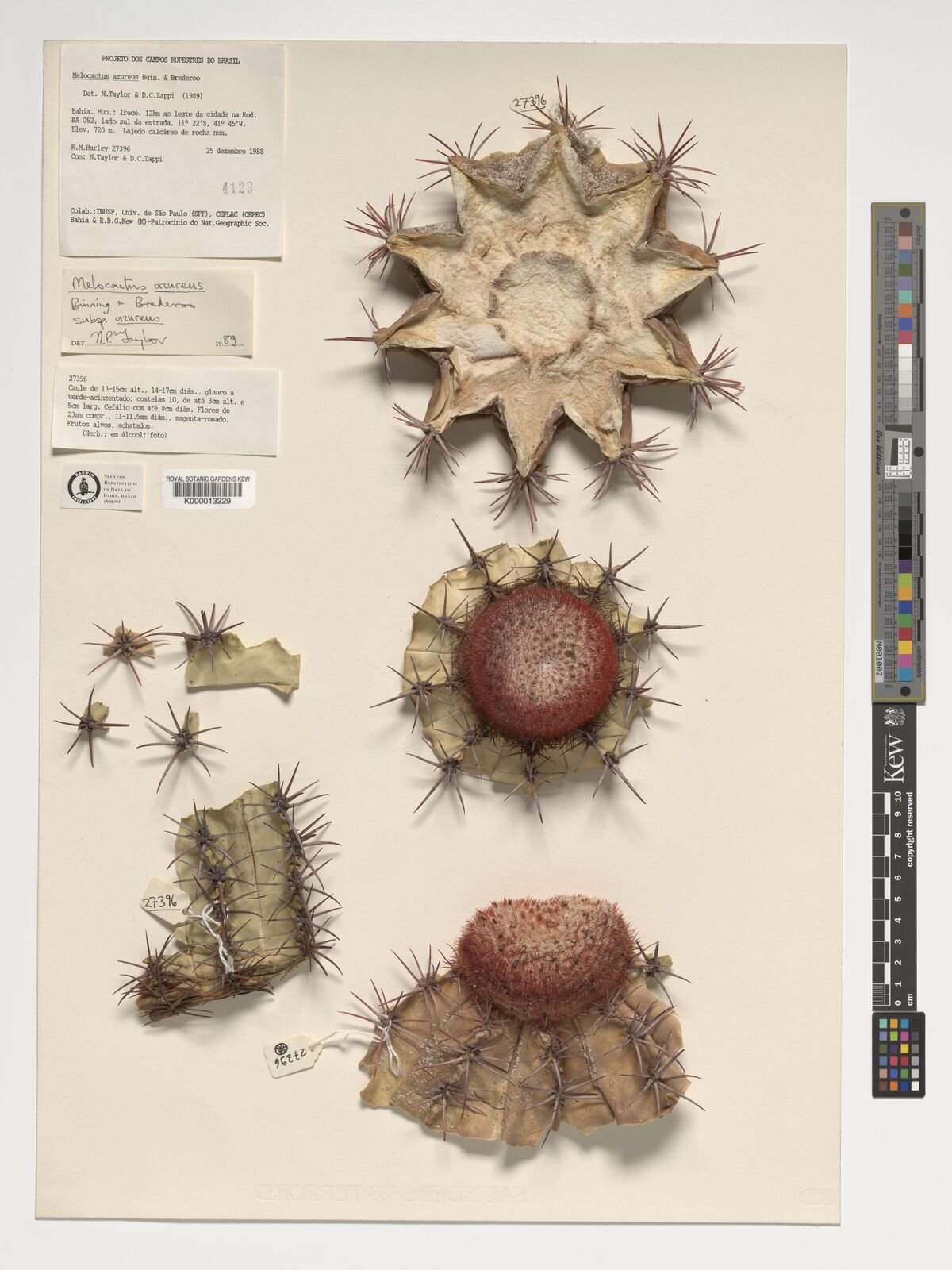
Melocactus azureus
Melocactus azureus
Melocactus azureus is an iconic and highly sought-after cactus species belonging to the family Cactaceae, famous for its striking glaucous blue-green stem and the distinctive woolly crown known as a 'cephalium' that develops at maturity .
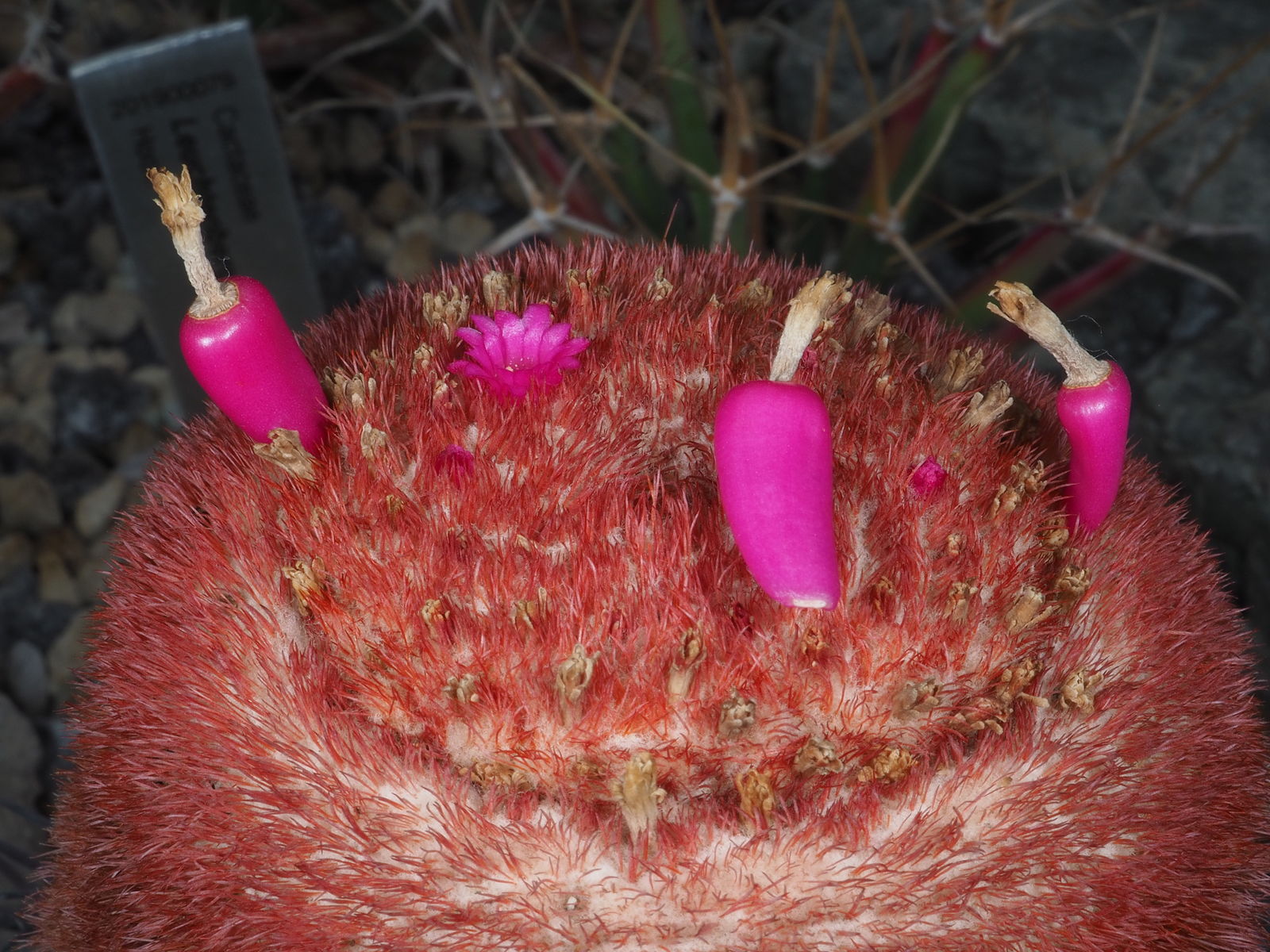
Melocactus bahiensis
Melocactus bahiensis is a distinctive cactus species endemic to Brazil, highly prized by collectors for the woolly, bristly red cap (cephalium) that develops on mature plants .
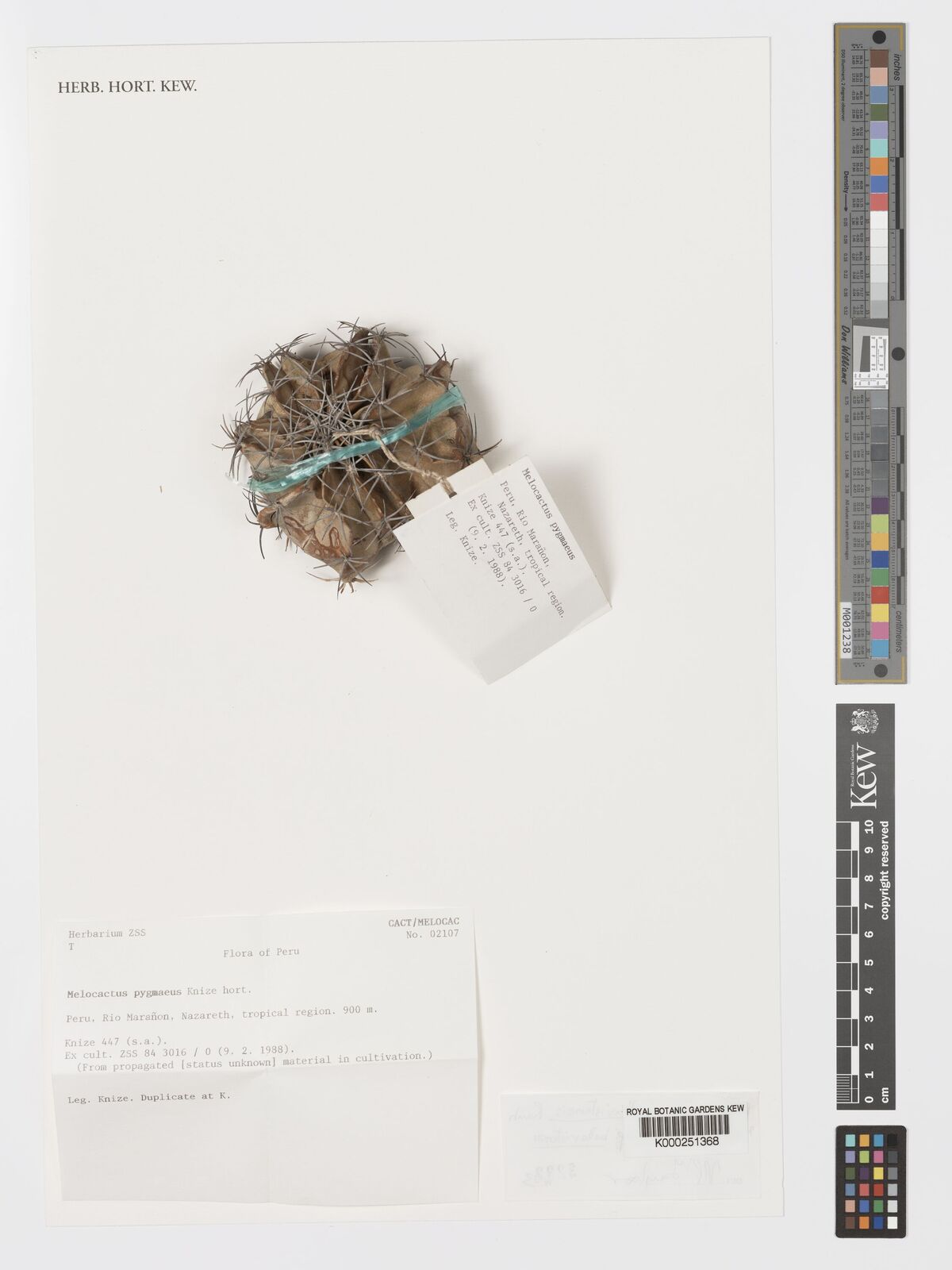
Melocactus bellavistensis
Melocactus bellavistensis is a unique member of the Cactaceae family, famous for producing a colorful, woolly cap called a cephalium at maturity.
Melocactus braunii
Melocactus braunii
Melocactus braunii is a highly prized and critically endangered member of the Cactaceae family. Known for its distinct, colorful felt-and-bristle cap called a 'cephalium' that develops on mature specimens, it is a magnificent addition to specialist collections but requires precise care.
Melocactus brederooanus
Melocactus brederooanus is a rare and critically endangered globose cactus belonging to the Cactaceae family, renowned for the distinctive woolly, bristly cap called a 'cephalium' that develops at its apex when mature .
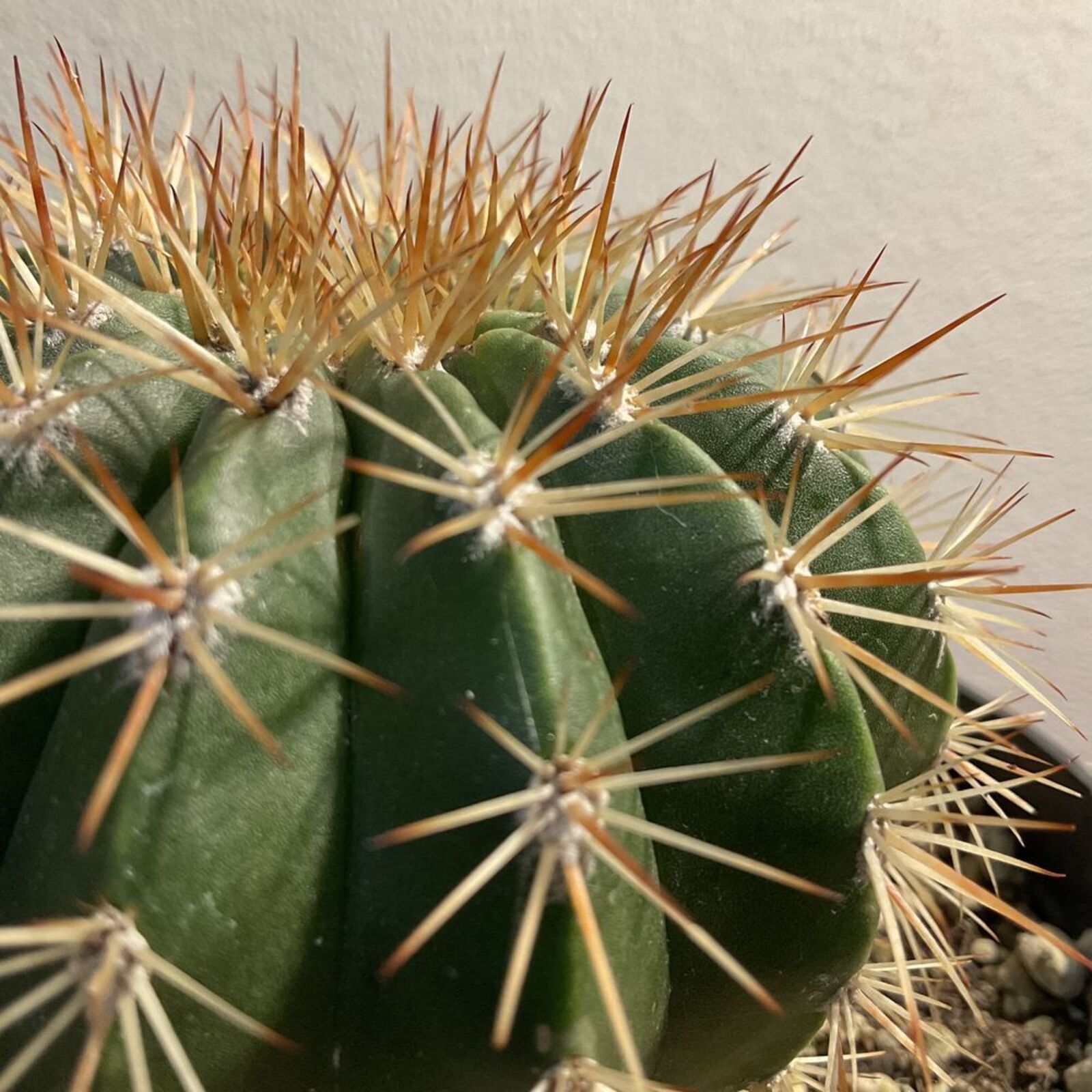
Melocactus broadwayi
Melocactus broadwayi is a distinctive globose cactus species belonging to the Cactaceae family, renowned for the colorful cephalium that develops at the crown of mature specimens. Native to the Caribbean, this slow-growing succulent subshrub is highly valued by plant enthusiasts for its unique anatomical transition upon reaching adulthood .
Melocactus calderanus
Melocactus calderanus is a rare and highly prized member of the Cactaceae family, renowned for the unique 'cephalium' that develops at the apex of mature specimens. Unlike standard cacti, Melocactus species stop growing vegetatively once they reach maturity and instead produce a woolly, bristly structure specialized for flowering . Cultivating this species requires a high level of expertise due to its delicate root system and strict temperature requirements.
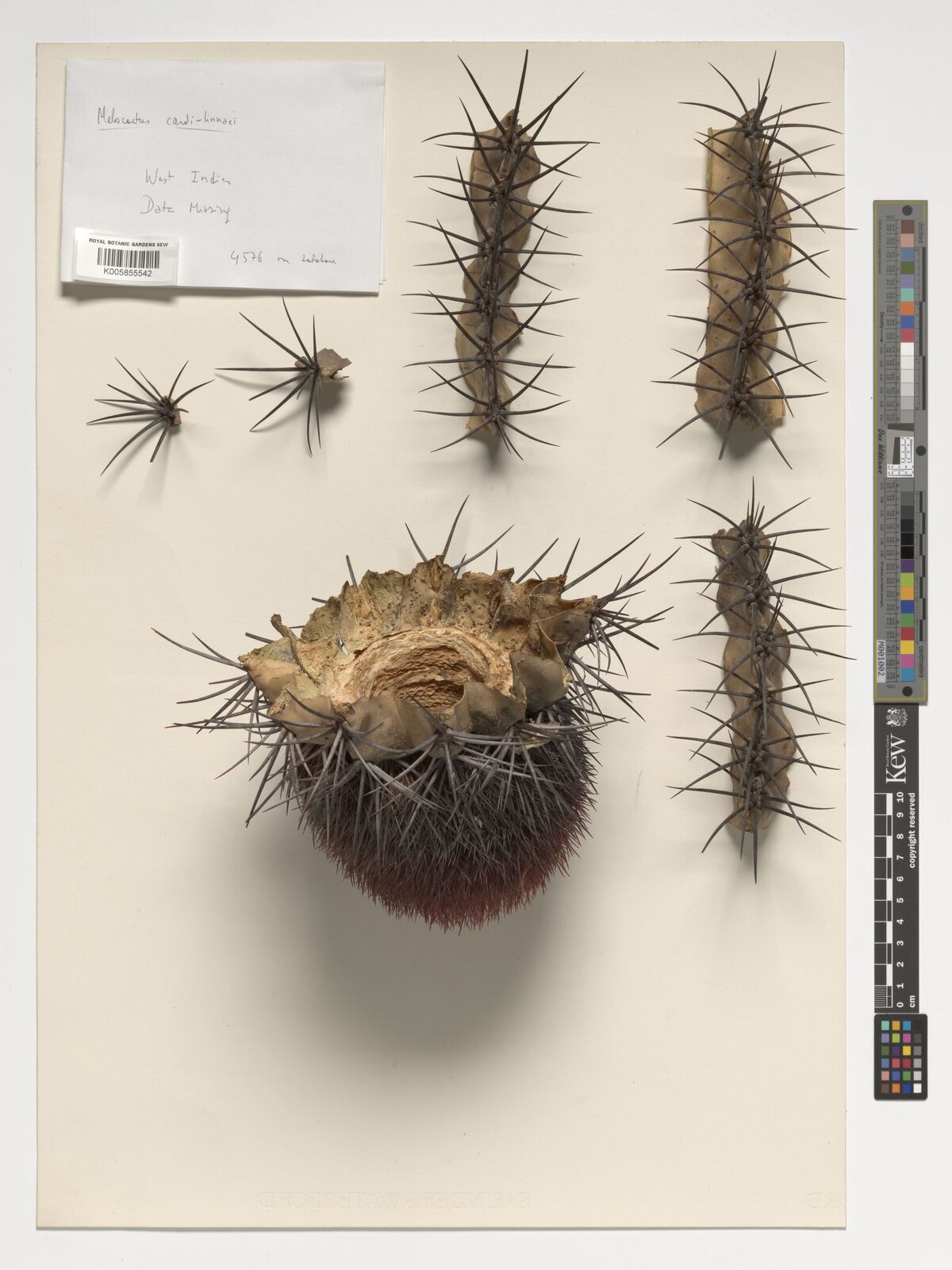
Melocactus caroli-linnaei
Melocactus caroli-linnaei is a highly distinctive globose cactus belonging to the family Cactaceae. It is globally recognized for its iconic, bristly reddish-pink crown known as a "cephalium", which develops at maturity to produce flowers and fruit.
Melocactus conoideus
Melocactus conoideus is an exceptionally rare, globose to conical cactus species belonging to the family Cactaceae . Characterized by its distinctive woolly and bristly terminal structure known as a "cephalium", this species represents one of the most evolutionarily specialized groups in the family. It is currently assessed as Critically Endangered (CR) due to severe habitat loss .
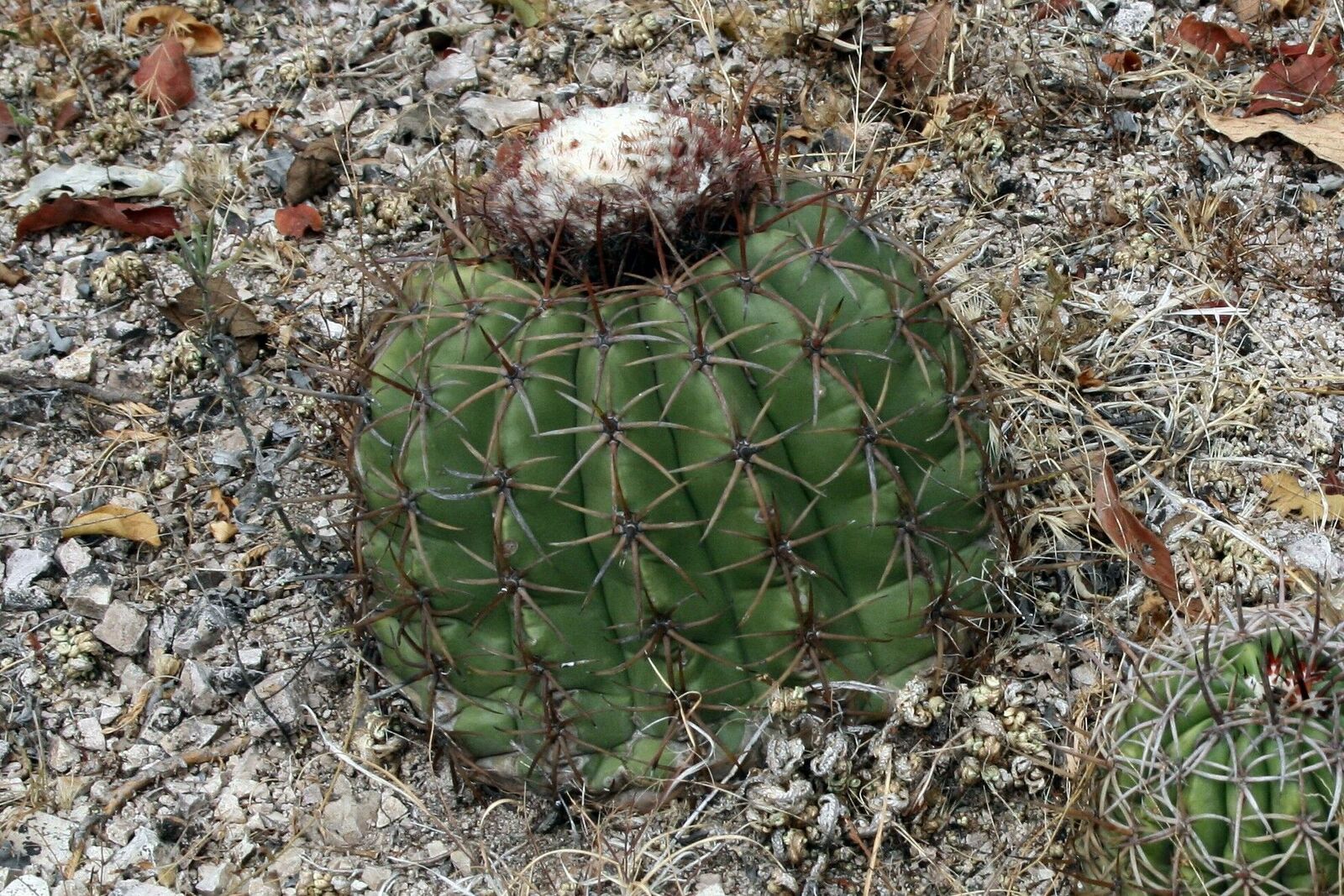
Melocactus curvispinus
Melocactus curvispinus is an iconic cactus species in the family Cactaceae, famous for the woolly, colorful cap called a cephalium that develops at its apex when mature . Once the cephalium forms, vegetative growth of the main stem ceases, and all energy is directed into producing flowers and fruits from this specialized structure.
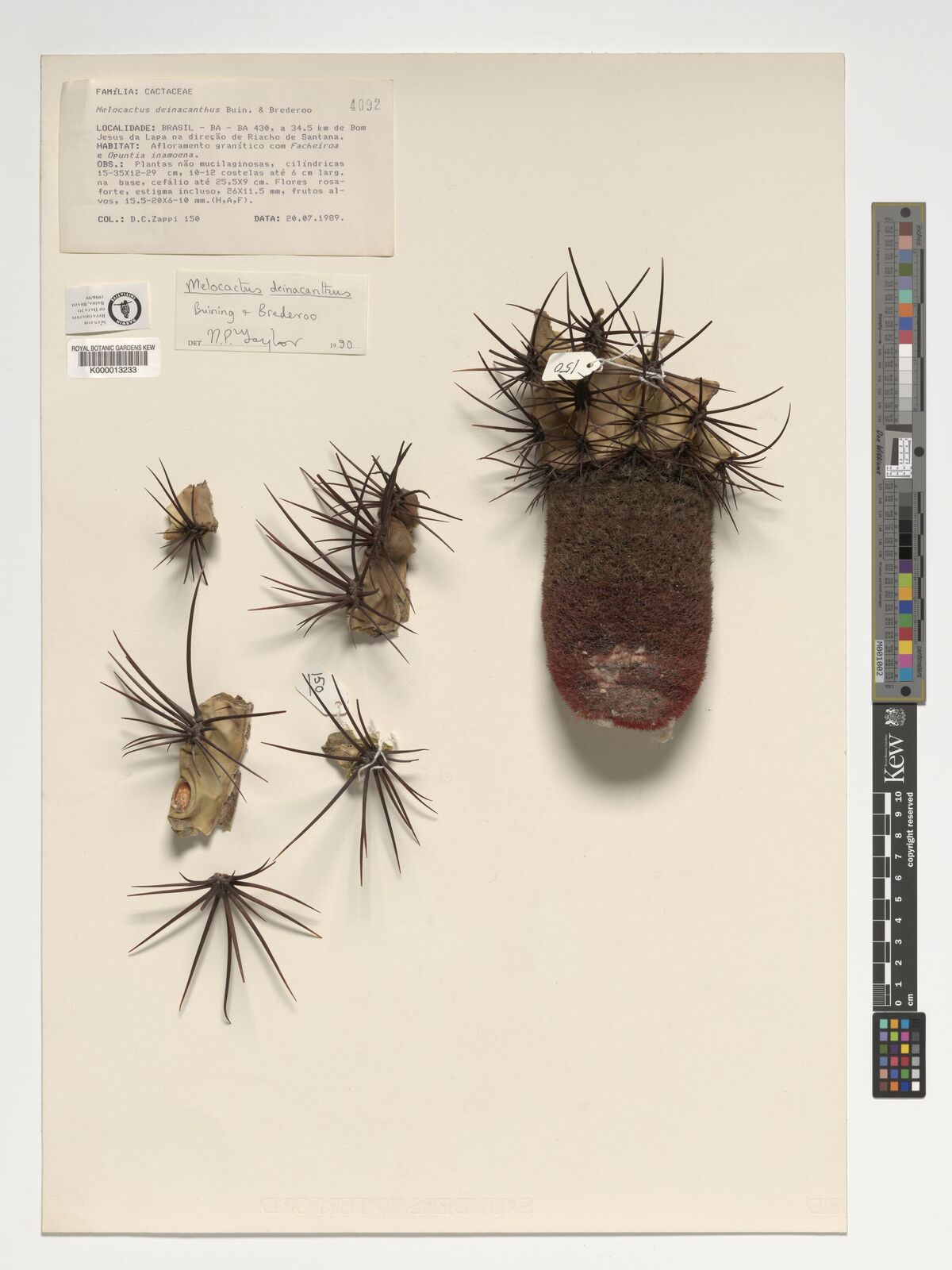
Melocactus deinacanthus
Melocactus deinacanthus is a highly sought-after, rare cactus species belonging to the family Cactaceae. Known for its spectacular cephalium—a woolly, bristly structure that develops at the crown of mature specimens—this plant represents a fascinating evolutionary adaptation to seasonally dry tropical environments .
Melocactus ernestii
Melocactus ernestii
Melocactus ernestii is a slow-growing, globose cactus species belonging to the family Cactaceae. It is highly sought after by collectors for its distinctive bristly 'cephalium' that develops at the top of mature specimens .
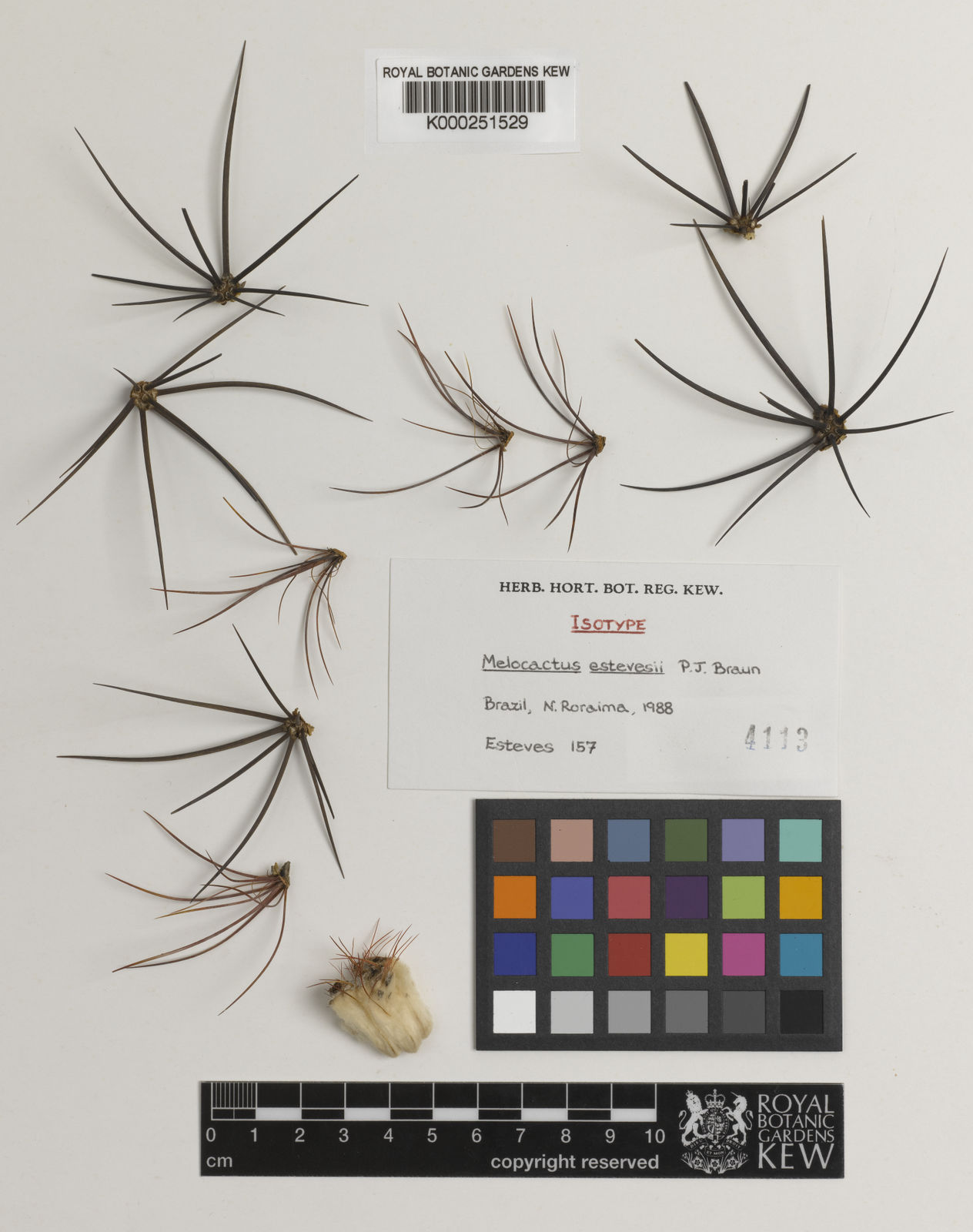
Melocactus estevesii
Melocactus estevesii is a rare and highly sought-after succulent subshrub in the Cactaceae family, famous for the unique woolly cephalium that develops on top of mature specimens. Unlike standard cacti, once this species reaches maturity, stem growth ceases and all reproductive energy is directed into developing this brush-like crown .
Melocactus evae
Melocactus evae
Melocactus evae is a highly sought-after, globose succulent subshrub in the family Cactaceae. Known for its iconic cephalium, this species represents the unique lineage of tropical canopy and coastal cacti that require distinct care compared to desert cacti [].
Melocactus excavatus
Melocactus excavatus is a fascinating and relatively rare member of the family Cactaceae. Known for the distinctive woolen and bristly structure called a "cephalium" that develops at the crown of mature specimens, this species is highly sought after by succulent collectors for its dramatic transformation from a globular green body into a capped architectural marvel .
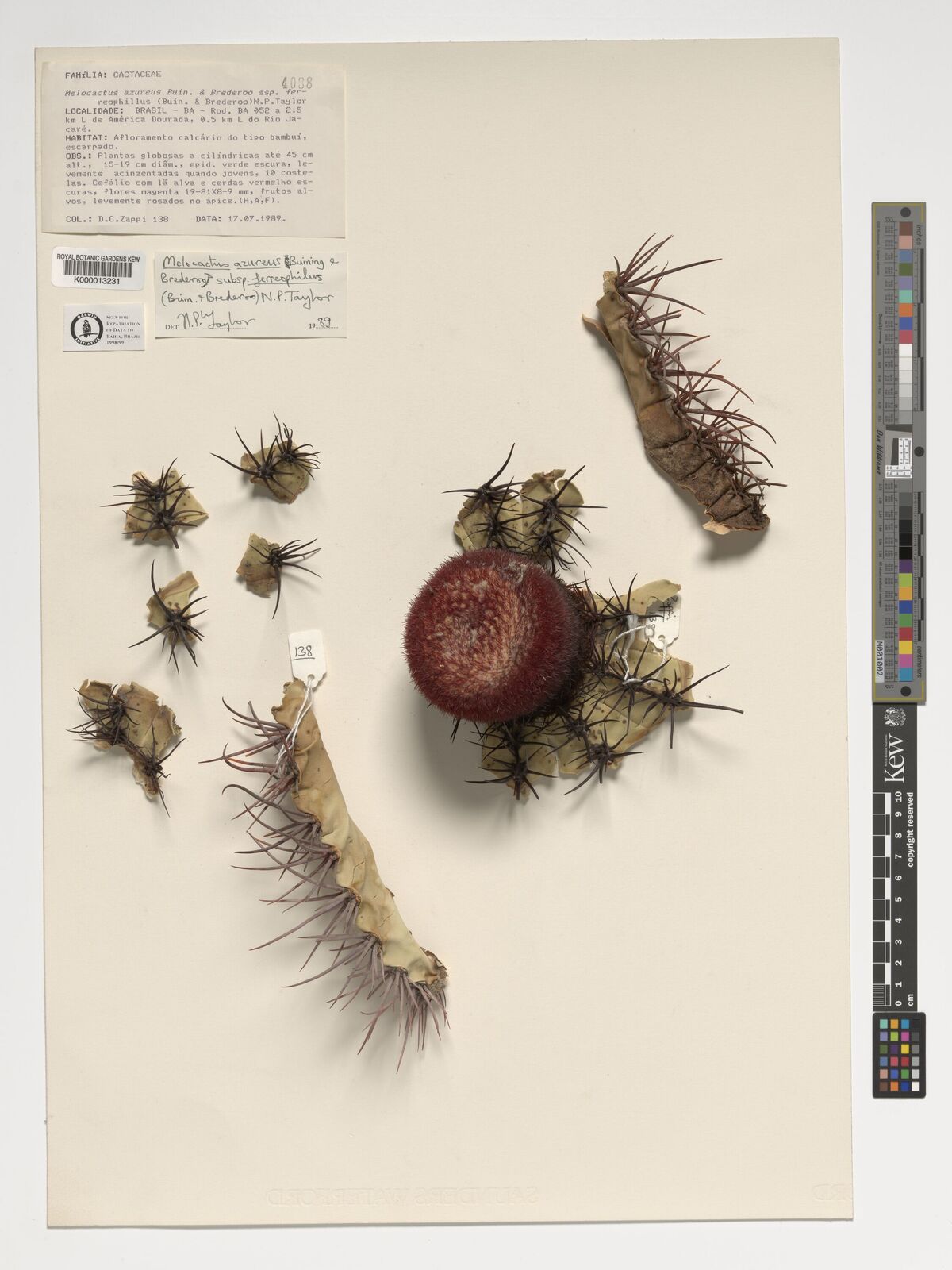
Melocactus ferreophilus
Melocactus ferreophilus is a unique, globular to cylindrical succulent subshrub belonging to the family Cactaceae. It is highly sought after by collectors for its distinctive woolly cephalium .
Melocactus lanssensianus
Melocactus lanssensianus is a highly sought-after, endangered cactus species within the Cactaceae family, known for its distinctive woolly and bristly cap-like structure called a cephalium. Growing as a succulent subshrub, this slow-growing species is a prize for global collectors due to its dramatic transition into maturity .
Melocactus lasyacanthus
Melocactus lasyacanthus is a distinctive member of the Cactaceae family, famous for the woolly, bristle-covered structure called a cephalium that develops at its apex upon maturity. Unlike most cacti, Melocactus species cease stem growth once the cephalium forms, redirecting energy into flowering . Its cultivation requires specialized knowledge due to sensitive root systems.
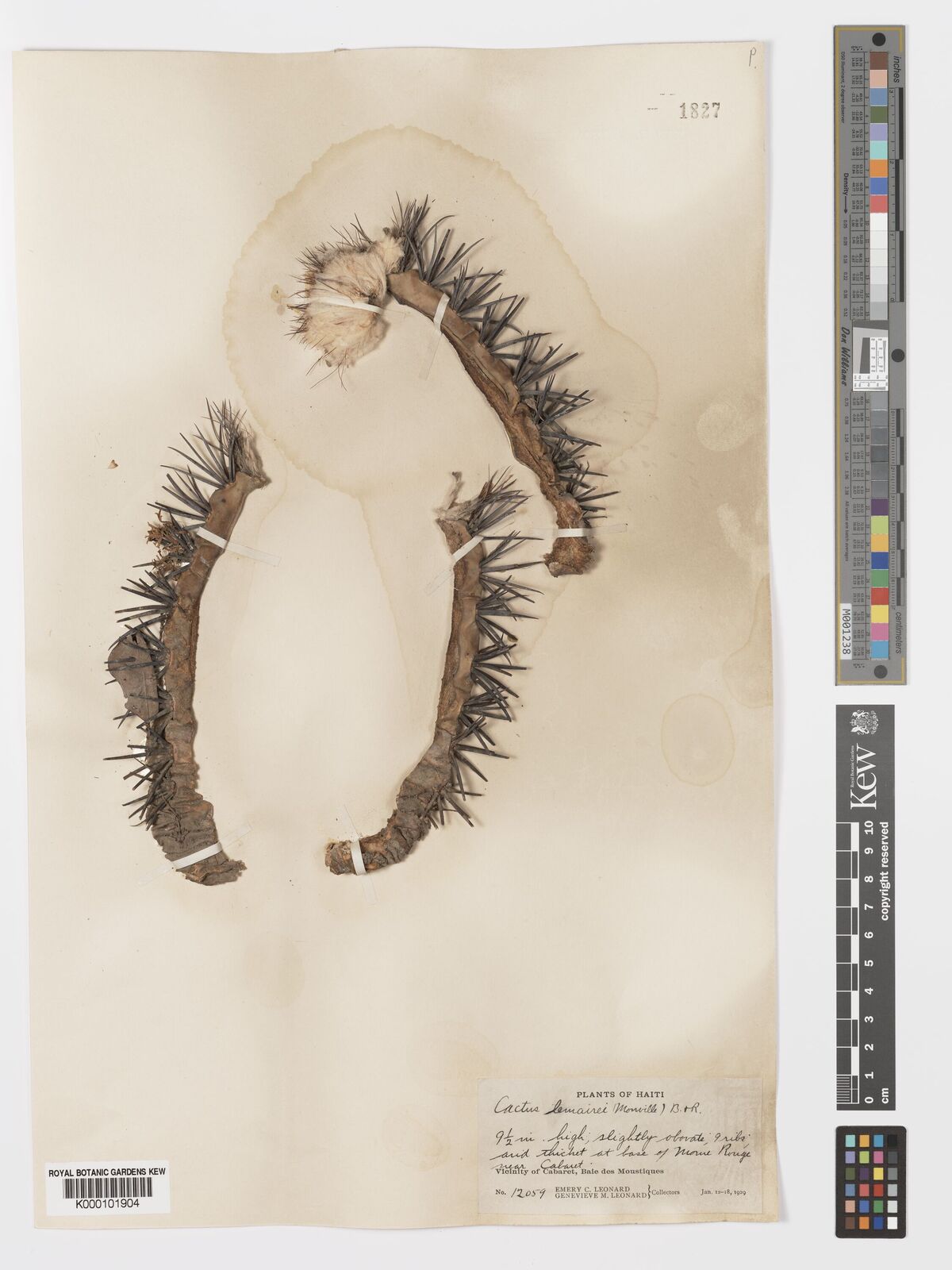
Melocactus lemarii
Melocactus lemarii
Melocactus lemarii is a highly specialized, tropical cactus species within the family Cactaceae, famously characterized by the woolly, bristly "cephalium" that crowns mature specimens .
Melocactus leopoldii
Melocactus leopoldii is a rare and highly prized member of the Cactaceae family, renowned for the striking cephalium (a colorful, woolly cap) that develops at its apex upon reaching maturity . Melocactus species possess a unique growth habit where vegetative stem growth ceases once the cephalium forms, redirecting all energy toward reproduction.
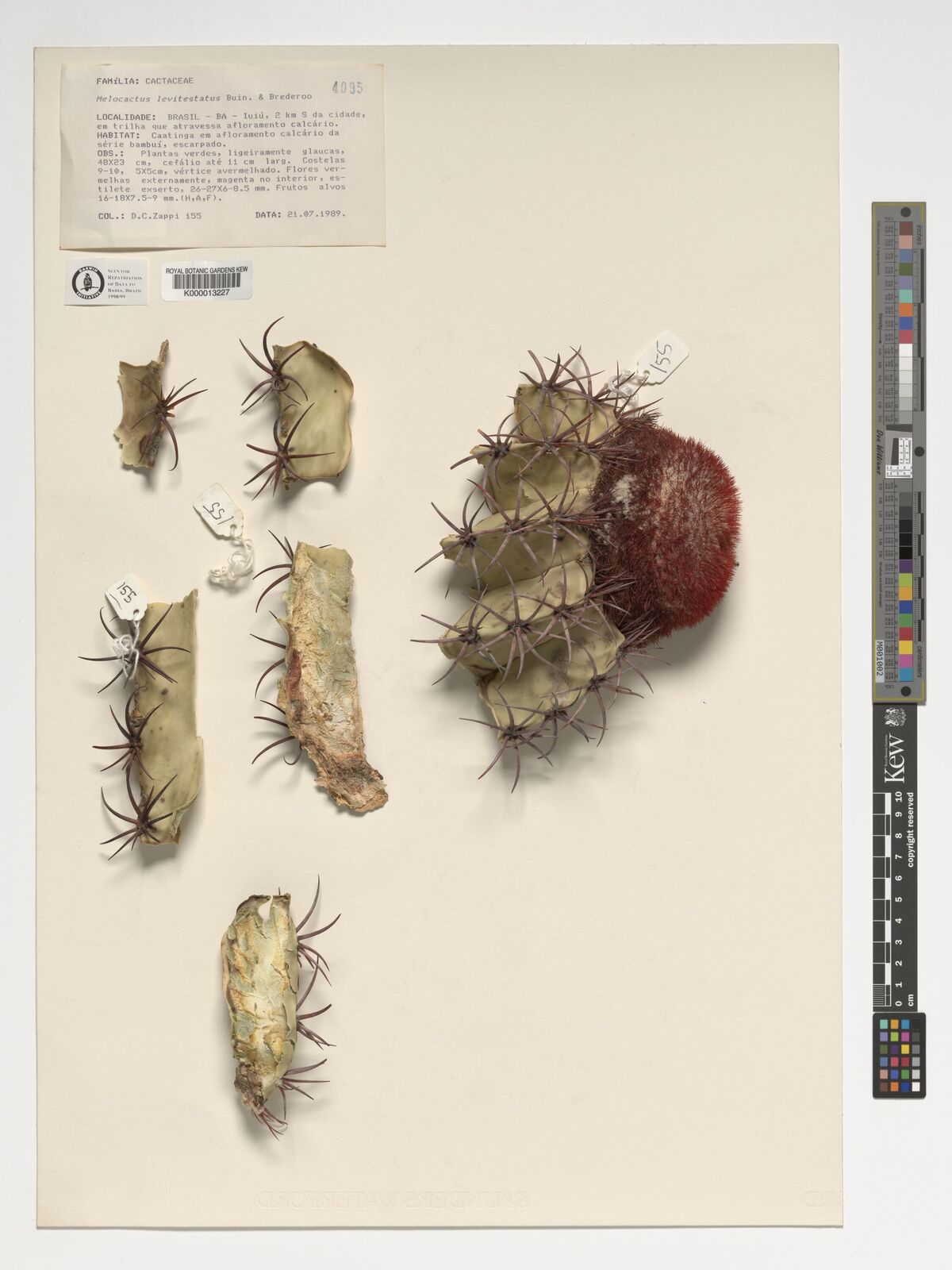
Melocactus levitestatus
Melocactus levitestatus is a highly distinctive member of the Cactaceae family, renowned for developing a terminal, woolly, and bristly structure called a cephalium upon reaching maturity . Like other species in the genus Melocactus, it ceases vegetative growth once the cephalium begins to form, dedicating its energy solely to this reproductive structure. It is highly prized by collectors but poses a challenge for beginners.
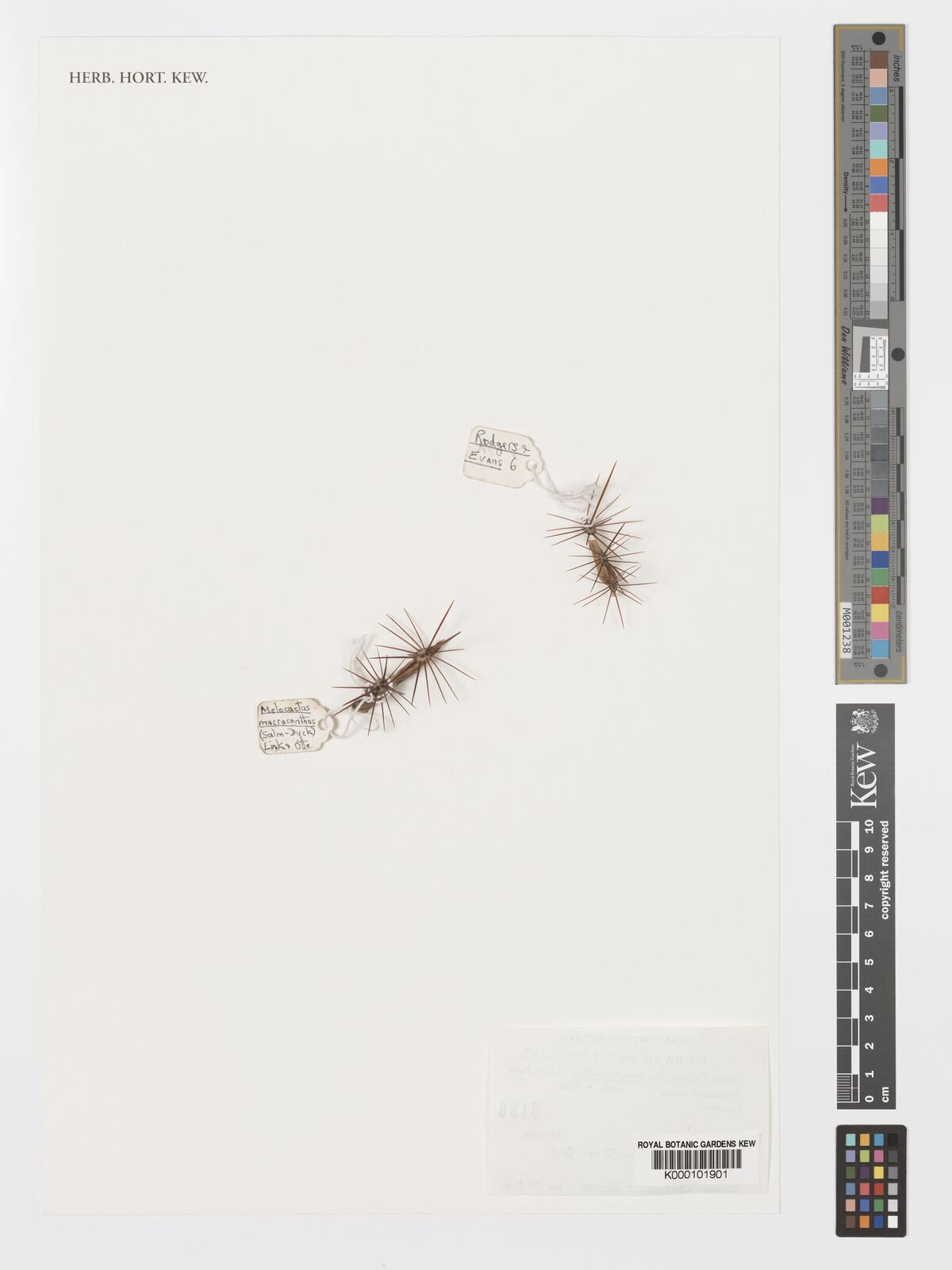
Melocactus macracanthos
Melocactus macracanthos is a unique succulent subshrub belonging to the Cactaceae family, highly sought after by collectors for its distinctive, woolly cephalium that forms at the crown of mature specimens .
Melocactus matanzanus
Melocactus matanzanus is one of the most intriguing members of the cactus family. Known for the colorful, woolly 'cephalium' that forms on its top once it reaches maturity, it is highly sought after by collectors. Its compact size makes it the ideal Melocactus species for indoor cultivation .
Melocactus mazelianus
Melocactus mazelianus is a fascinating and highly specialized member of the Cactaceae family. Known commonly as a Turk's cap cactus, it is celebrated for the colorful, woolly, bristly structure called a 'cephalium' that develops at the apex of mature specimens. Unlike desert cacti, it thrives in wetter tropical environments .
Melocactus monoclonos
Melocactus monoclonos is an extraordinary member of the Cactaceae family, renowned for the distinctive woolly "cephalium" that crowns its mature stem . Unlike typical cacti, Melocactus species grow vegetatively until maturity, at which point they cease stem growth and develop a colorful, bristly cap dedicated solely to flowering and fruiting.
Melocactus montevidensis
Melocactus montevidensis is an intriguing, globose-to-cylindrical cactus species within the family Cactaceae, celebrated for its unique terminal cephalium . Unlike typical cacti, species of the genus Melocactus cease vegetative stem growth once mature, focusing all resources into a woolly, bristly structure atop the stem where flowers and fruits develop.
Melocactus nagyi
Melocactus nagyi
Melocactus nagyi is an extremely rare and critically endangered member of the Cactaceae family. It is highly prized for its unique 'cephalium'—a woolly, bristly structure that develops at the crown of mature specimens .
Melocactus natalensis
Melocactus natalensis is a unique succulent subshrub belonging to the family Cactaceae. Known for its distinctive ribbed green body, it is famous for developing a 'cephalium'—a specialized crown of wool and bristles at the top of the stem once it reaches maturity, which bears both flowers and fruits .
Melocactus neoviridescens
Melocactus neoviridescens is a fascinating member of the Cactaceae family, highly sought after by collectors for its distinctive, bristly cephalium that forms at the crown when mature .
Melocactus neryi
Melocactus neryi
Melocactus neryi is a globose, tropical cactus species belonging to the family Cactaceae, highly distinguished by the woolly, bristly structure known as a 'cephalium' that develops at the top of mature specimens . Once this cephalium forms, the plant ceases vegetative growth and dedicates its energy solely to flowering and fruiting.
Melocactus ocampo
Melocactus ocampo
Melocactus ocampo is a rare and distinct cactus species belonging to the family Cactaceae and the renowned genus Melocactus . It is highly celebrated for the striking, woolly "cephalium" that develops at the apex of mature specimens .
Melocactus octogonus
Melocactus octogonus is a rare and highly sought-after cactus species in the family Cactaceae, characterized by its globose, symmetrically ribbed stem and the distinctive cephalium that develops at the apex upon reaching maturity.
Melocactus oreas
Melocactus oreas
Melocactus oreas is a distinctive globose cactus species belonging to the family Cactaceae. It is highly valued among collectors for its striking cephalium—a woolly, bristly structure that develops at the crown of mature specimens [1].
Melocactus pachyacanthus
Melocactus pachyacanthus is one of the most striking and highly sought-after members of the Cactaceae family. It is easily recognized by its intensely glaucous, powdery blue-grey stem and the distinctive reddish-pink felted cap called a "cephalium" that forms at the top of mature specimens.
Melocactus paucispinus
Melocactus paucispinus is a rare and distinctive globose cactus native to Brazil, famous for its flattened stem and the colorful, woolly "cephalium" that develops at the crown of mature specimens .
Melocactus pedernalensis
Melocactus pedernalensis is one of the most distinctive and taxonomically intriguing members of the family Cactaceae. Adapted to the arid environments of the Caribbean, this succulent subshrub is renowned for its remarkable cephalium—a dense, woolly, and bristly structure that develops at the apex of mature specimens .
Melocactus perezassoi
Melocactus perezassoi is an extremely rare, critically endangered cactus species within the Cactaceae family, renowned for developing a prominent cephalium at maturity .
Melocactus peruvianus
Melocactus peruvianus is a fascinating, slow-growing globose cactus highly sought after for its distinctive cephalium—a bristly, woolly cap that develops on mature plants . Belonging to the Cactaceae family, this species is well-adapted to surviving in rocky, arid, and desert environments, making it a unique addition to succulent collections.
Melocactus praerupticola
Melocactus praerupticola is a rare and highly specialized succulent belonging to the family Cactaceae . Renowned for its solitary globose growth and the striking cephalium that crowns mature specimens, it is highly prized among cactus enthusiasts.
Melocactus pruinosus
Melocactus pruinosus is a fascinating globose cactus species belonging to the family Cactaceae. Known for its distinct glaucous, powdery blue-green stem and the development of a colorful woolly 'cephalium' at maturity, this species stands out as a highly prized but challenging collector's item .
Melocactus pseudoviolaceus
Melocactus pseudoviolaceus is a unique and sought-after succulent species belonging to the Cactaceae family, known for developing a distinctive bristle-and-wool cap called a 'cephalium' at its apex upon maturity [1]. Flowers and subsequent colorful fruits arise solely from this structure, making it a highly valued plant for collectors.
Melocactus radoczii
Melocactus radoczii
Melocactus radoczii is a globose, perennial succulent subshrub belonging to the family Cactaceae. Known for its distinctive habit of developing a specialized woolly and bristly structure called a 'cephalium' at its apex, this species ceases stem growth once mature, redirecting all energy into reproductive structures.
Melocactus salvadorensis
Melocactus salvadorensis is a unique globose cactus belonging to the family Cactaceae, famous for developing a woolly cephalium at its apex upon maturity . Native to the arid landscapes of eastern Brazil, this species is highly prized by collectors for its slow growth and distinct ornamental morphology.
Melocactus santiagoensis
Melocactus santiagoensis is a rare and highly sought-after cactus species within the family Cactaceae, famous for developing a striking reddish woolly and bristly cap, known as a cephalium, at its apex. Unlike most other cacti, once members of the genus Melocactus reach maturity, stem growth ceases, and all energy is redirected into the growth of the cephalium .
Melocactus schatzlii
Melocactus schatzlii is a distinctive members of the Cactaceae family, famous for its striking apical 'cephalium' which develops at maturity. It is highly sought after by succulent enthusiasts but faces threats in its wild habitats due to localized distribution .
Melocactus sergipensis
Melocactus sergipensis is a highly rare and critically endangered cactus species belonging to the family Cactaceae, native to a very restricted area in Brazil . Like other members of its genus, it is famous for producing a colorful, woolly, and bristly structure called a "cephalium" at its apex upon reaching maturity.
Melocactus smithii
Melocactus smithii
Melocactus smithii is a unique, globose to cylindrical cactus species belonging to the Cactaceae family, renowned for producing a striking woolly cephalium at maturity 1. Unlike desert cacti, it thrives in seasonally dry tropical environments.
Taxonomy and Naming
Belonging to the iconic genus Melocactus, its generic name originates from the Latin word 'melo' (melon) due to its ribbed, rounded shape. Once the mature cephalium forms, the main green stem ceases to grow, diverting all physiological energy to flower and seed production 2.
Distribution and Habitat
This species is native to northern South America, specifically found in Guyana and northern Brazil (Roraima and Amazonas states) 1. It predominantly grows on rocky granite outcrops (inselbergs) and within dry savanna biomes.
Appearance
It grows as a solitary, ribbed stem with heavy, rigid radials and central spines. Upon reaching adulthood, it develops a cap-like cephalium consisting of dense reddish-pink bristles and white wool. Tiny, self-fertile pink flowers emerge from this cephalium, followed by club-shaped red fruits.
Cultivation and Care
Melocactus smithii requires warm temperatures year-round, ideally not dropping below 12°C even in winter 2. It prefers bright, filtered sunlight and higher ambient humidity than arid-land cacti. Watering should be regular during summer but carefully reduced in winter.
Common Mistakes
Overwatering during cold periods and exposing the plant to drafts are the primary causes of root rot. Repotting a specimen that has already established a cephalium is highly risky due to fragile root systems 1.
References
Melocactus stramineus
Melocactus stramineus is a distinctive species within the Melocactus genus, belonging to the Cactaceae family. Highly prized by succulent collectors, this plant is famous for developing a woolly, colorful cephalium at its crown once it reaches maturity. It grows as a succulent subshrub adapted to arid conditions.
Melocactus violaceus
Melocactus violaceus, belonging to the Cactaceae family, is a slow-growing, highly distinct succulent subshrub renowned for its characteristic pink-to-purple cephalium. Unlike standard desert cacti, it alters its growth form entirely upon reaching maturity, producing a terminal woolly structure dedicated solely to flowering and fruiting .
Melocactus viridis
Melocactus viridis
Melocactus viridis is a rare and critically endangered globose cactus species belonging to the family Cactaceae. Known for its distinct green body, the species is highly prized by collectors for the spectacular fuzzy, bristly structure called a cephalium that develops at its apex once the plant reaches maturity .
Melocactus zehntneri
Melocactus zehntneri is an extraordinary cactus species endemic to Brazil, highly prized among collectors for its distinctive bristly head, known as a cephalium . Once mature, it offers a dramatic botanical display.
Melocactus × albicephalus
Melocactus × albicephalus is a fascinating natural hybrid succulent subshrub belonging to the Cactaceae family. Like other members of its genus, it is highly prized for its cephalium—a specialized woolly and bristly flowering cap that develops at the apex of mature plants .
Melocactus × horridus
Melocactus × horridus is a fascinating natural hybrid cactus within the Cactaceae family. Distinguished by the presence of a specialized apical structure known as a 'cephalium', this succulent subshrub captures the attention of plant enthusiasts worldwide. Unlike typical desert cacti, it requires tropical conditions to thrive .
Melocactus × trachycephalus
Melocactus × trachycephalus is a rare natural hybrid cactus within the family Cactaceae . Native to the arid coastal regions of the Caribbean and Northern South America, it is highly sought after by collectors for its unique cephalium .