
Light
Bright Indirect Light
Provide plenty of bright, indirect light. Avoid harsh, midday direct sunlight to prevent scorching.
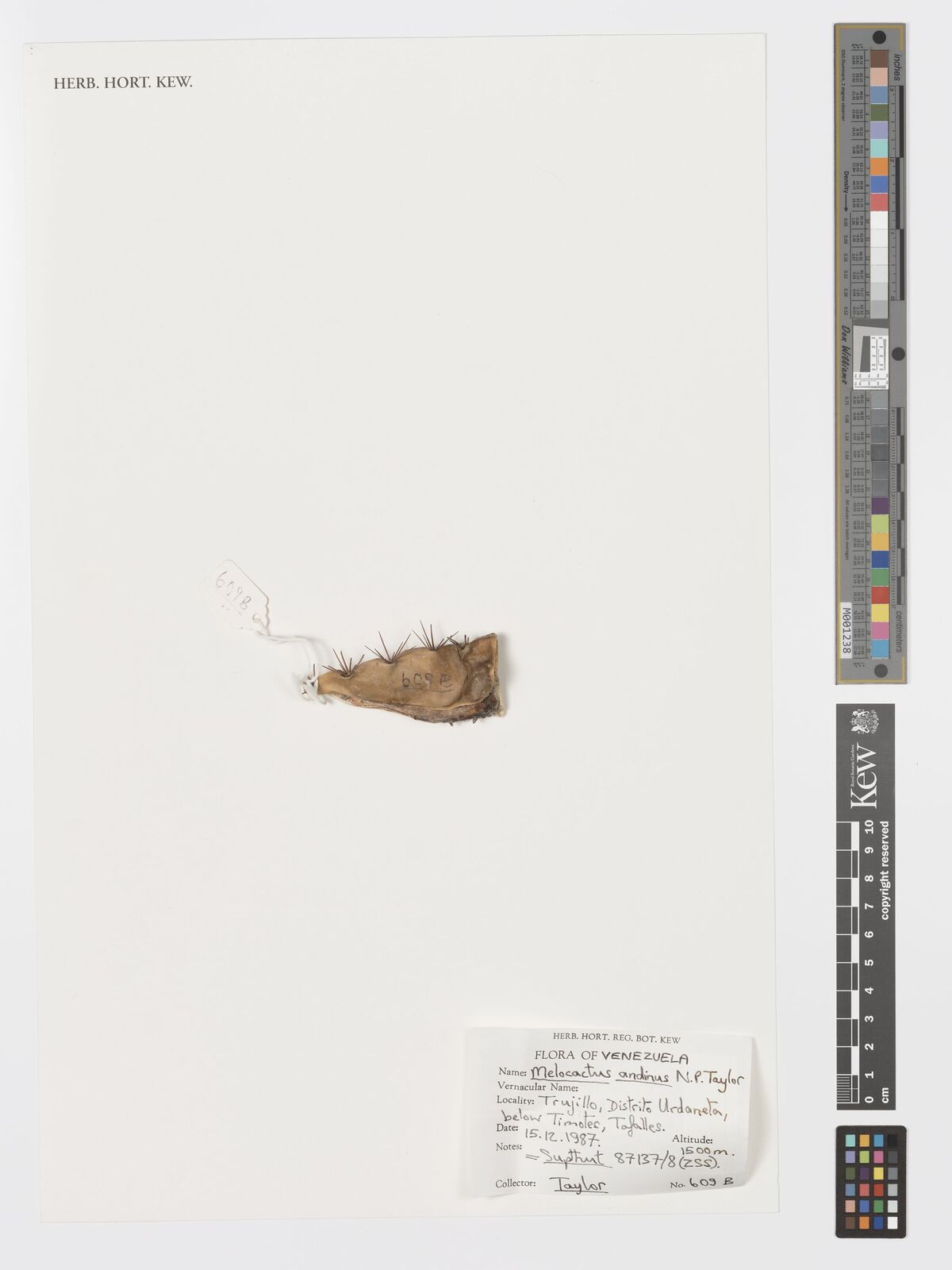 Reference image
Andean Melon Cactus
Melocactus andinus is a unique member of the Cactaceae family, renowned for the distinctive cephalium that develops at its apex upon maturity. Unlike many of its lowland coastal relatives, this species has adapted to the montane environments of the Andes, making it highly sought after by succulent enthusiasts.
Scientifically described by Gruber, the species is placed within the genus Melocactus 1. The specific epithet "andinus" directly references its native habitat in the Andes mountain range. It shares botanical affinities with other high-altitude South American cacti but remains distinct due to its specific spination and cephalium structure 2.
This species is native to western and northern South America, particularly in the montane regions of Colombia and Venezuela 1. It thrives at elevations between 1500 and 2500 meters above sea level. Its habitat consists of seasonally dry tropical biomes, typically growing on rocky outcrops, steep cliffs, and thin organic soils where mist provides regular moisture.
The stem is solitary, globose to short-cylindrical, and bright green with well-defined ribs armed with strong, slightly curved spines. Upon reaching reproductive maturity, the vegetative growth stops, and a woolly, bristly red-and-white cephalium forms at the crown. Small, tubular pink flowers emerge from this structure, followed by club-shaped, edible magenta fruits 2.
In cultivation, Melocactus andinus requires warmer winter temperatures than most desert cacti, preferring to stay above 10°C. It benefits from bright, indirect light rather than scorching direct sun. The soil must be highly porous, and watering should be consistent during the growing season without letting the root zone dry out completely for extended periods.
Allowing the temperature to drop too low in winter or leaving the soil bone-dry for months will damage its root system. Conversely, waterlogged soil quickly leads to rot.
Provide plenty of bright, indirect light. Avoid harsh, midday direct sunlight to prevent scorching.
Water thoroughly once the topsoil dries out. Do not let the soil remain completely dry for long periods.
Use a mineral-rich substrate containing high amounts of pumice, perlite, and coarse sand for rapid drainage.
Non-toxic to pets, but has sharp spines that can cause physical injury. Handle with care.
Requires moderate care due to its sensitivity to cold, wet winter soil and specific humidity needs.
Native to the high-elevation rocky slopes and seasonally dry tropical mountain forests of the Andes in Colombia and Venezuela, ranging from 1500 to 2500 meters.
