
Light
Filtered Sun
Provide bright, filtered sunlight. Protect from intense, direct midday sun to avoid scorching.
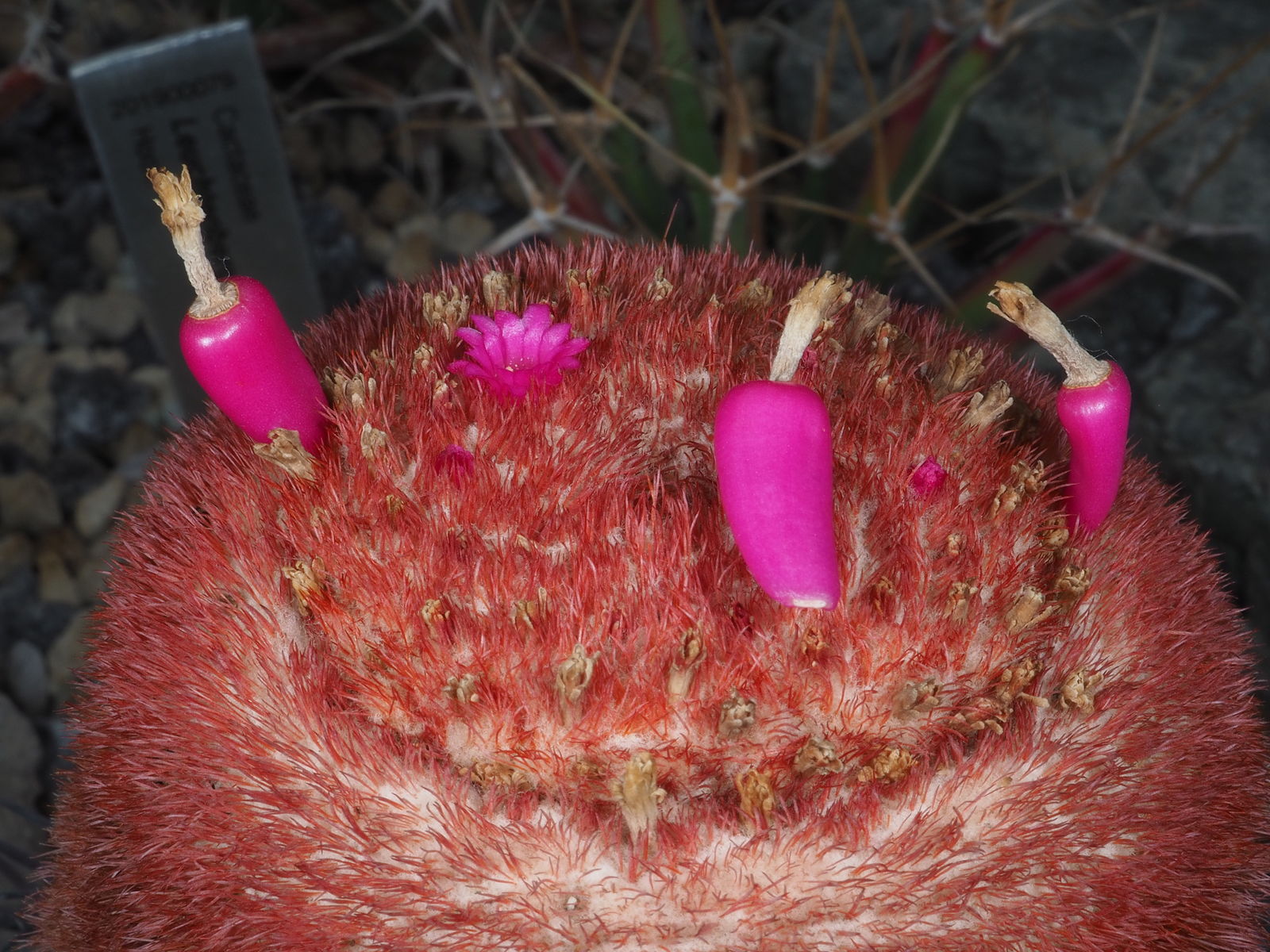 Reference image
Bahia Melon Cactus
Melocactus bahiensis is a distinctive cactus species endemic to Brazil, highly prized by collectors for the woolly, bristly red cap (cephalium) that develops on mature plants 1.
Belonging to the Cactaceae family, this species was described with historical synonyms but is widely accepted today as Melocactus bahiensis. Its specific epithet refers to the Brazilian state of Bahia, where it is commonly found 2.
Native to northeastern and southeastern Brazil, including Bahia, Minas Gerais, and Pernambuco, it thrives in seasonally dry tropical biomes. It typically colonizes rocky outcrops and stony soils 1.
The body is globose to short cylindrical with well-defined ribs. Once mature, it stops growing taller and produces a cephalium at the crown, made of pale wool and reddish bristles. Tiny pink flowers and club-shaped pinkish-red fruits emerge from this structure 2.
Unlike desert cacti, Melocactus bahiensis demands warmer winter temperatures, ideally not dropping below 10°C. It prefers bright, filtered light and a highly porous, mineral-based substrate to prevent root rot.
Overwatering is the most critical mistake, especially once the cephalium has formed, as the root system becomes more delicate. Keeping the soil wet in cool conditions or exposing the plant to frost will lead to sudden death 1.
Provide bright, filtered sunlight. Protect from intense, direct midday sun to avoid scorching.
Allow the soil to dry out completely between waterings in summer; keep nearly dry in winter.
Use an extremely gritty, free-draining cactus mix rich in pumice, gravel, and coarse sand.
Non-toxic to pets, but features sharp spines that can cause physical injury.
Requires moderate care due to its tropical temperature needs and sensitivity to cold, wet soil.
Native to the dry, rocky landscapes of eastern and northeastern Brazil, predominantly found in the caatinga scrublands of Bahia and surrounding states.
