
Light
Bright Indirect Light
Requires bright, filtered sunlight; protect from scorching midday sun.
 Reference image
 Reference image
Braun's Melon Cactus
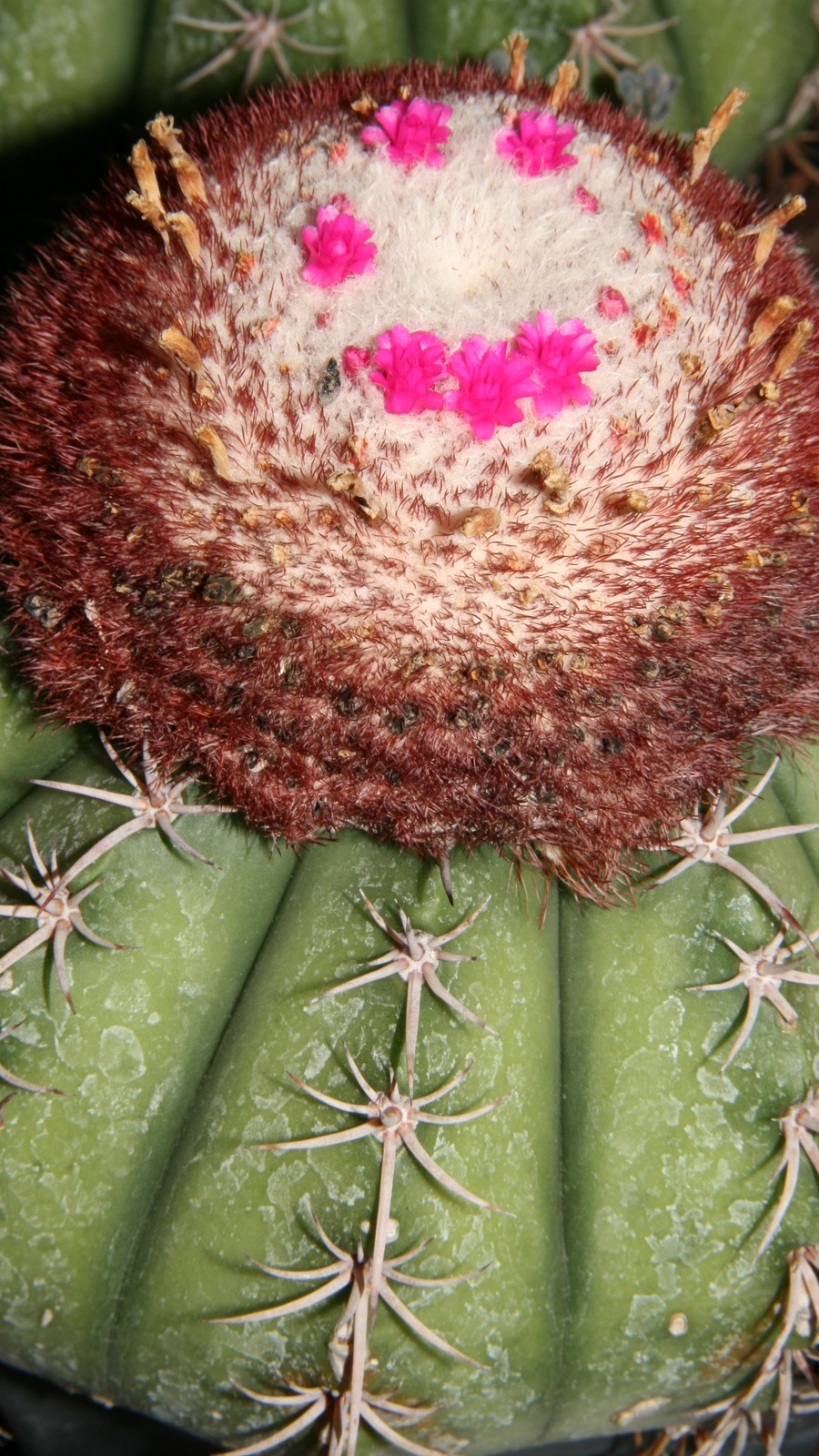
Melocactus braunii is a highly prized and critically endangered member of the Cactaceae family. Known for its distinct, colorful felt-and-bristle cap called a 'cephalium' that develops on mature specimens, it is a magnificent addition to specialist collections but requires precise care.
Belonging to the genus Melocactus within the Cactaceae family, this species was named in honor of the German botanist Pierre Josef Braun. It is commonly referred to as Braun's Melon Cactus or Turk's Cap Cactus due to its spherical body and distinctive cap 1.
This species is endemic to the northeastern region of Brazil, particularly within the state of Bahia. It thrives in seasonally dry tropical biomes, growing in cracks of quartzite rocks and stony, nutrient-poor soils 2. Due to habitat degradation and its very restricted range, it is classified as Critically Endangered (CR) on the IUCN Red List.
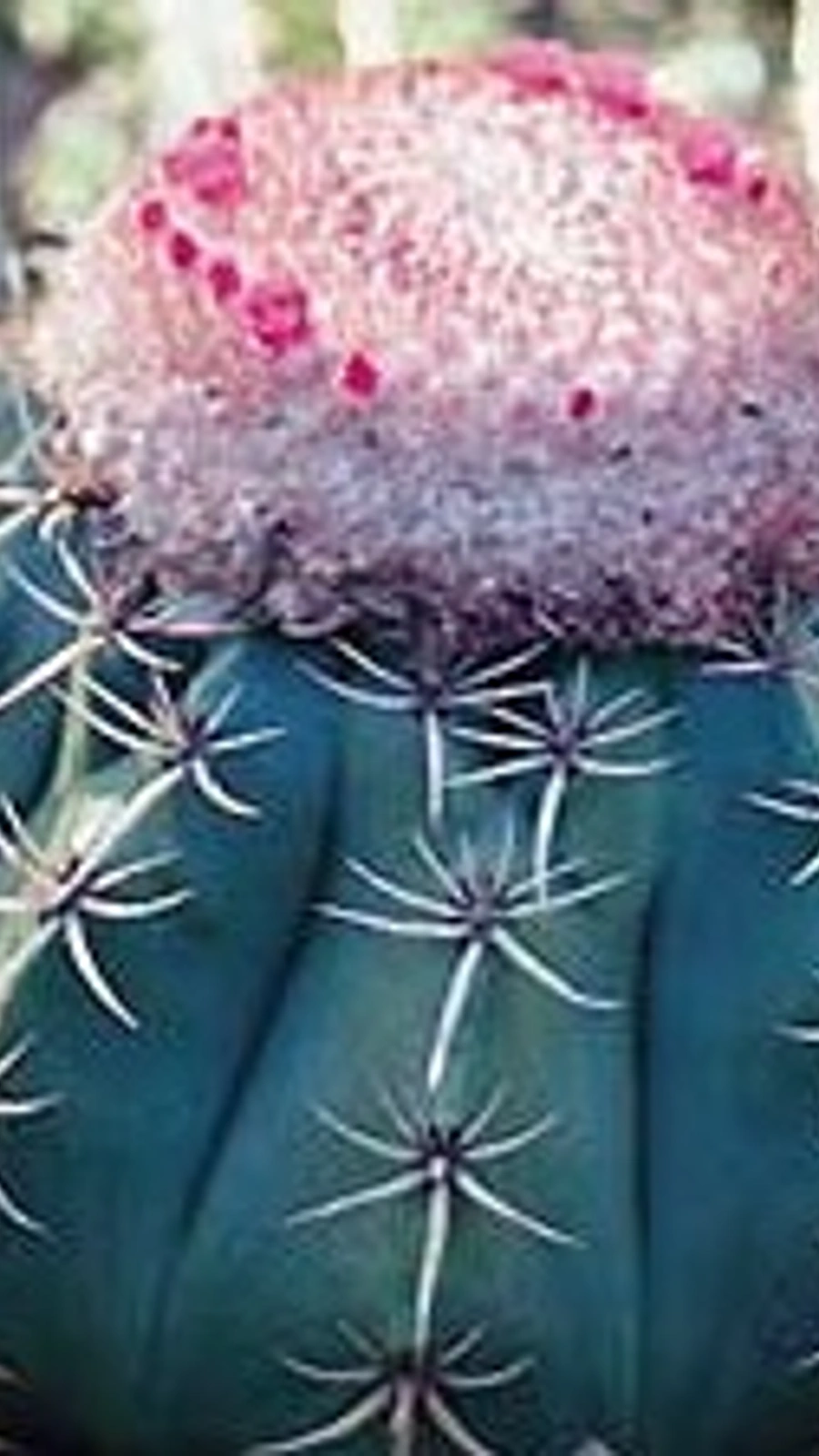
The stem is globose to depressed-globose, light to dark green, with 8 to 13 well-defined ribs. The spines are greyish-brown and slightly recurved. Upon reaching maturity, the vegetative growth of the stem stops, and it develops a terminal cephalium consisting of pinkish-red wool and bristles, from which small pink flowers and subsequent fleshy red fruits emerge 1.
Unlike many other cacti, Melocactus braunii is highly sensitive to cold temperatures. It must be kept above 10°C at all times. It prefers bright, indirect sunlight or filtered sun. During the active growing season, water thoroughly only when the substrate is completely dry, and reduce watering drastically in winter 2.
Watering during cold spells is the most common cause of failure, leading to rapid root rot. Standard cactus soils with high organic matter are also detrimental; this species requires a highly mineral, gritty substrate with excellent drainage.
Requires bright, filtered sunlight; protect from scorching midday sun.
Water only after the soil dries out completely. Keep nearly dry in winter.
Highly porous, mineral-rich medium containing pumice, gravel, and sand.
Spines can cause physical injury, though the plant is non-toxic to pets.
Highly sensitive to cold and overwatering, making it suitable for experienced growers.
Native to the dry, rocky highlands of Bahia in northeastern Brazil, where it grows in cracks of quartzite rocks.
