
Light
Bright Indirect Light
Requires at least 6 hours of bright, filtered sunlight. Protect from intense, scorching midday sun.
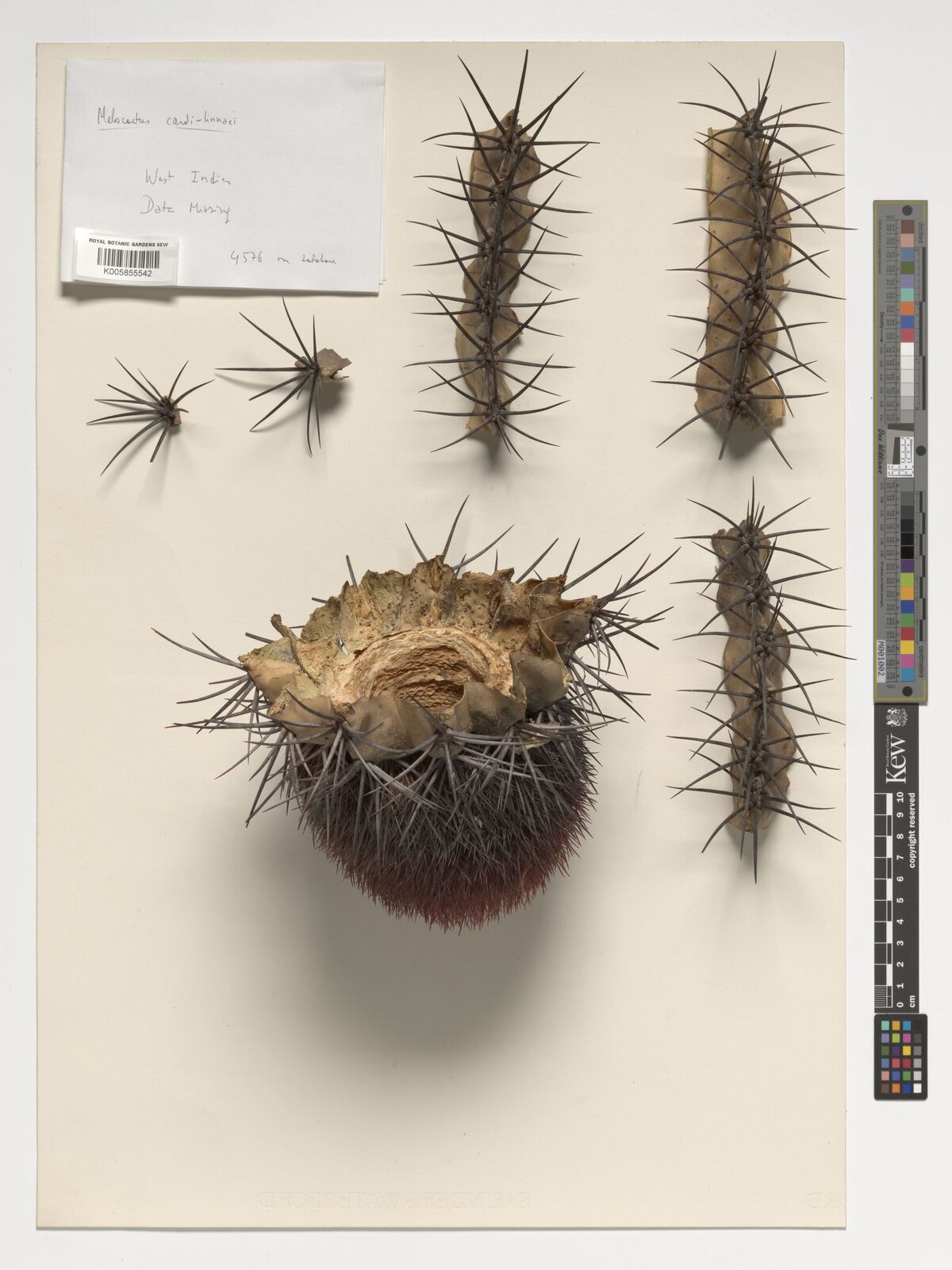 Reference image
Linné's Melon Cactus
Melocactus caroli-linnaei is a highly distinctive globose cactus belonging to the family Cactaceae. It is globally recognized for its iconic, bristly reddish-pink crown known as a "cephalium", which develops at maturity to produce flowers and fruit.
The species epithet caroli-linnaei honors the father of modern taxonomy, Carl Linnaeus 1. The genus Melocactus represents a highly specialized group of cacti native to the Caribbean and northern South America, valued for their unique reproductive morphology.
This succulent subshrub is native to Jamaica and parts of the Caribbean, typically thriving in seasonally dry tropical biomes 2. It is frequently found on limestone cliffs and rocky coastal slopes where it enjoys excellent drainage and marine breezes.
In its juvenile stage, it appears as a ribbed, dark green, spiny globose cactus. After several years, it stops vegetative growth and develops a woolly, apical cephalium covered in reddish-brown bristles. Delicate, small pink flowers emerge directly from this structure.
Unlike desert cacti, Melocactus caroli-linnaei prefers warmer, more humid tropical conditions and is sensitive to frost. It requires a minimum winter temperature of 10°C. Position it in bright, indirect light with excellent air circulation.
Allowing the root ball to dry out completely for extended periods in winter can cause root loss. Conversely, overwatering without proper drainage leads to root rot. Avoid repotting once the cephalium has formed, as mature plants tolerate root disturbance poorly 2.
Requires at least 6 hours of bright, filtered sunlight. Protect from intense, scorching midday sun.
Water thoroughly once the substrate dries out. Do not let it dry completely bone-dry during winter.
Requires highly porous, calcareous soil rich in pumice, grit, and coarse sand for perfect drainage.
Equipped with very sharp, stiff spines. Keep out of reach of children and companion animals.
Requires moderate care due to its specific sensitivity to cold temperatures and root disturbance.
Inhabits the coastal limestone terraces and dry tropical woodlands of Jamaica, exposed to warm sea breezes and high solar radiation.
