
Light
Full Sun
Thrives in direct, intense sunlight; ideal for south-facing windows or bright patios.
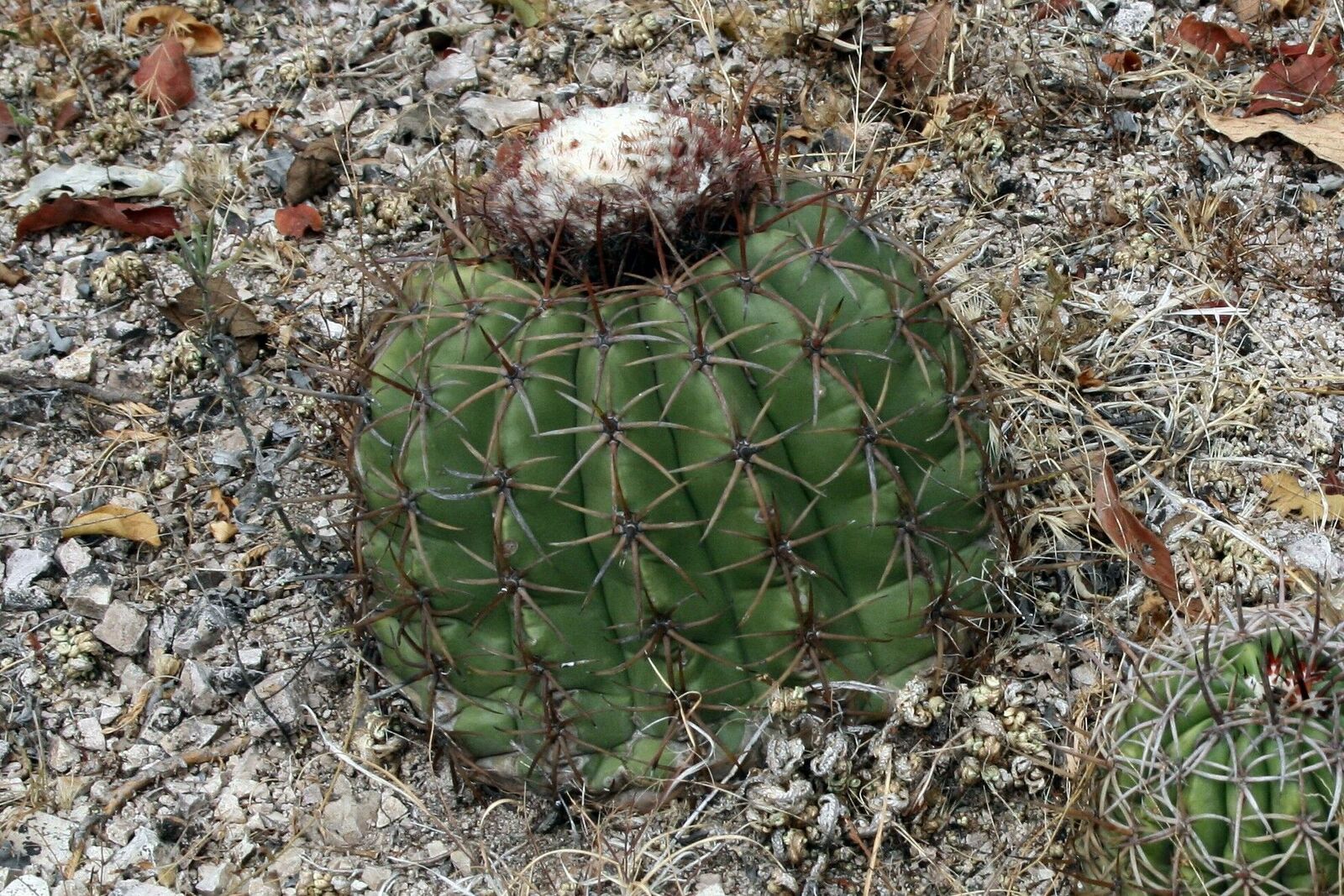 Reference image
Curved-spine Melon Cactus
Melocactus curvispinus is an iconic cactus species in the family Cactaceae, famous for the woolly, colorful cap called a cephalium that develops at its apex when mature 1. Once the cephalium forms, vegetative growth of the main stem ceases, and all energy is directed into producing flowers and fruits from this specialized structure.
This species was first formally described in 1913 by the American botanists Nathaniel Lord Britton and Joseph Nelson Rose 2. The genus name 'Melocactus' is derived from the Latin 'melo' (melon), referencing the ribbed, globose stem shape. The specific epithet 'curvispinus' refers to the plant's characteristic curved spines.
Melocactus curvispinus has a broad native range spanning Mexico, Central America (Guatemala, Nicaragua), the Caribbean, and northern South America (Colombia, Venezuela) 1. It thrives in seasonally dry tropical biomes, rocky slopes, coastal cliffs, and deciduous dry forests.
This cactus features a solitary, globose to short-cylindrical stem with 10 to 16 well-defined ribs. The spines are strong, sharp, grayish-yellow, and conspicuously curved backward. Upon reaching maturity (typically in 10-12 years), it grows a terminal cephalium covered in dense white wool and reddish-orange bristles. Small, pinkish flowers emerge from the cephalium, followed by decorative bright red, club-shaped edible fruits 2.
Unlike desert cacti, Melocactus species require tropical warmth and should not be kept completely dry during winter. They prefer consistent watering during the growing season in a highly porous, mineral-rich substrate. Full sun exposure and excellent ventilation are key to healthy growth.
Overwatering in poorly draining soil or exposing the plant to temperatures below 10°C will quickly lead to root rot. Additionally, leaving the soil completely bone-dry for months during winter can cause irreversible root loss, unlike with hardier desert cacti.
Thrives in direct, intense sunlight; ideal for south-facing windows or bright patios.
Water thoroughly when the soil dries out in summer; keep lightly damp but not soggy in winter.
Requires a highly porous, mineral-rich cactus mix with plenty of pumice, lava rock, and coarse sand.
Armed with very sharp, curved spines. Keep away from pets and children. Non-toxic.
Moderate. Requires consistent warmth during winter and careful monitoring of moisture levels.
In its native habitats, this species clings to coastal rocky cliffs, volcanic outcrops, and open dry forests, where it is exposed to harsh tropical sun, marine breezes, and seasonal rainfall followed by dry spells.
