
Light
Bright Indirect Light
Prefers bright, indirect light or filtered sunlight. Protect from intense, scorching afternoon sun.
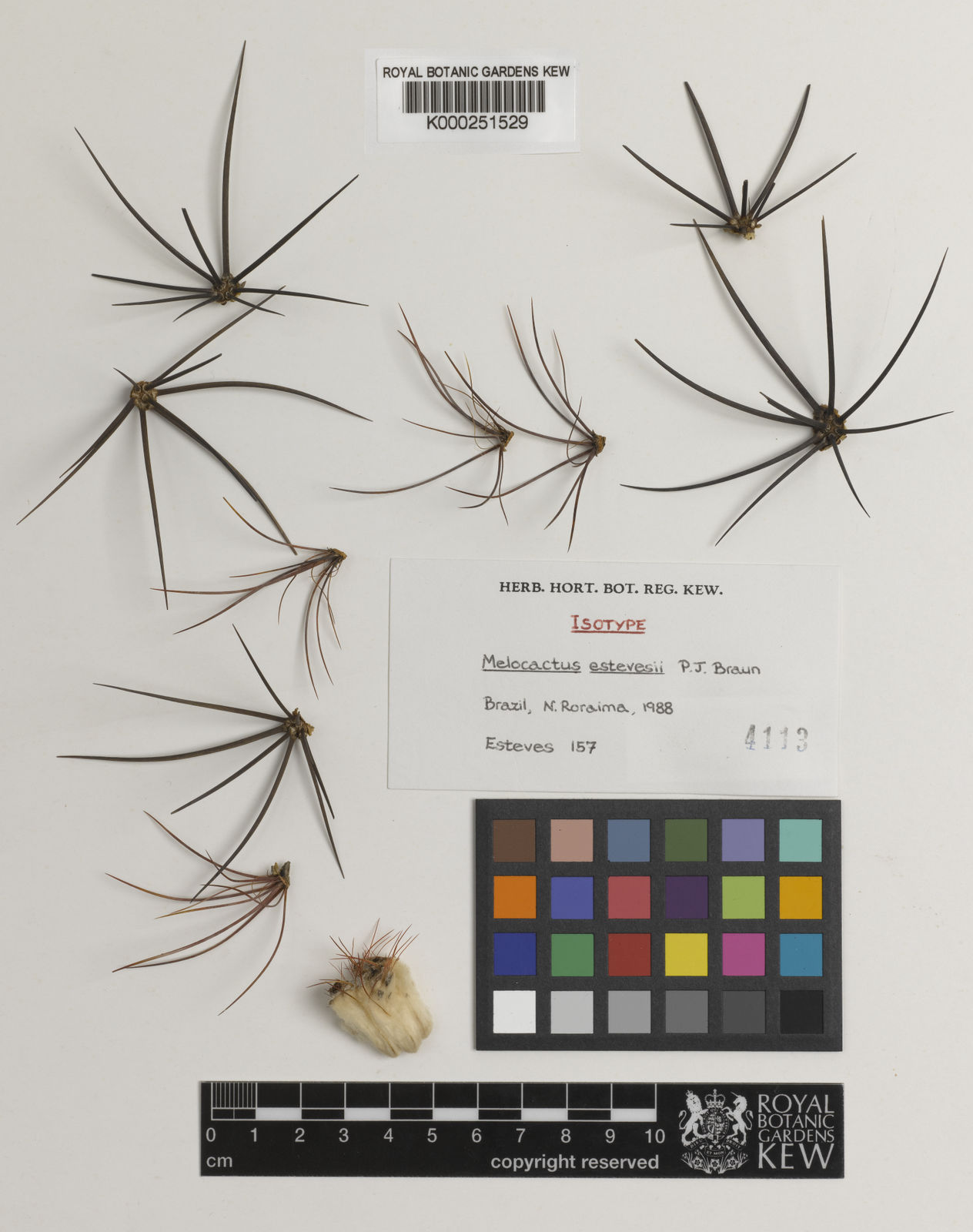 Reference image
Melon Cactus (Melocactus estevesii)
Melocactus estevesii is a rare and highly sought-after succulent subshrub in the Cactaceae family, famous for the unique woolly cephalium that develops on top of mature specimens. Unlike standard cacti, once this species reaches maturity, stem growth ceases and all reproductive energy is directed into developing this brush-like crown 1.
The genus name Melocactus is derived from the Greek "melon" due to the ribbed, round shape of the body. The specific epithet honors Eddie Esteves Pereira, a prominent Brazilian botanist and cactus researcher. Its taxonomic validity is well-documented by the Royal Botanic Gardens, Kew 2.
This species is native to northern Brazil, specifically within the states of Roraima and Amazonas 2. It thrives in seasonally dry tropical biomes, growing mainly in sandy fields, rocky outcrops, and open savannas where temperatures remain warm throughout the year.
The plant features a globose, green, heavily ribbed stem armed with robust, curved spines. Upon reaching adulthood, it produces a dense apical cephalium made of reddish bristles and white wool. Tiny pinkish-purple flowers emerge directly from the cephalium, followed by cylindrical, fleshy pink fruits.
Melocactus species are notoriously difficult to cultivate due to their sensitive root systems. Unlike arid-desert cacti, they require constant warmth and must not be subjected to prolonged cold or dry periods during winter, as their roots can easily desiccate and die.
Overwatering causes rapid root rot, but allowing the soil to dry out completely for months during winter is equally fatal, as the fine root system will die and fail to regenerate. Temperatures below 12°C will cause unsightly scarring or systemic collapse 1.
Prefers bright, indirect light or filtered sunlight. Protect from intense, scorching afternoon sun.
Water thoroughly once the topsoil dries. Keep slightly damp even in winter to prevent root death.
Requires an extremely porous mineral substrate with plenty of pumice, grit, and coarse sand.
Equipped with very sharp, stiff spines. Keep out of reach of curious pets and children.
Highly challenging due to strict heat requirements and fragile root systems that do not tolerate dry wintering.
Native to the seasonally dry tropical biomes of Northern Brazil, thriving in sandy soils and rocky clearings across states like Roraima and Amazonas.
