
Light
Bright Indirect Light
Requires bright, indirect sunlight or filtered sun. Avoid intense mid-day direct rays.
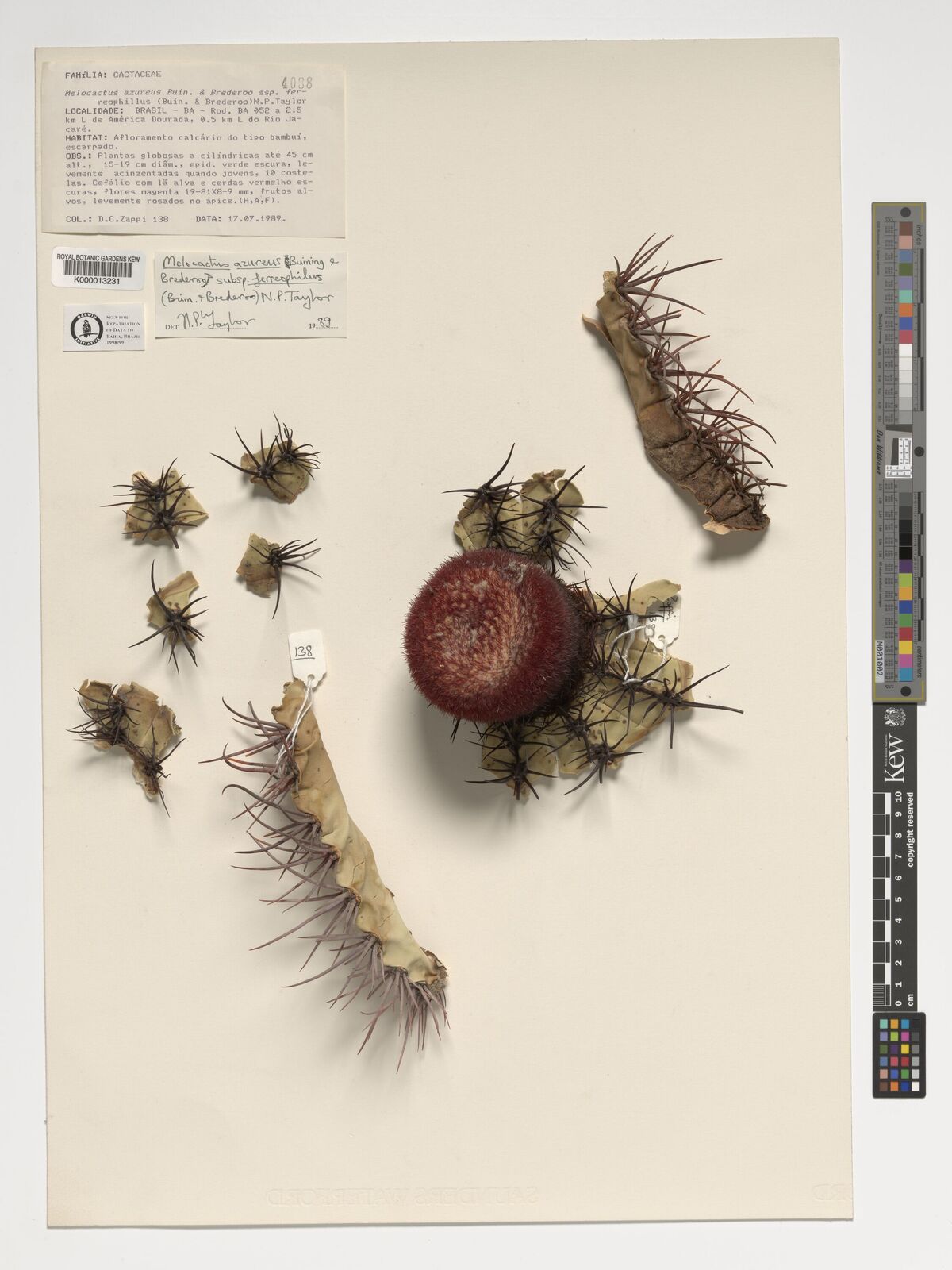 Reference image
Iron-Loving Melon Cactus
Melocactus ferreophilus is a unique, globular to cylindrical succulent subshrub belonging to the family Cactaceae. It is highly sought after by collectors for its distinctive woolly cephalium 1.
Classified under the genus Melocactus, the specific epithet "ferreophilus" translates to "iron-loving," highlighting the species' adaptation and preference for iron-rich substrate soils in its native range 2.
Native to northeastern Brazil, including states like Bahia, Pernambuco, and Ceará, this species thrives in seasonally dry tropical biomes. It is typically found growing on rocky outcrops and mineral-rich soils 1.
It features a green, ribbed body armored with strong, curved spines. Upon reaching maturity, the apex of the cactus produces a cylindrical cephalium composed of dense, reddish-orange bristles and wool, from which tiny pink flowers and club-shaped pink fruits emerge.
This species requires a very porous, well-draining mineral soil mix. It prefers warm temperatures year-round and should not be exposed to temperatures below 12°C. Water moderately during the hot summer and keep almost dry in winter 2.
Overwatering is the primary cause of failure, leading to root rot. Additionally, repotting after the cephalium has developed can shock the sensitive root system and cause the cactus to decline rapidly.
Requires bright, indirect sunlight or filtered sun. Avoid intense mid-day direct rays.
Water moderately in summer when the soil dries out; keep virtually dry in winter.
High-mineral, non-alkaline, gritty cactus mix containing pumice and quartz particles.
Features sharp, sturdy spines and is considered mildly toxic to household pets.
Best suited for advanced collectors due to its cold sensitivity and delicate roots.
Grows naturally on iron-rich rocky outcrops and quartzite soils within the seasonally dry tropical zones of northeastern Brazil.
