
Light
Bright Indirect Light
Requires bright, indirect sunlight or filtered sun; avoid harsh midday direct rays to prevent scorching.
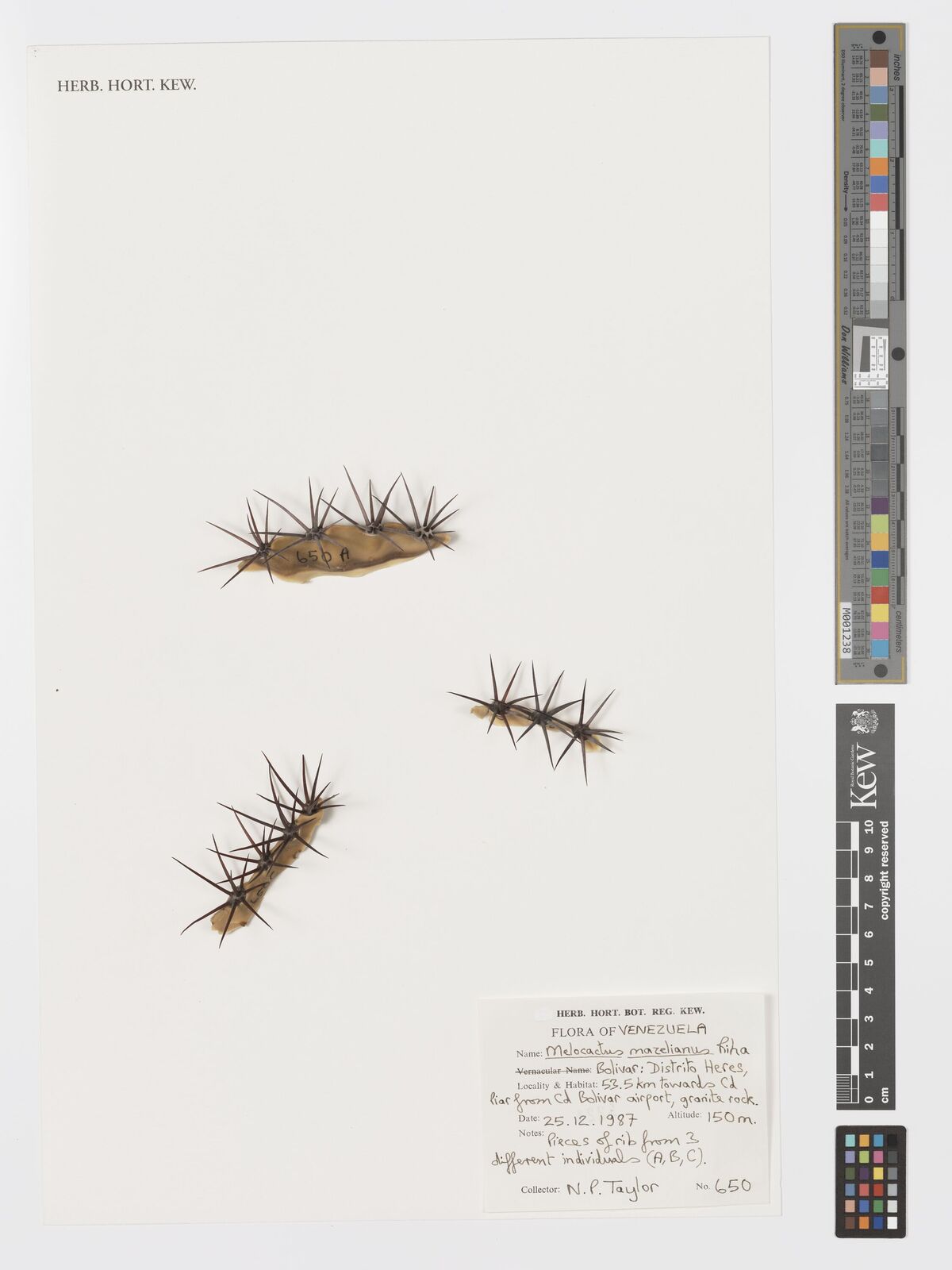 Reference image
Turk's Cap Cactus (Melocactus mazelianus)
Melocactus mazelianus is a fascinating and highly specialized member of the Cactaceae family. Known commonly as a Turk's cap cactus, it is celebrated for the colorful, woolly, bristly structure called a 'cephalium' that develops at the apex of mature specimens. Unlike desert cacti, it thrives in wetter tropical environments 1.
Belonging to the genus Melocactus, its generic name derives from the Greek word for melon, referencing its globular shape. The specific epithet mazelianus honors botanical research and distinct morphological characteristics documented within the South American flora 2.
This species is native to northern South America, primarily within Colombia and Venezuela. It grows on granitic rock outcrops (inselbergs), savanna margins, and open areas within wet tropical biomes, where it experiences warm temperatures and high humidity 1.
In its juvenile stage, it appears as a globose, deeply ribbed, green spiny cactus. Upon reaching maturity, the vegetative stem stops growing, and it produces a terminal cephalium covered in dense red or orange wool and bristles. Small, pink flowers and club-shaped edible-looking pink fruits emerge directly from this cephalium 2.
Due to its wet tropical origin, it requires higher humidity and more consistent watering than arid-land cacti. It cannot tolerate frost or prolonged temperatures below 12°C. Bright, indirect light or filtered sunlight is optimal for keeping its stem healthy and promoting cephalium growth.
Allowing the plant to freeze or keeping it completely dry in winter is a fatal mistake, as its roots die off quickly without minimal moisture. Using heavy soil mixes that retain water will inevitably lead to root rot and cephalium decay 1.
Requires bright, indirect sunlight or filtered sun; avoid harsh midday direct rays to prevent scorching.
Water regularly during summer when the soil dries out; reduce but do not completely stop watering in winter.
Highly porous mineral substrate rich in pumice and gravel with minimal organic matter is necessary.
Non-toxic to pets, but possesses sharp spines that can cause physical injury. Handle with care.
Moderate care level due to its strict temperature requirements and moisture sensitivity compared to desert cacti.
Native to the wet tropical zones of Colombia and Venezuela, where it is found growing on exposed granite outcrops and humid savanna margins.
