
Light
Full Sun
Requires full sun to bright filtered light. A south-facing greenhouse is highly recommended.
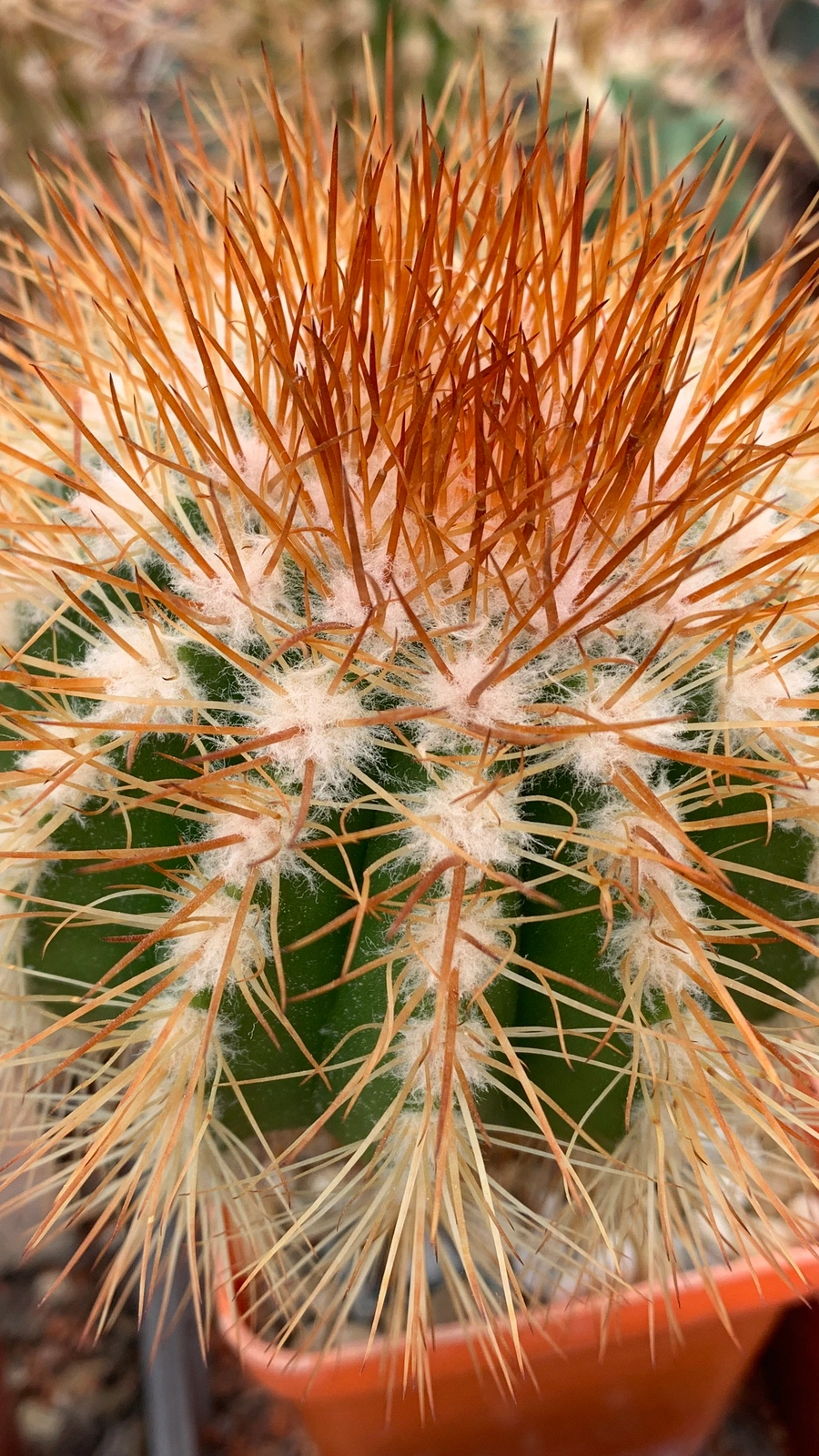 Reference image
Perez-Asso's Melon Cactus
Melocactus perezassoi is an extremely rare, critically endangered cactus species within the Cactaceae family, renowned for developing a prominent cephalium at maturity 1.
Named in honor of Raul Perez Asso, a prominent Cuban collector and researcher, this species represents a highly specialized evolution within the genus Melocactus, adapted to specific edaphic conditions 2.
This species is strictly endemic to Central Cuba, particularly restricted to the Motembo region in Villa Clara province. It thrives exclusively on serpentine barrens within seasonally dry tropical scrublands, a highly threatened habitat 1.
Growing as a solitary, succulent subshrub, it features a globose-to-cylindrical green stem with prominent ribs lined with sharp spines. Upon reaching reproductive maturity, it grows a colorful apical cephalium of dense bristles and wool, from which tiny pinkish flowers emerge.
In cultivation, M. perezassoi is highly demanding. Unlike desert cacti, it originates from the Caribbean and cannot tolerate frost or prolonged cold wet spells. It requires intense light and mineral-heavy, fast-draining substrates.
Overwatering during winter and exposing the plant to temperatures below 12°C are fatal. Additionally, transplanting or disturbing the roots of a mature specimen with a fully formed cephalium often leads to sudden decline.
Requires full sun to bright filtered light. A south-facing greenhouse is highly recommended.
Water thoroughly only when the soil is completely dry in summer. Keep nearly dry in winter.
Prefers a mineral-rich substrate containing pumice, clay, and sand, with zero organic compost.
Non-toxic to humans and pets, but has very sharp spines. Handle with thick protective gloves.
Highly sensitive to cold and root rot, making it suitable only for experienced growers.
Endemic to a highly localized serpentine outcrop in the Motembo area of Central Cuba, within dry tropical savannah biomes.
