
Light
Full Sun
Requires full sun, ideally 6+ hours of direct sunlight daily for healthy cephalium development.
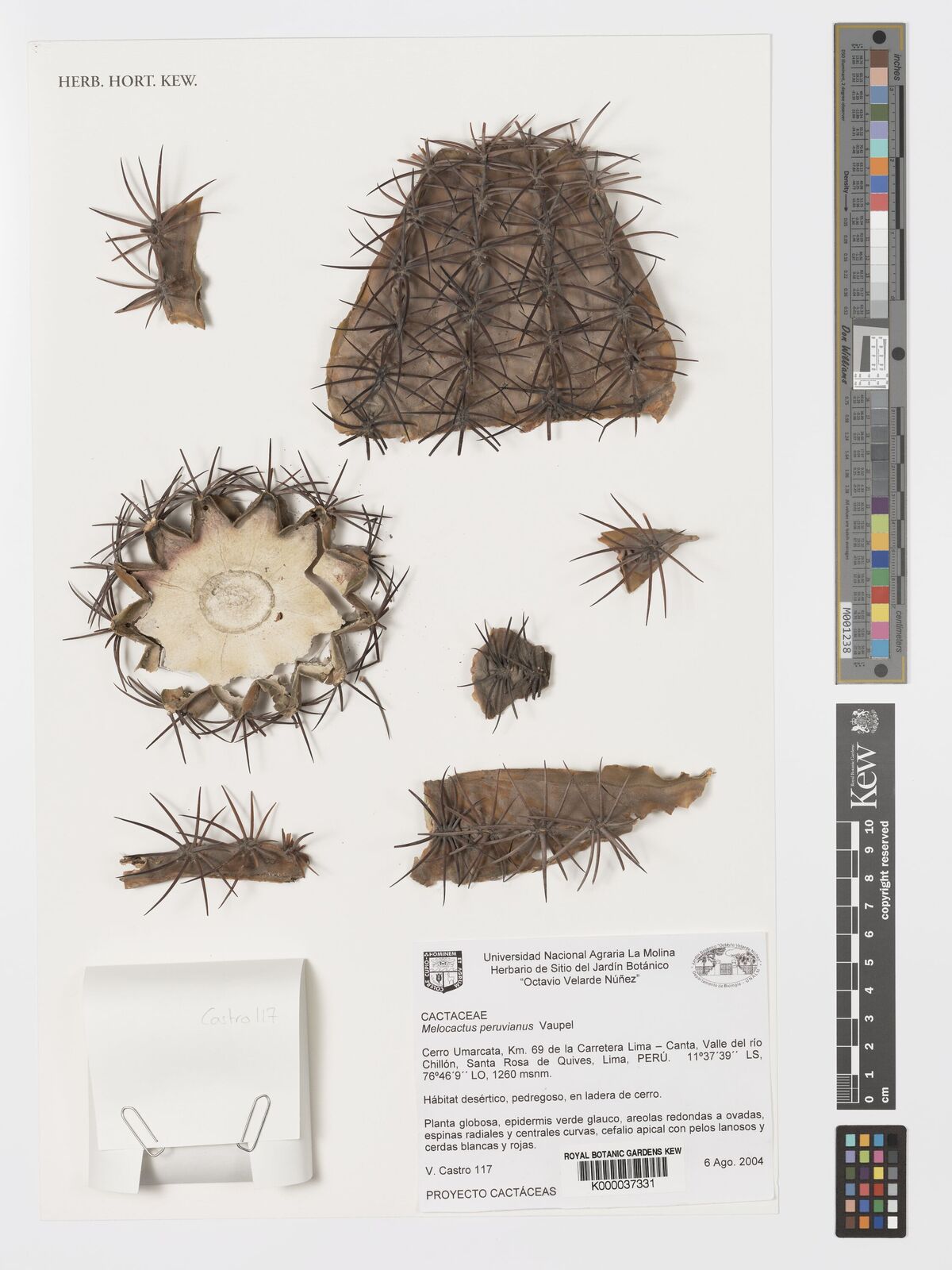 Reference image
Peruvian Melon Cactus
Melocactus peruvianus is a fascinating, slow-growing globose cactus highly sought after for its distinctive cephalium—a bristly, woolly cap that develops on mature plants 1. Belonging to the Cactaceae family, this species is well-adapted to surviving in rocky, arid, and desert environments, making it a unique addition to succulent collections.
Named after its primary native country, Peru, the genus Melocactus derives from the Greek word for "melon cactus" due to its rounded shape [2]. Once the plant reaches maturity and forms its cephalium, stem growth ceases, and all energy is directed into cephalium development and reproduction.
This species is native to the western slopes of the Andes, spanning throughout Peru and into southern Ecuador 1. It thrives in gravelly, well-draining soils on steep rocky slopes and hyper-arid coastal deserts, often from sea level up to elevations of 1,500 meters.
Young specimens exhibit a bright green, ribbed globose body with sturdy, curved radial spines. Upon reaching maturity (typically in 10 to 15 years), they grow a dense apical cephalium made of reddish-orange bristles and white wool. Tiny pinkish-magenta flowers emerge from this structure, followed by decorative, club-shaped red fruits.
Unlike desert cacti from colder regions, Melocactus peruvianus does not tolerate freezing temperatures and prefers warm conditions year-round, even in winter. It requires maximum sunlight and a gritty, inorganic potting mix that prevents water retention.
Overwatering during the winter dormant season is the most common cause of root rot and plant loss. Additionally, repotting mature specimens with established cephalia should be avoided as they have very delicate, fragile root systems that do not recover easily.
Requires full sun, ideally 6+ hours of direct sunlight daily for healthy cephalium development.
Water deeply when the soil is dry to the bottom in summer, keep almost dry in winter.
Highly porous, low-organic mineral mix with pumice, gravel, and sand.
Spines are sharp and can cause injury. Keep away from pets and children.
Moderate. Needs careful temperature regulation and minimal disturbance when mature.
Grows natively along the arid and semi-arid coastal areas and the dry, rocky lower slopes of the Andes mountains in Peru and southern Ecuador.
