
Light
Filtered Sun
Prefers bright, filtered sunlight or light shade during the hottest hours to prevent scorching.
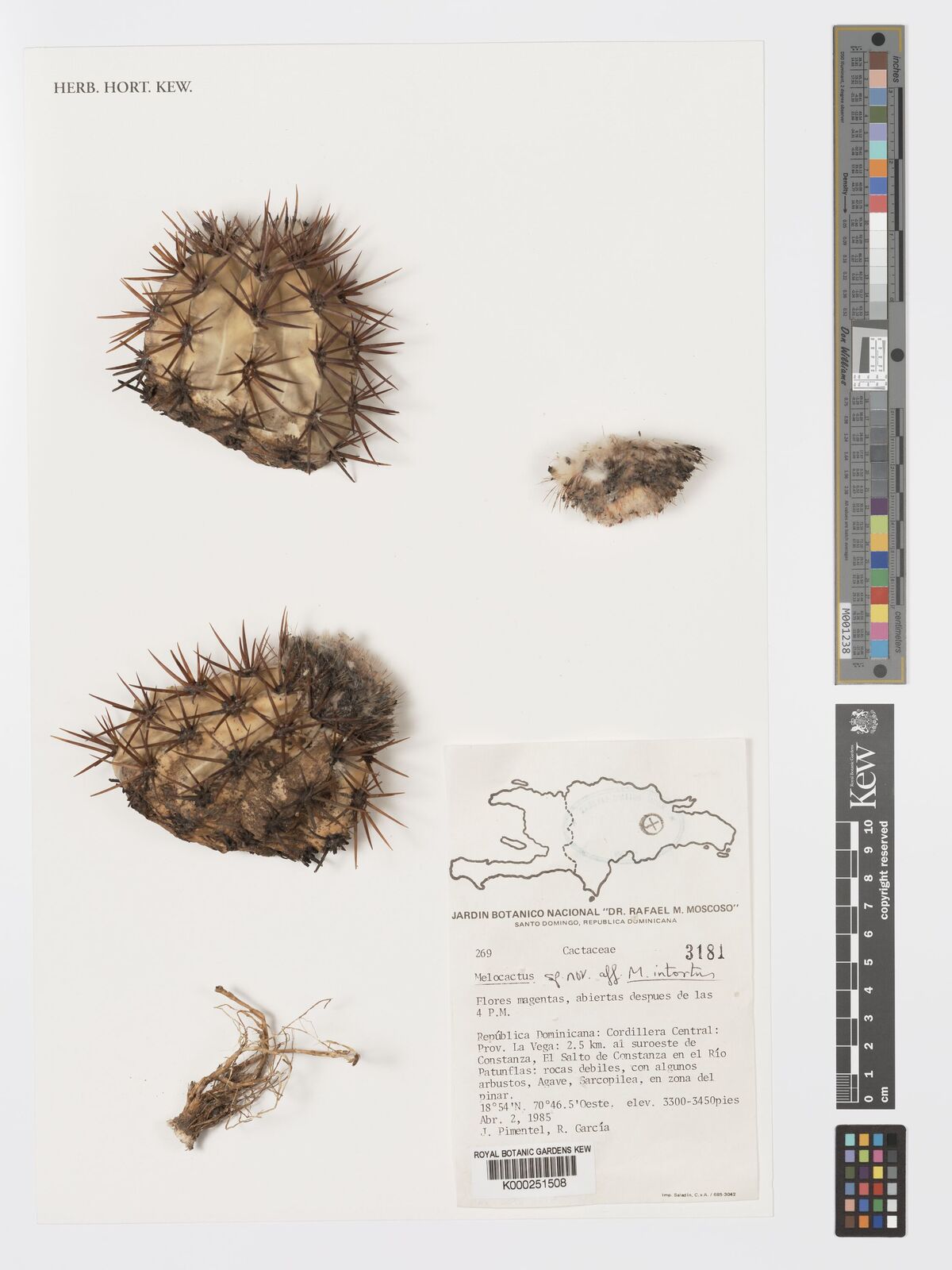 Reference image
Melocactus praerupticola is a rare and highly specialized succulent belonging to the family Cactaceae 1. Renowned for its solitary globose growth and the striking cephalium that crowns mature specimens, it is highly prized among cactus enthusiasts.
The species was formally described in 2000 by Cuban-American botanist Alberto E. Areces-Mallea 2. The specific epithet praerupticola translates from Latin as "cliff-dweller," which directly characterizes its highly specific growth habit on vertical rock faces.
This species is strictly endemic to the island of Hispaniola (specifically the Dominican Republic) in the Caribbean 1. It thrives in seasonally dry tropical zones, clinging to sheer, rocky cliffs and escarpments where virtually no organic soil exists, surviving in tiny rock crevices under intense solar radiation 2.
It features a globose, ribbed green stem adorned with strong, recurved spines. Upon reaching reproductive maturity, the vegetative growth ceases, and the plant develops a terminal cephalium composed of dense reddish-orange wool and bristles, from which small pink flowers emerge 1.
Cultivating Melocactus praerupticola is challenging. It lacks frost tolerance and requires minimum winter temperatures of around 12°C. Once the cephalium is established, the root system becomes exceptionally fragile; thus, repotting should be avoided as it often proves fatal 2.
Overwatering during the winter rest period and exposure to cool drafts are the primary causes of failure. Root rot occurs rapidly in soggy, cold soils. Disturbing the root ball of a mature cephalium-bearing specimen also leads to decline.
Prefers bright, filtered sunlight or light shade during the hottest hours to prevent scorching.
Allow the substrate to dry out completely between waterings, and keep completely dry in winter.
Requires an exclusively mineral-based substrate consisting of pumice, grit, and very little organic matter.
Equipped with sharp, rigid spines that can cause physical injury. Keep out of reach of pets and children.
Highly sensitive to overwatering, cold temperatures, and root disturbance, making it suitable for experienced growers.
Endemic to the island of Hispaniola within the Dominican Republic, this cactus is restricted to sheer vertical cliffs. It adapts to seasonally dry tropical climates, anchoring its roots into narrow cracks of limestone walls where it survives intense wind and sun exposure.
