
Light
Bright Indirect Light
Prefers bright, indirect sunlight or filtered sun. Intense afternoon sun can scorch the blue waxy coating.
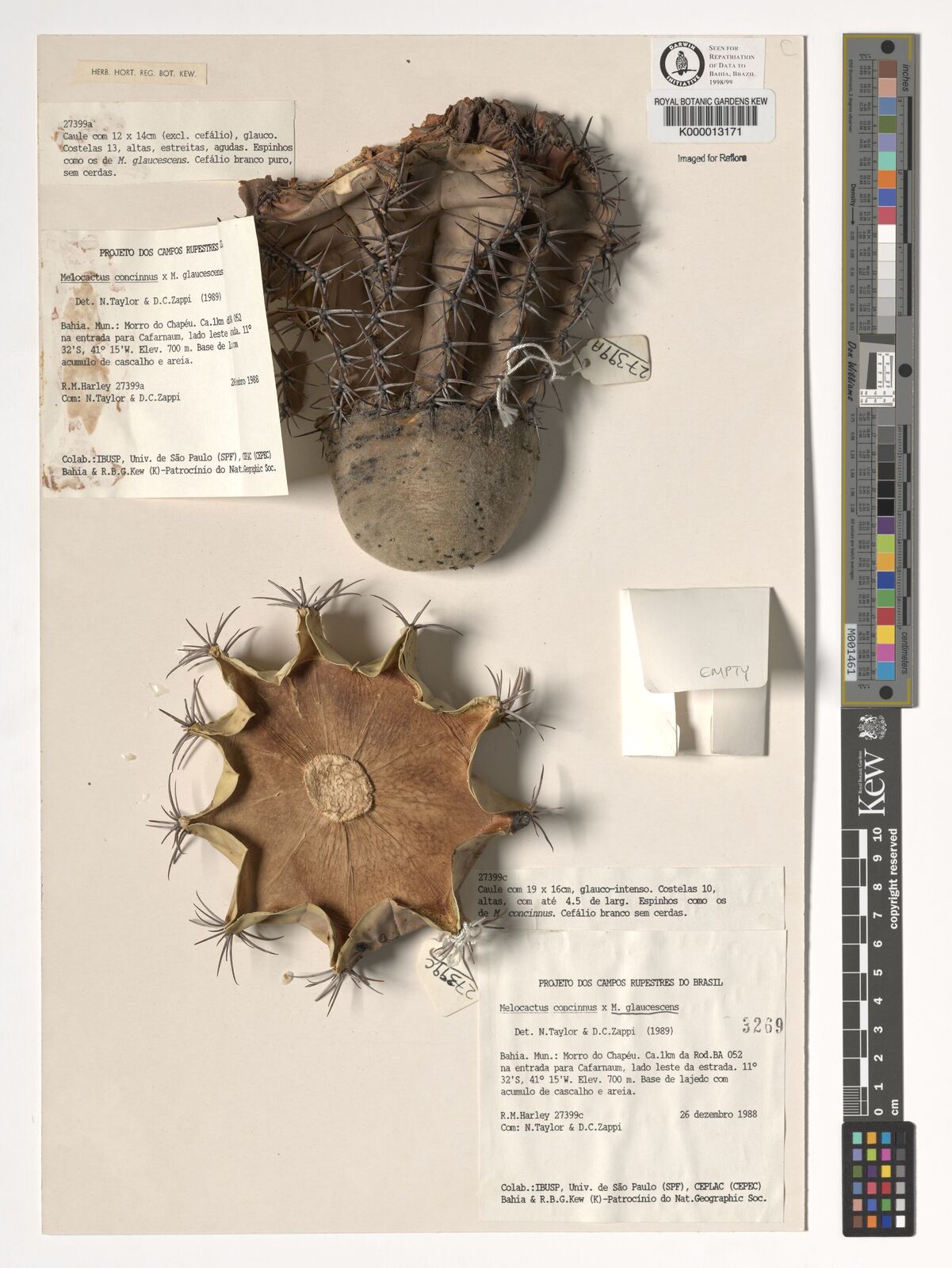 Reference image
Frosted Melon Cactus
Melocactus pruinosus is a fascinating globose cactus species belonging to the family Cactaceae. Known for its distinct glaucous, powdery blue-green stem and the development of a colorful woolly 'cephalium' at maturity, this species stands out as a highly prized but challenging collector's item 1.
Belonging to the genus Melocactus, the specific epithet pruinosus is derived from Latin, meaning 'frosted' or 'hoary'. This refers directly to the fine, powdery epicuticular wax layer covering its skin, giving it a characteristic misty look 2.
This species is native to eastern and northeastern Brazil, including states like Bahia and Minas Gerais. It thrives in seasonally dry tropical biomes, typically growing on rocky outcrops, granite domes, and highly drained sandy soils at moderate elevations 1.
Initially globose and solitary, this succulent subshrub has well-defined ribs lined with clusters of sharp, radiating spines. The most prominent feature is the apical cephalium—a dense structure of wool and bristles that forms only when the cactus reaches reproductive maturity. Small pink flowers emerge from this cephalium, followed by cylindrical pinkish-red fruits.
Unlike desert cacti, Melocactus species require higher humidity and warm winter temperatures. They do not tolerate frost and can rot quickly if kept wet during cool spells 2. A porous, highly mineralized soil and careful watering are essential.
Overwatering in low temperatures is the primary cause of decline. Additionally, attempting to repot the plant once the cephalium has formed can damage the highly sensitive, fibrous root system, often leading to transplant shock and death 1.
Prefers bright, indirect sunlight or filtered sun. Intense afternoon sun can scorch the blue waxy coating.
Allow soil to dry almost completely in summer before watering. In winter, water sparingly just to keep roots from desiccating.
Highly porous mineral substrate consisting of pumice, perlite, and coarse sand with minimal organic matter.
Features very sharp spines that can cause injury. Keep away from pets and curious children.
Hard/Expert. Requires precise moisture management and year-round warm conditions.
Inhabits the dry caatinga scrublands and rocky, sandy substrates of eastern Brazil, experiencing warm temperatures year-round.
