
Light
Filtered Sun
Prefers bright, filtered sunlight; protect from intense, direct midday summer sun.
 Reference image
Salvador Melon Cactus
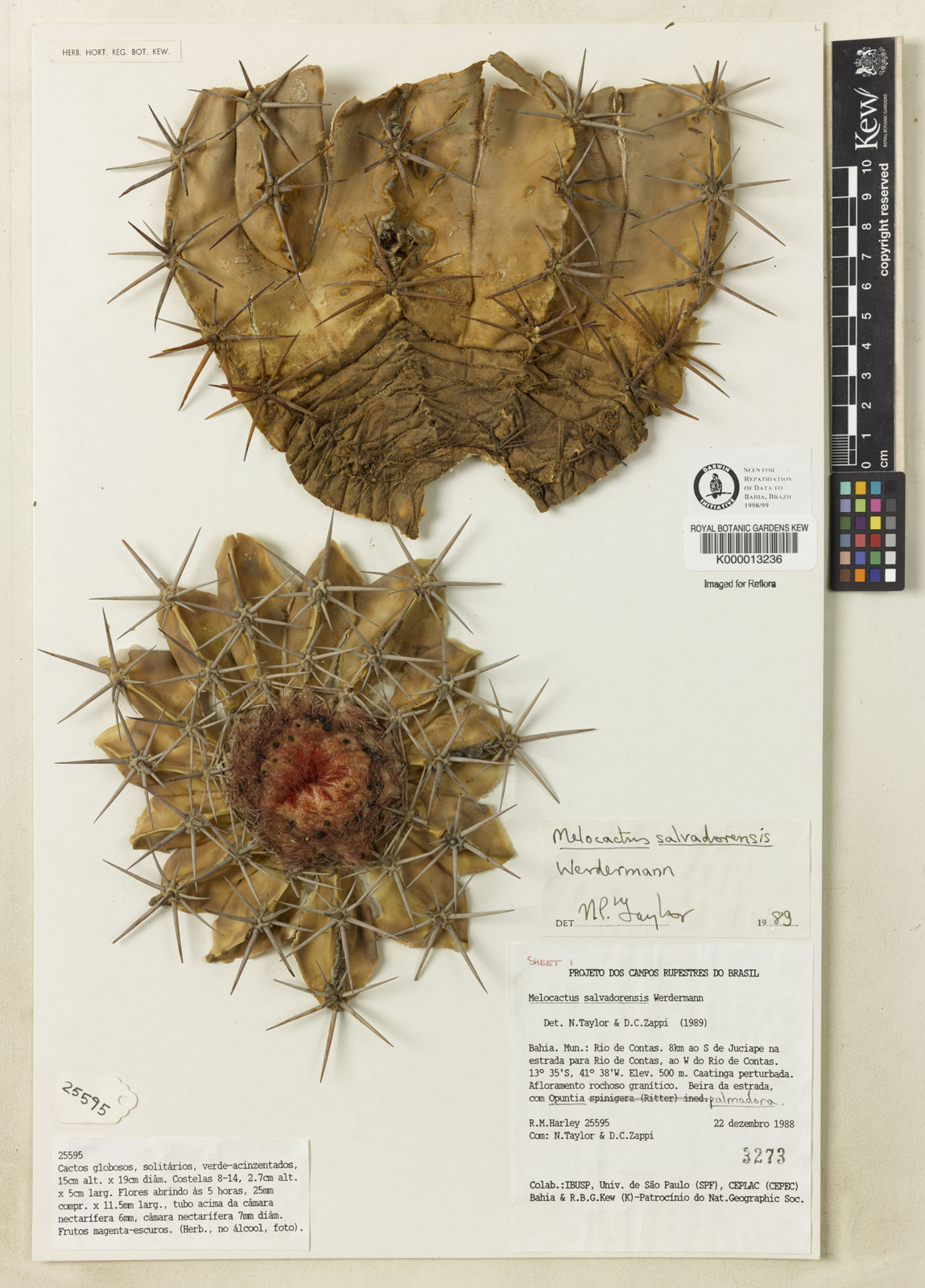
Melocactus salvadorensis is a unique globose cactus belonging to the family Cactaceae, famous for developing a woolly cephalium at its apex upon maturity 1. Native to the arid landscapes of eastern Brazil, this species is highly prized by collectors for its slow growth and distinct ornamental morphology.
The genus name Melocactus derives from the Latin "melo" (melon), referencing the ribbed, rounded shape of these cacti. The specific epithet "salvadorensis" pays tribute to the city of Salvador in Bahia, Brazil, near where the species was documented 2.
This species is endemic to eastern and northeastern Brazil, particularly thriving in the states of Bahia and Minas Gerais. It inhabits seasonally dry tropical biomes, growing on rocky outcrops, crystalline soils, and gravelly slopes within the semi-arid caatinga vegetation 1.
It features a solitary, globose to short-cylindrical green stem with deep, well-defined ribs. The areoles bear robust, slightly curved, greyish-brown spines. Its defining feature is the cephalium—a dense, cylindrical structure of red-pink bristles and white wool that forms at the top of mature plants 2. Small, pinkish flowers and subsequent elongated red berries emerge exclusively from this cephalium.
Cultivating Melocactus salvadorensis requires an exceptionally well-draining, mineral-based substrate. Unlike desert cacti, Melocactus species prefer consistent warmth and should never be exposed to temperatures below 12°C. They appreciate moderate watering during the active growing season but demand dry conditions during winter dormancy 1.
Overwatering during the cold winter months is the primary cause of root and stem rot. Placing the plant in drafty, cold locations or exposing immature specimens to scorching, unfiltered afternoon sun can cause permanent scarring and plant death.
Prefers bright, filtered sunlight; protect from intense, direct midday summer sun.
Water when the soil is nearly dry during summer, keep almost completely dry in winter.
Highly porous, mineral-rich soil containing pumice, volcanic rock, and coarse grit.
Non-toxic, but the sharp and rigid spines pose a physical hazard to pets and children.
Requires moderate care due to specific temperature, soil, and moisture requirements.
Endemic to eastern and northeastern Brazil, specifically inhabiting rocky hillsides and rocky caatinga scrublands.
