
Light
Filtered Sun
Prefers bright, filtered sunlight; protect from scorching midday sun to prevent skin burns.
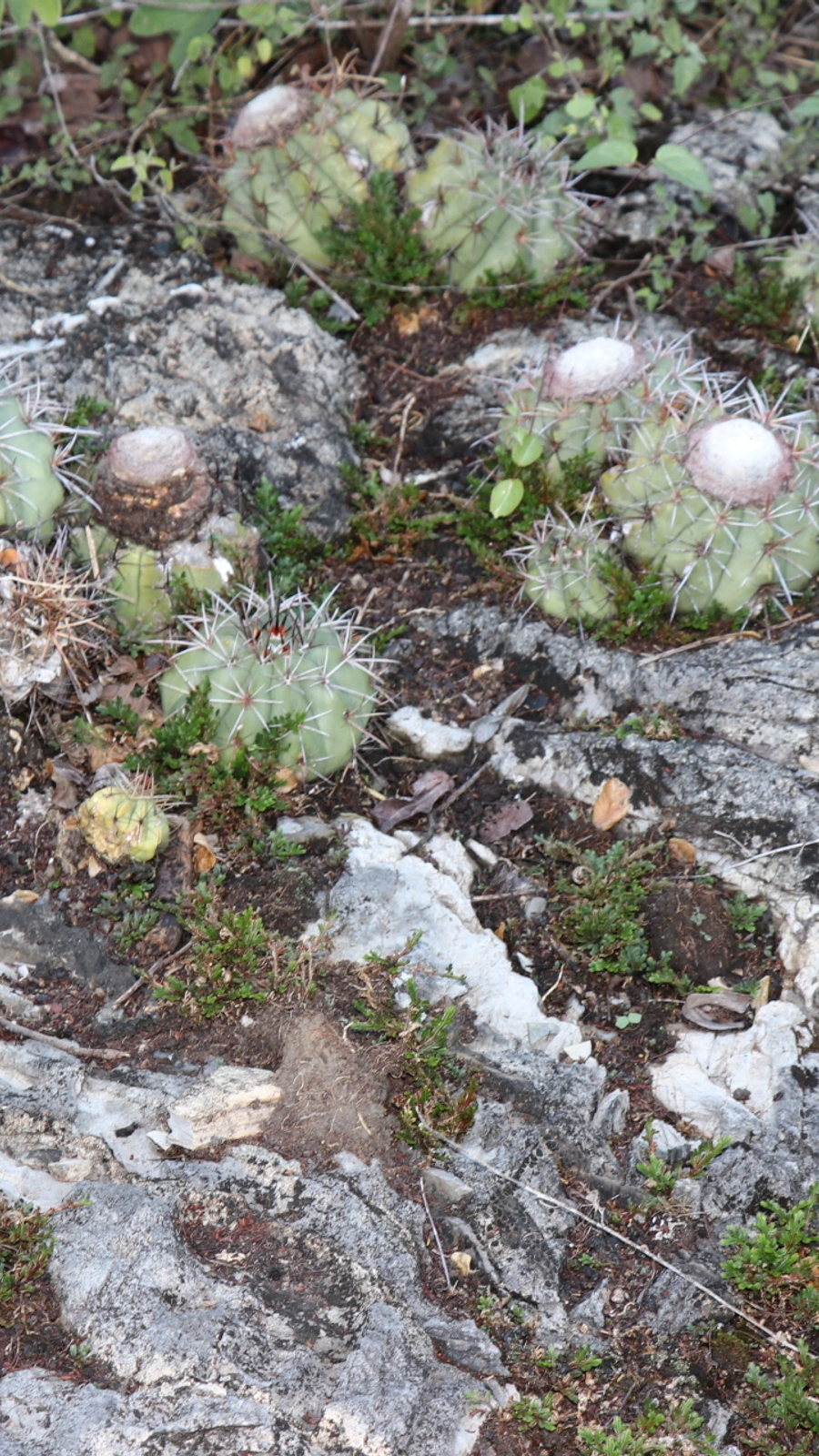 Reference image
Sergipe Turk's Cap Cactus
Melocactus sergipensis is a highly rare and critically endangered cactus species belonging to the family Cactaceae, native to a very restricted area in Brazil 1. Like other members of its genus, it is famous for producing a colorful, woolly, and bristly structure called a "cephalium" at its apex upon reaching maturity.
Taxonomically described from the northeastern region of Brazil, its specific epithet "sergipensis" directly honors the state of Sergipe, where the species was discovered 2. It represents a highly specialized evolutionary line within the Melocactus genus.
This species is endemic to northeastern Brazil, specifically within the state of Sergipe 1. It thrives in seasonally dry tropical biomes, primarily on rocky outcrops, stony soils, and within the semi-arid shrublands known as the Caatinga vegetation.
It has a globose, bright green, deeply ribbed stem. Along the ribs, there are clusters of strong, slightly curved, greyish-brown spines. Once the plant reaches maturity, stem growth ceases, and a dense, reddish-pink cephalium made of bristles and wool develops at the crown 2. Small, tubular pink flowers emerge from this structure, followed by seed-bearing pink fruits.
Melocactus sergipensis is challenging to cultivate due to its fragile, shallow root system. It requires an exceptionally porous, mineral-rich potting medium. Unlike typical desert cacti, it prefers consistent warmth and cannot tolerate cold winter drafts 3.
Attempting to repot a mature specimen with an established cephalium often leads to root shock and plant death. Overwatering during cooler winter months and exposing the plant to temperatures below 12°C are also fatal mistakes 3.
Prefers bright, filtered sunlight; protect from scorching midday sun to prevent skin burns.
Allow the potting mix to dry out completely between waterings; reduce significantly in winter.
Requires an extremely porous mineral mix containing pumice, gravel, and minimal organic matter.
Armed with sharp spines; handle with care. Non-toxic but can cause physical injury to pets.
Difficult and demanding due to its strict temperature requirements and sensitive roots.
A micro-endemic species native to the rocky and arid Caatinga shrublands of northeastern Brazil, restricted to a very limited habitat.
