
Light
Filtered Sun
Requires bright, filtered sunlight; protect from harsh midday sun to avoid scorching.
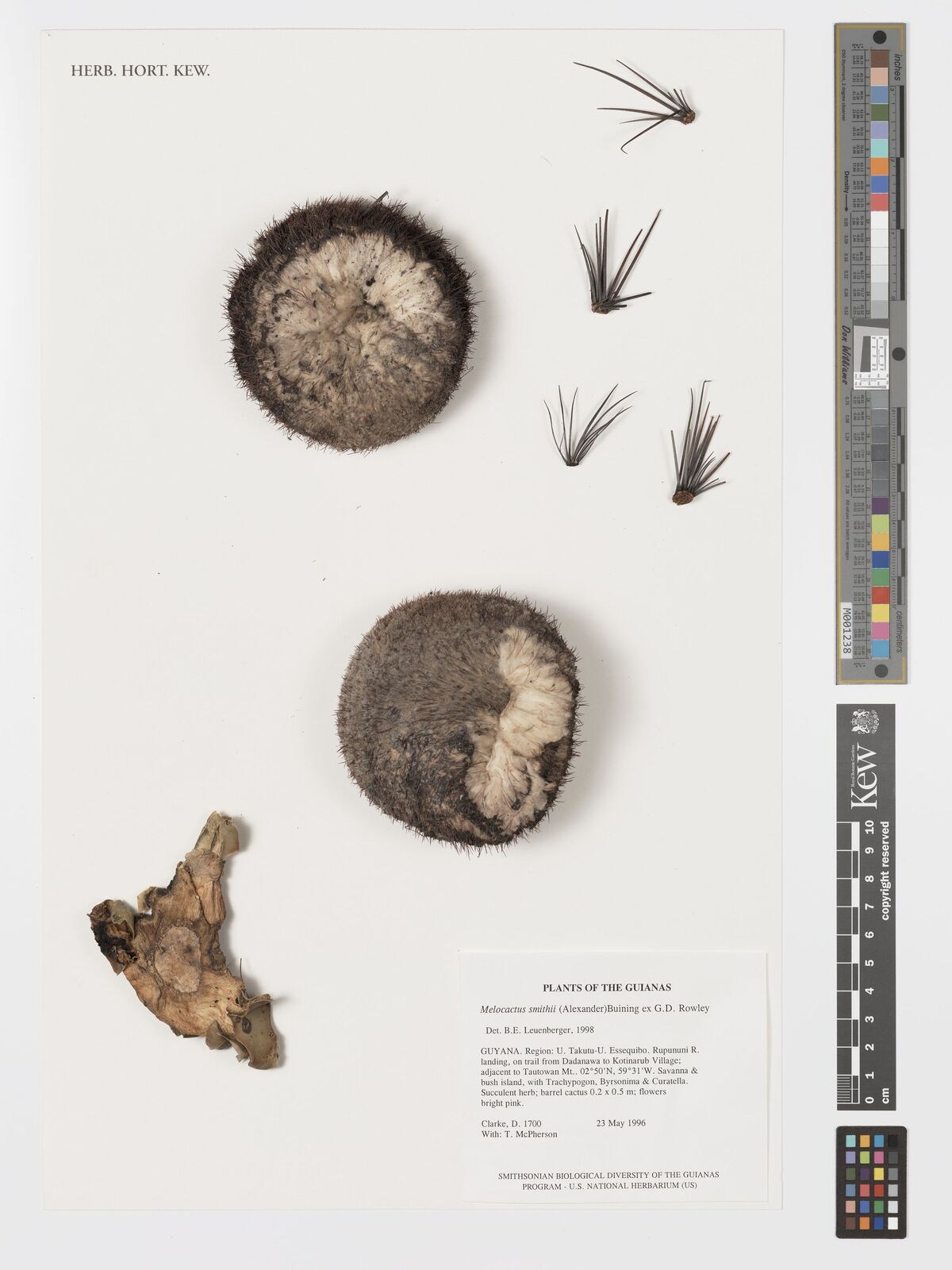 Reference image
Melocactus smithii is a unique, globose to cylindrical cactus species belonging to the Cactaceae family, renowned for producing a striking woolly cephalium at maturity 1. Unlike desert cacti, it thrives in seasonally dry tropical environments.
Belonging to the iconic genus Melocactus, its generic name originates from the Latin word 'melo' (melon) due to its ribbed, rounded shape. Once the mature cephalium forms, the main green stem ceases to grow, diverting all physiological energy to flower and seed production 2.
This species is native to northern South America, specifically found in Guyana and northern Brazil (Roraima and Amazonas states) 1. It predominantly grows on rocky granite outcrops (inselbergs) and within dry savanna biomes.
It grows as a solitary, ribbed stem with heavy, rigid radials and central spines. Upon reaching adulthood, it develops a cap-like cephalium consisting of dense reddish-pink bristles and white wool. Tiny, self-fertile pink flowers emerge from this cephalium, followed by club-shaped red fruits.
Melocactus smithii requires warm temperatures year-round, ideally not dropping below 12°C even in winter 2. It prefers bright, filtered sunlight and higher ambient humidity than arid-land cacti. Watering should be regular during summer but carefully reduced in winter.
Overwatering during cold periods and exposing the plant to drafts are the primary causes of root rot. Repotting a specimen that has already established a cephalium is highly risky due to fragile root systems 1.
Requires bright, filtered sunlight; protect from harsh midday sun to avoid scorching.
Water thoroughly when the soil is dry during summer; keep nearly dry but warm in winter.
Use an extremely porous mineral mix rich in pumice, gravel, and minimal organic matter.
Non-toxic, but the sharp and robust spines can cause physical injury.
Difficult to maintain due to its strict temperature and moisture requirements in winter.
Found on rocky granite slopes and savanna transitions in Guyana and northern Brazil under a tropical wet-and-dry climate.
