
Light
Full Sun
Requires at least 6 hours of direct sunlight daily; southern windows are highly recommended.
 Reference image
Zehntner's Melon Cactus
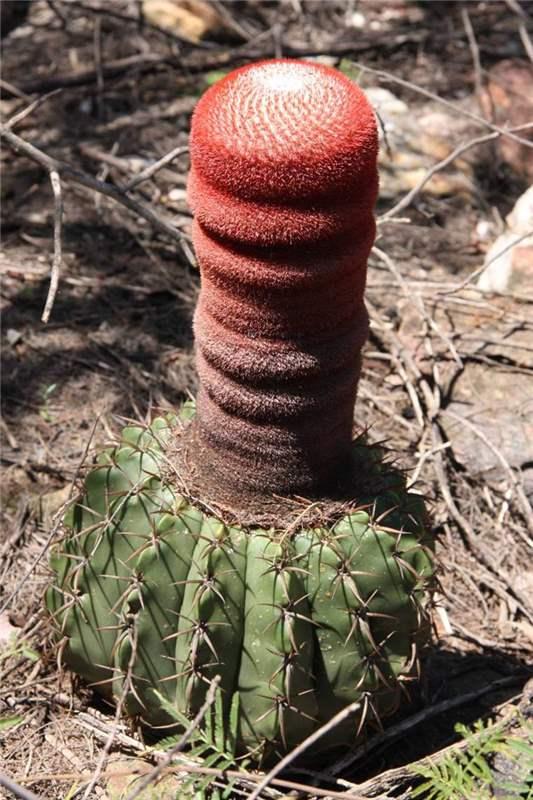
Melocactus zehntneri is an extraordinary cactus species endemic to Brazil, highly prized among collectors for its distinctive bristly head, known as a cephalium 1. Once mature, it offers a dramatic botanical display.
Belonging to the genus Melocactus within the Cactaceae family, this species was named in honor of the Swiss naturalist Leo Zehntner, who conducted extensive botanical work in Brazil 2.
It is native to northeastern Brazil, spanning across states such as Bahia, Ceará, and Pernambuco 1. It thrives in the seasonally dry tropical Caatinga biome, typically growing on rocky granitic outcrops, shallow soils, and sandy plains.
In its juvenile stage, M. zehntneri displays a globose, deeply ribbed, and spiny green stem. Upon reaching reproductive maturity (usually around 10-15 years), it stops vegetative growth and develops a cylindrical, woolly, and bristly cephalium at its apex 2. Small, pinkish-red flowers and bright pink, cone-like fruits emerge directly from this unique structure.
This species requires a warm climate and must never be exposed to temperatures below 10°C, as it lacks the cold hardiness of other desert cacti. It thrives in porous, well-draining mineral soil with high light exposure. Water thoroughly only when the soil has completely dried out.
Overwatering during the winter dormant phase or exposing the plant to cold drafts are the primary causes of root rot and sudden specimen loss 1.
Requires at least 6 hours of direct sunlight daily; southern windows are highly recommended.
Allow the potting medium to dry out completely. Reduce watering to a minimum in winter.
Requires an extremely porous mineral substrate mixed with pumice, grit, and very little organic matter.
Non-toxic, but the long, sharp spines pose a physical hazard to pets and children.
Difficult to cultivate due to strict temperature demands and sensitive root system.
Originates from the semi-arid Caatinga biome of northeastern Brazil, where it grows on granitic domes and dry, rocky soils under hot tropical climates.
