
Light
Bright Indirect Light
Requires bright indirect light or morning sun. Protect from scorching mid-day summer sun.
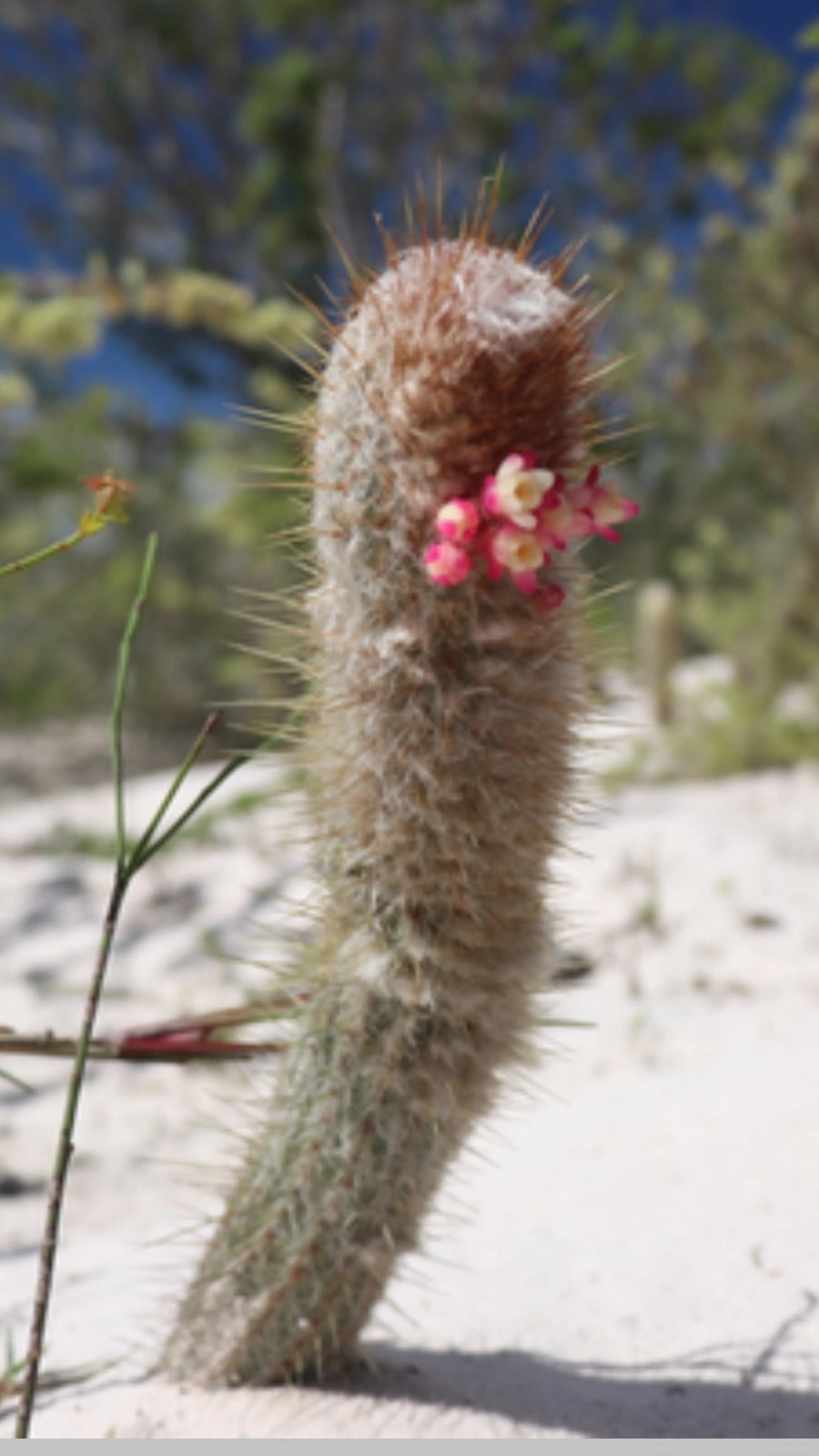 Reference image
Alvin's Columnar Cactus
Micranthocereus alvinii is a rare and highly ornamental columnar cactus species in the family Cactaceae, native to the montane tropical regions of Brazil. Known for its slender stems and dense, golden-brown spination, it is highly prized among succulent enthusiasts.
Belonging to the genus Micranthocereus, this species stands out due to its distinct morphological features. Taxonomists recognize its unique placement within the genus based on its specific floral structure and stem development, verified through regional flora studies 1.
This cactus is native to Eastern Brazil, spanning regions like Bahia and neighboring states 2. It typically thrives in montane tropical biomes, growing on rocky outcrops, quartzite fields, and shallow, sandy pockets within dry shrubland ecosystems.
Micranthocereus alvinii forms a succulent subshrub or shrub with erect, columnar stems. The stems are green to grayish-green, featuring numerous ribs. Areoles are closely set, bearing dense clusters of fine, golden-yellow to brownish spines. Small, tubular pinkish-red flowers emerge from a lateral cephalium-like zone.
In cultivation, it requires bright, indirect light or filtered sun and excellent air circulation. The potting medium must be highly porous and mineral-based. Watering should follow the 'soak and dry' method, with a strict dry period during the cold winter months to prevent crown rot.
The most frequent mistake is overwatering, especially in soil with poor drainage, which rapidly leads to root rot. Additionally, exposing the plant to freezing temperatures or stagnant, humid air will cause severe damage.
Requires bright indirect light or morning sun. Protect from scorching mid-day summer sun.
Allow the potting mix to dry out fully before watering. Keep almost dry during winter dormancy.
Highly porous mineral mix with plenty of pumice, perlite, and coarse sand for rapid drainage.
Non-toxic, but the dense, sharp spines can cause physical injury. Keep away from pets and children.
Moderate. Requires careful watering control and frost protection, but otherwise resilient.
Native to the montane tropical zones of northeastern and eastern Brazil, where it grows primarily on rocky quartzite slopes and shallow, gravelly soils.
