
Scientific taxonomy article
Auto-generated taxonomy record for Micranthocereus.
Micranthocereus
Auto generated taxonomy record for Micranthocereus.
Auto-generated taxonomy record for Micranthocereus.

Micranthocereus albicephalus
Micranthocereus albicephalus is an erect, columnar cactus belonging to the family Cactaceae. It is highly valued among collectors for its striking lateral cephalium filled with dense, woolly white hairs that contrast beautifully with its golden spines. In its native habitat, it grows as a succulent subshrub in rugged, mountainous terrains .

Micranthocereus alvinii
Micranthocereus alvinii is a rare and highly ornamental columnar cactus species in the family Cactaceae, native to the montane tropical regions of Brazil. Known for its slender stems and dense, golden brown spination, it is highly prized among succulent enthusiasts.

Micranthocereus aureispinus
Micranthocereus aureispinus is a striking, column shaped endemic cactus belonging to the family Cactaceae. Highly prized by enthusiasts, it is easily recognized by its dense golden yellow spines and unique lateral cephalium.

Micranthocereus auri-azureus
Micranthocereus auri azureus is an exceptionally striking, columnar cactus species belonging to the Cactaceae family. Highly prized by collectors, it is famous for the vibrant contrast between its bluish green epidermis and dense golden yellow spines .

Micranthocereus flaviflorus
Micranthocereus flaviflorus is an elegant, columnar cactus belonging to the Cactaceae family, highly appreciated by collectors for its intensely spined golden green stems and small yellow tubular flowers . It represents the rich succulent flora of the mountainous dry regions of northeastern Brazil.

Micranthocereus hofackerianus
Micranthocereus hofackerianus is a rare and striking columnar cactus species belonging to the family Cactaceae. It is highly valued among collectors for its specialized growth form and colorful cephalium .
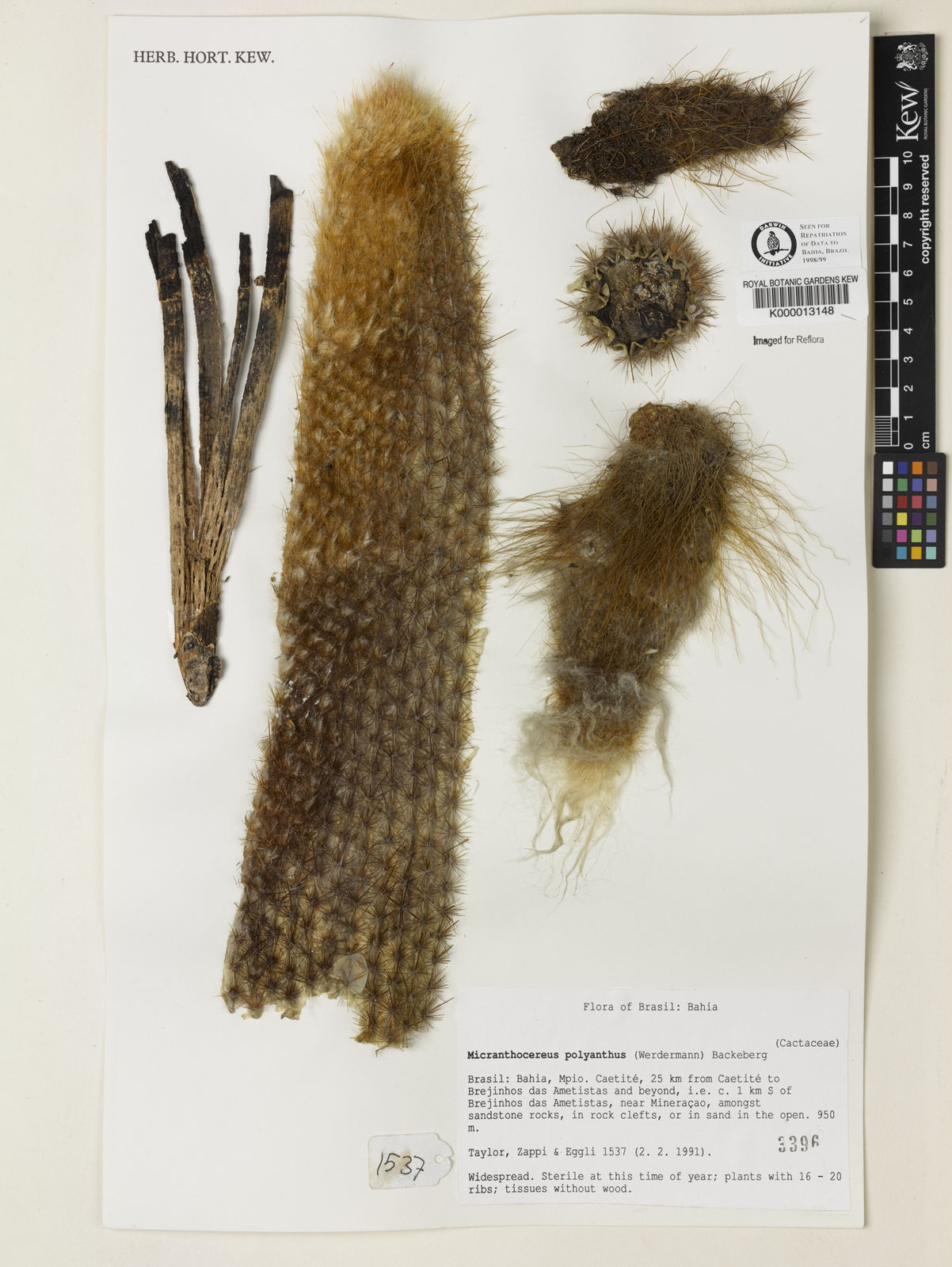
Micranthocereus polyanthus
Micranthocereus polyanthus is an erect, columnar succulent shrub belonging to the Cactaceae family. Highly appreciated by succulent collectors, this species is renowned for its slender stems, dense spination, and numerous pinkish red tubular flowers that emerge from specialized floriferous zones.
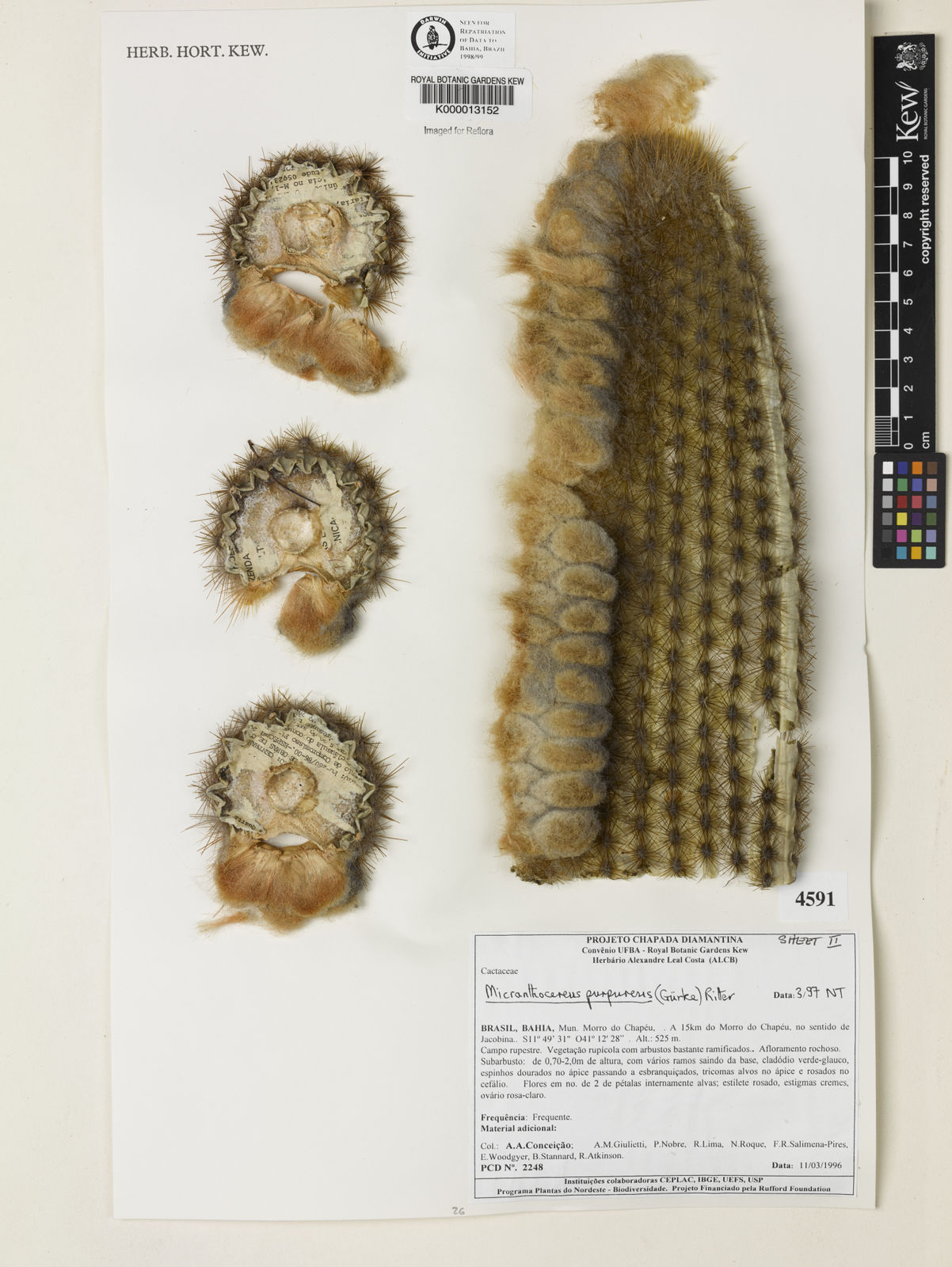
Micranthocereus purpureus
Micranthocereus purpureus is a striking, columnar cactus species in the family Cactaceae. Reaching up to 3 meters in height in its native habitat, this species is highly prized among succulent enthusiasts for its dense golden brown spines and the woolly cephalium that forms on mature stems. It produces beautiful, nocturnal, purple to pink tubular flowers, which emerge from the lateral cephalium .
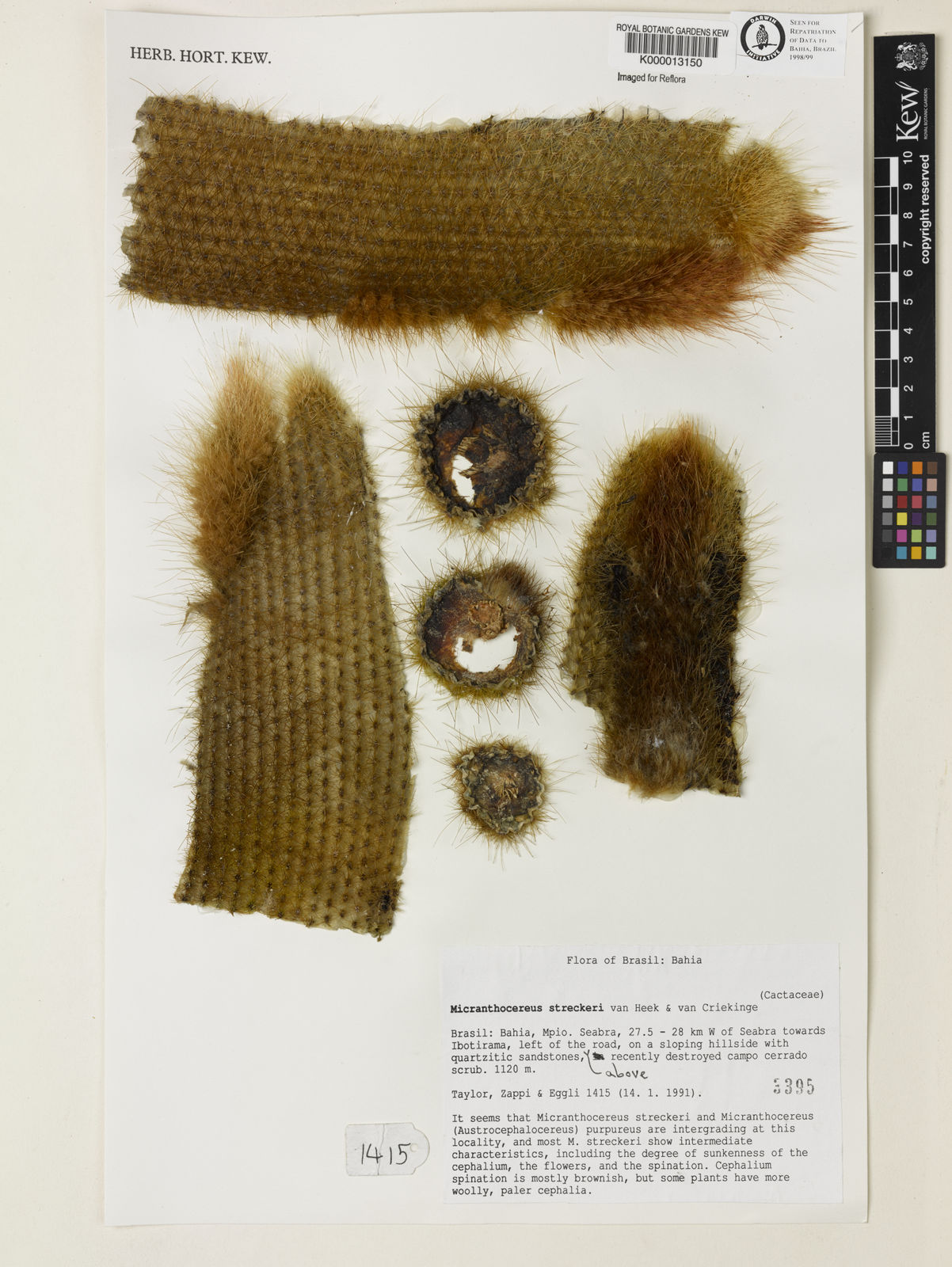
Micranthocereus streckeri
Overview\nMicranthocereus streckeri is a rare, columnar succulent shrub belonging to the Cactaceae family. Due to its restricted natural range and habitat degradation, it is classified as Critically Endangered .\n\n Taxonomy and Naming\nDescribed by Van Heek and van Criekinge, the specific epithet honors the German cactus collector Willi Strecker. The genus Micranthocereus is characterized by its small sized, tube like flowers .\n\n Distribution and Habitat\nEndemic to the Bahia state of Brazil, this cactus grows on rocky outcrops and quartzite sands in high altitude montane tropical grasslands (campos rupestres) .\n\n Appearance\nIt features blue green stems up to 1 2 meters tall, lined with golden brown spines. During maturity, it develops a lateral woolly cephalium on one side of the stem, producing small pinkish purple flowers .\n\n Cultivation\nIt thrives in high light environments with filtered sunlight. It requires a highly mineral, well draining substrate. Watering should be done thoroughly but only when the medium is completely dry .\n\n Common Cultivation Mistakes\nOverwatering during the cold winter dormancy is the main cause of root rot. Lack of air circulation in humid indoor spaces can lead to rapid fungal infections.\n\n References\n IUCN Red List: Micranthocereus streckeri Conservation Status (iucnredlist.org)\n Plants of the World Online (POWO): Kew Science Database
