
Light
Full Sun
Requires full, direct sun for several hours daily to promote healthy growth and golden spine coloration.
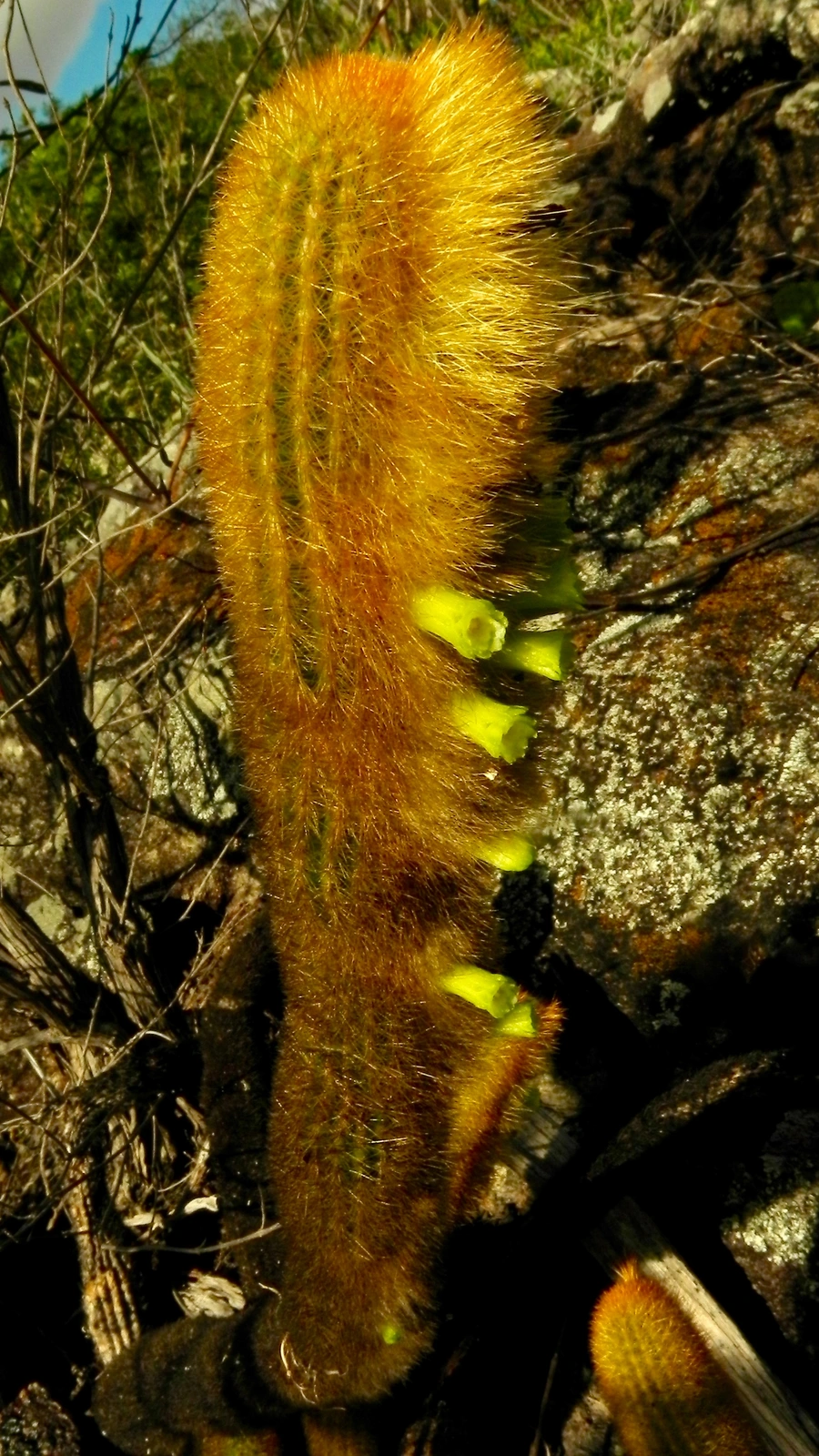 Reference image
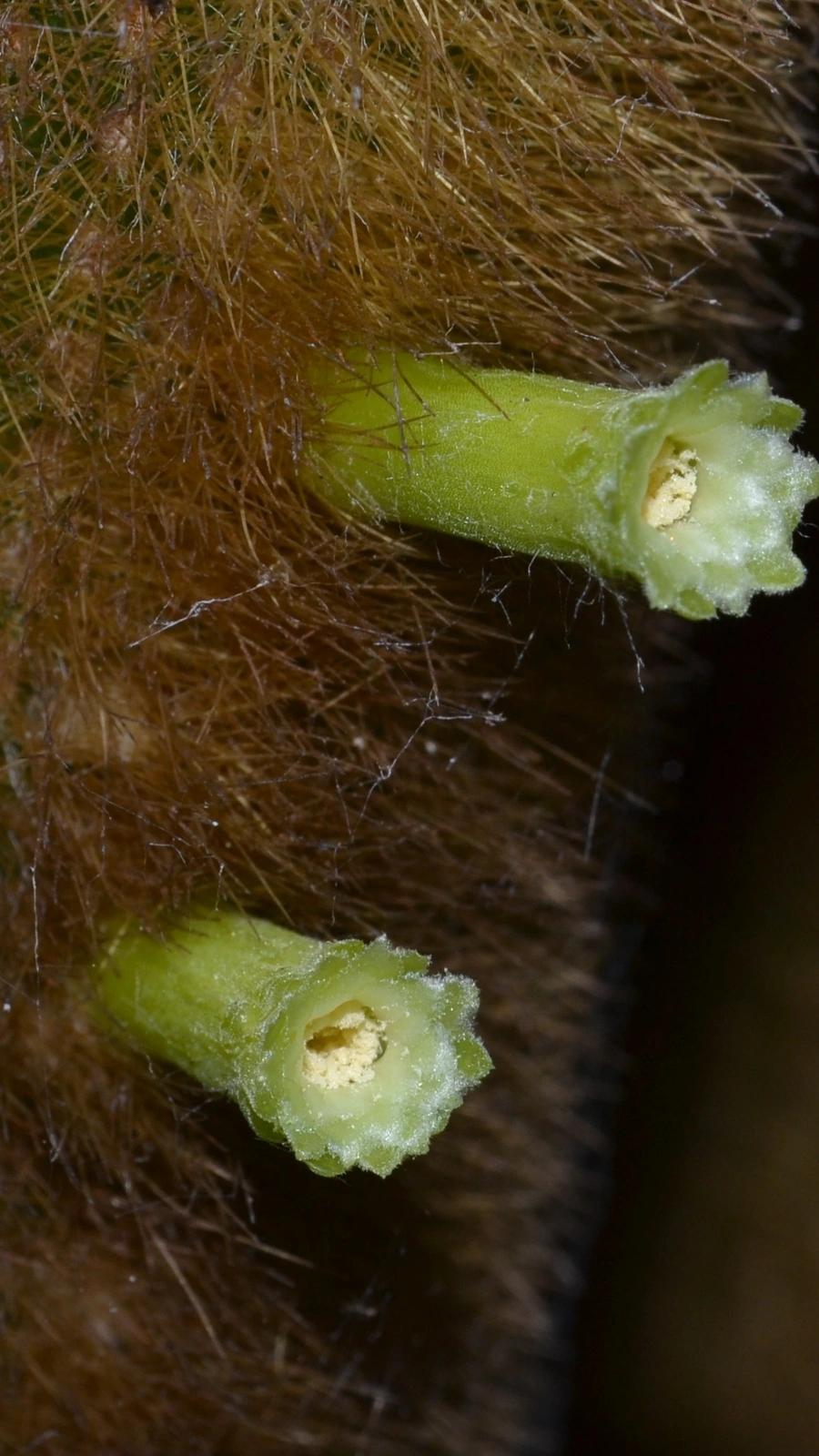 Reference image
Golden-Spined Micranthocereus
Micranthocereus aureispinus is a striking, column-shaped endemic cactus belonging to the family Cactaceae. Highly prized by enthusiasts, it is easily recognized by its dense golden-yellow spines and unique lateral cephalium.
Originally described by Friedrich Ritter 1, the genus name Micranthocereus references its small flowers, while the specific epithet aureispinus literally translates to "golden-spined" in Latin.
This species is restricted to the state of Bahia in northeastern Brazil 2. It thrives at elevations of 400 to 900 meters, growing in crevices of quartzitic rocks within the seasonally dry tropical Caatinga biome.
It forms upright, slender cylindrical stems that can branch from the base. The stems are densely covered in fine, bright golden-yellow spines. When mature, it produces a woolly lateral cephalium from which small pinkish-orange tubular flowers emerge.
This species requires maximum light and a highly porous mineral substrate. Water thoroughly during spring and summer only after the soil has dried out completely. Keep dry in winter and maintain temperatures above 10°C.
Overwatering and poor soil drainage are the primary causes of root rot. Keeping the cactus in damp, cold conditions during the winter dormancy period will quickly lead to fungal infections and stem collapse.
Requires full, direct sun for several hours daily to promote healthy growth and golden spine coloration.
Water thoroughly when the potting medium is dry during growth, keep completely dry in winter.
Prefers mineral-rich, slightly acidic soil mixes with high proportions of pumice, gravel, and sand.
Non-toxic, but the densely packed, fine golden spines pose a physical hazard and require careful handling.
Requires moderate care due to its strict sensitivity to overwatering and low temperature limits.
Endemic to Bahia, Brazil, this species is adapted to rocky slopes and dry shrublands, growing primarily in pockets of quartz-rich soils.
