
Light
Bright Indirect Light
Requires bright, indirect sunlight or filtered sun. Protect from intense mid-day heat.
 Reference image
Hofacker's Columnar Cactus
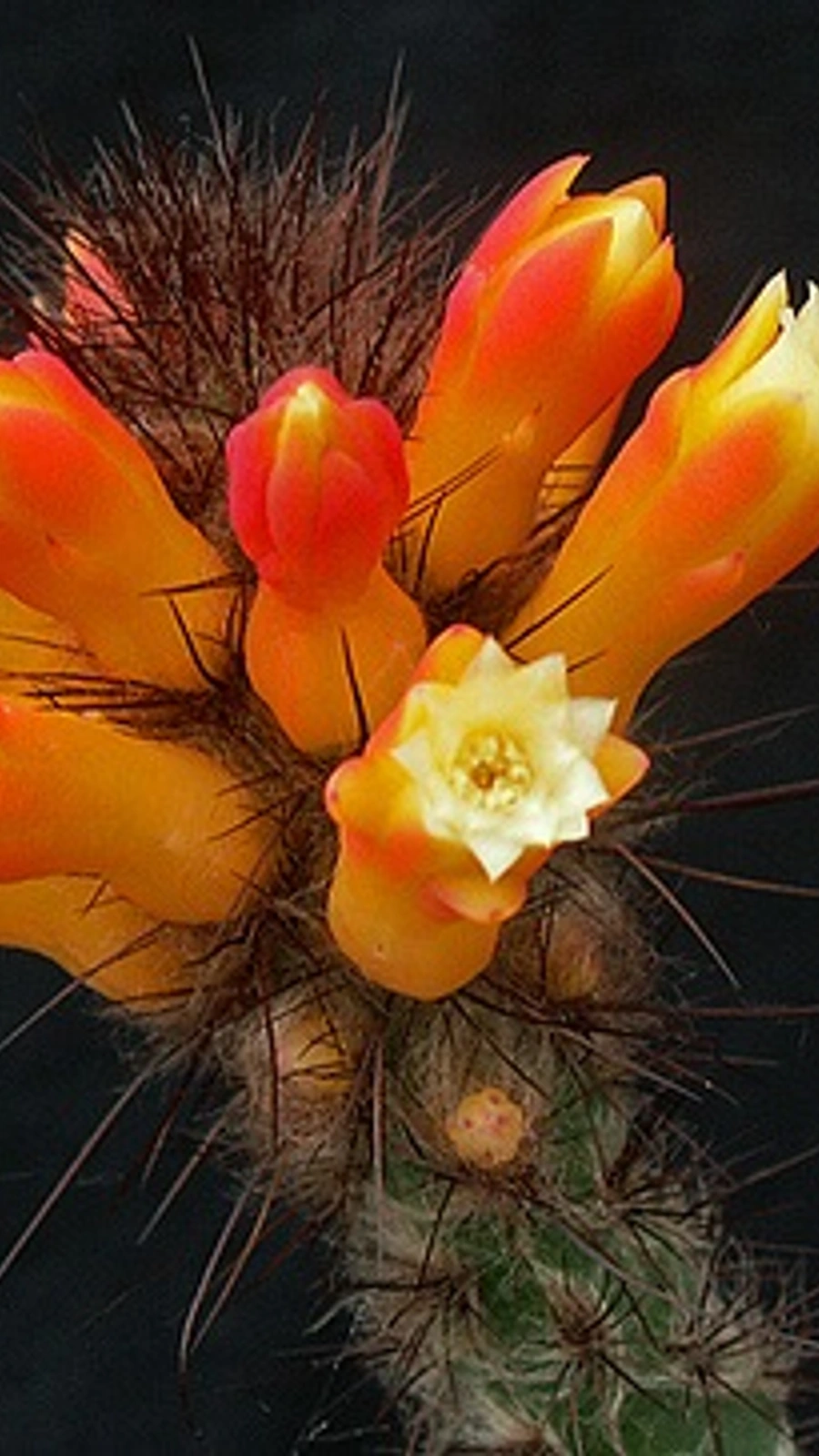
Micranthocereus hofackerianus is a rare and striking columnar cactus species belonging to the family Cactaceae. It is highly valued among collectors for its specialized growth form and colorful cephalium 1.
Named in honor of the German cactus expert Andreas Hofacker, this species belongs to the genus Micranthocereus, which is celebrated for producing small, tubular flowers from a lateral cephalium 2.
This species is native to eastern Brazil, particularly within Bahia and surrounding states. It is specialized to grow in montane tropical biomes, nesting in the cracks of quartzitic rocky outcrops 1.
It forms a subshrub or shrub with erect, gray-green stems. The stems are densely ribbed and armed with fine, golden-brown spines. Near the crown, a woolly cephalium develops from which small, tubular, pinkish-red flowers emerge 2.
In cultivation, it requires bright but filtered or indirect light to prevent sun scorching. Cultivation media must be strictly mineral-based. Water only when the potting mix is thoroughly dry, and maintain dry conditions during the winter.
The most frequent mistakes include overwatering during the dormant winter phase, which leads to root rot, and insufficient light levels that cause thin, weak growth (etiolation).
Requires bright, indirect sunlight or filtered sun. Protect from intense mid-day heat.
Allow the soil to dry out fully between waterings. Reduce watering to a minimum in winter.
Highly porous mineral substrate consisting of pumice, grit, and coarse sand.
Non-toxic to pets, but has sharp spines that require careful handling.
Moderate difficulty. Requires precise watering and good air circulation.
Endemic to eastern Brazil, where it primarily inhabits mountainous rocky terrains, growing in cracks of quartzitic and gneiss rocks in tropical montane zones.
