
Micranthocereus streckeri

Strecker\'s Blue Column Cactus

Overview

Micranthocereus streckeri is a rare, columnar succulent shrub belonging to the Cactaceae family. Due to its restricted natural range and habitat degradation, it is classified as Critically Endangered 1.

Taxonomy and Naming

Described by Van Heek and van Criekinge, the specific epithet honors the German cactus collector Willi Strecker. The genus Micranthocereus is characterized by its small-sized, tube-like flowers 2.

Distribution and Habitat

Endemic to the Bahia state of Brazil, this cactus grows on rocky outcrops and quartzite sands in high-altitude montane tropical grasslands (campos rupestres) 1.

Appearance

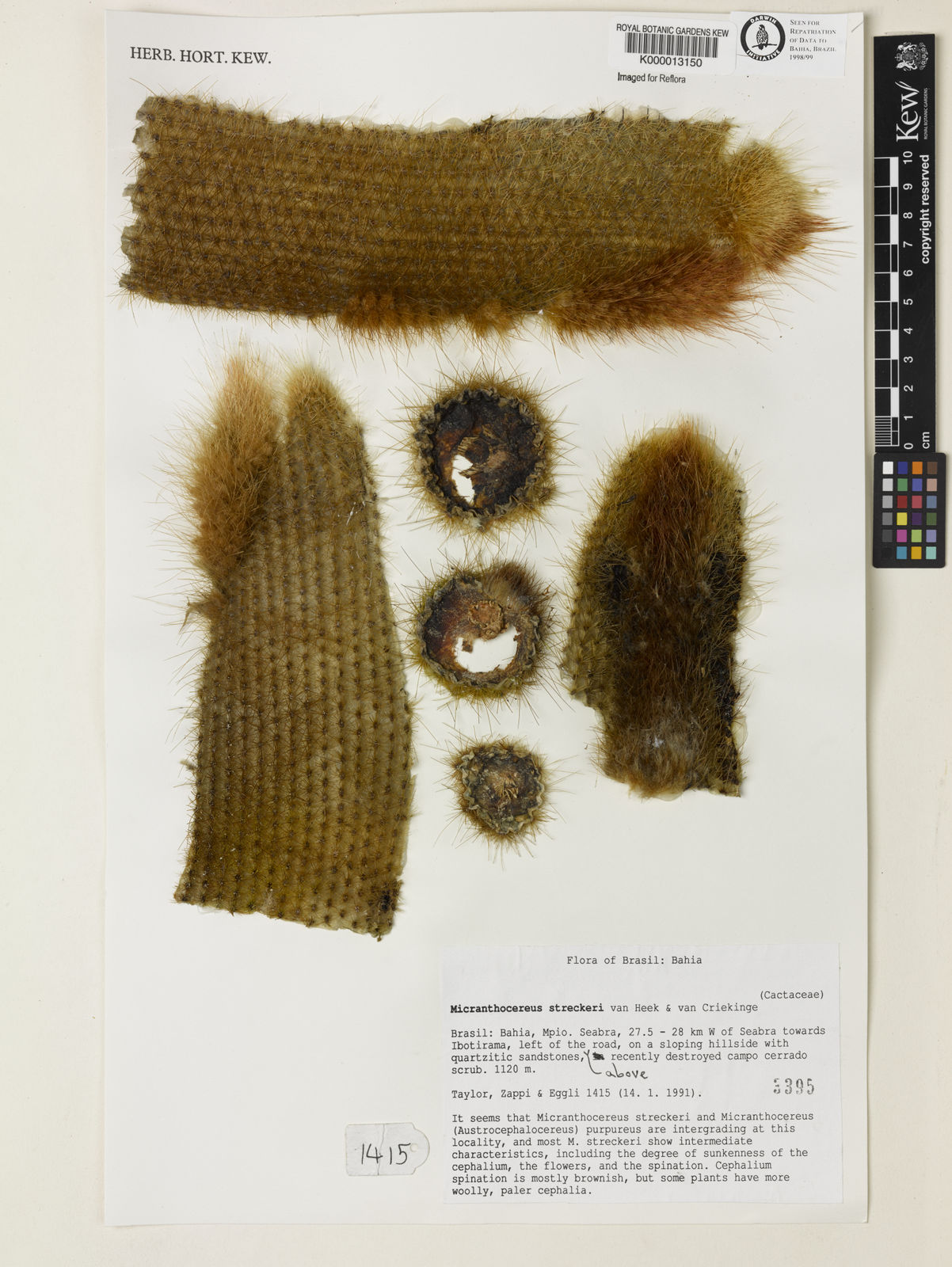
It features blue-green stems up to 1-2 meters tall, lined with golden-brown spines. During maturity, it develops a lateral woolly cephalium on one side of the stem, producing small pinkish-purple flowers 2.

Cultivation

It thrives in high-light environments with filtered sunlight. It requires a highly mineral, well-draining substrate. Watering should be done thoroughly but only when the medium is completely dry 2.

Common Cultivation Mistakes

Overwatering during the cold winter dormancy is the main cause of root rot. Lack of air circulation in humid indoor spaces can lead to rapid fungal infections.

References

  1. IUCN Red List: Micranthocereus streckeri Conservation Status (iucnredlist.org)
  2. Plants of the World Online (POWO): Kew Science Database
Light

Filtered Sun

Bright indirect light or filtered sun; avoid harsh midday direct rays.
Watering

7-25 Days

Water weekly in summer once dry; reduce to every 3-4 weeks in winter.

Soil

Gritty, mineral-rich, and well-draining cactus mix

Highly porous cactus mix rich in pumice, gravel, and minimal organic matter.

Safety

Pet Friendly

Features fine, sharp spines. Non-toxic to pets, but keep away due to physical hazard.

Difficulty

Moderate

Moderate. Demands careful winter dryness but rewards with beautiful cephalium growth.

Native Habitat

Bahia, Brazil

Endemic to rocky outcrops and sandy quartz plateaus near Seabra in Bahia, Brazil, adapting perfectly to high-altitude tropical biomes.

Frequently Asked Questions

Can Micranthocereus streckeri grow in a pot?
Yes, it is highly suitable for pots. However, using clay pots with drainage holes that do not retain moisture is crucial for root health.
Is it toxic to pets?
No, it is non-toxic. However, due to its fine and sharp spines, it should be kept out of reach to prevent injury to cats and dogs.
How often should it be watered?
In summer, water once a week as the soil dries out, and in winter, water lightly every 25-30 days depending on the temperature.
What type of soil does it prefer?
It prefers fast-drying cactus soils rich in pumice, perlite, river sand, and with low organic content.
What is required for it to bloom?
For blooming, the plant needs to mature, receive plenty of sun, and undergo a cool, dry resting period in winter.
How fast does it grow?
It is a slow to moderate-growing cactus. With proper nutrients and light, it can grow a few centimeters per year.
Can it stay on the balcony in winter?
It is sensitive to frost. It should be brought indoors when temperatures drop below 10 degrees Celsius.
What is the woolly part on its stem?
This structure is a cephalium. It is a natural formation indicating that the cactus is mature and will bloom from this area.
How can root rot be prevented?
You can prevent root rot by watering only when the soil is completely dry and ensuring no water accumulates in the pot saucer.
What are the signs of sunburn?
White or bleached brown patches on the stem indicate sunburn. In this case, the plant should be moved to a more shaded or filtered light area.