
Light
Full Sun
Requires full sun to filtered intense sunlight to maintain its natural compact growth.
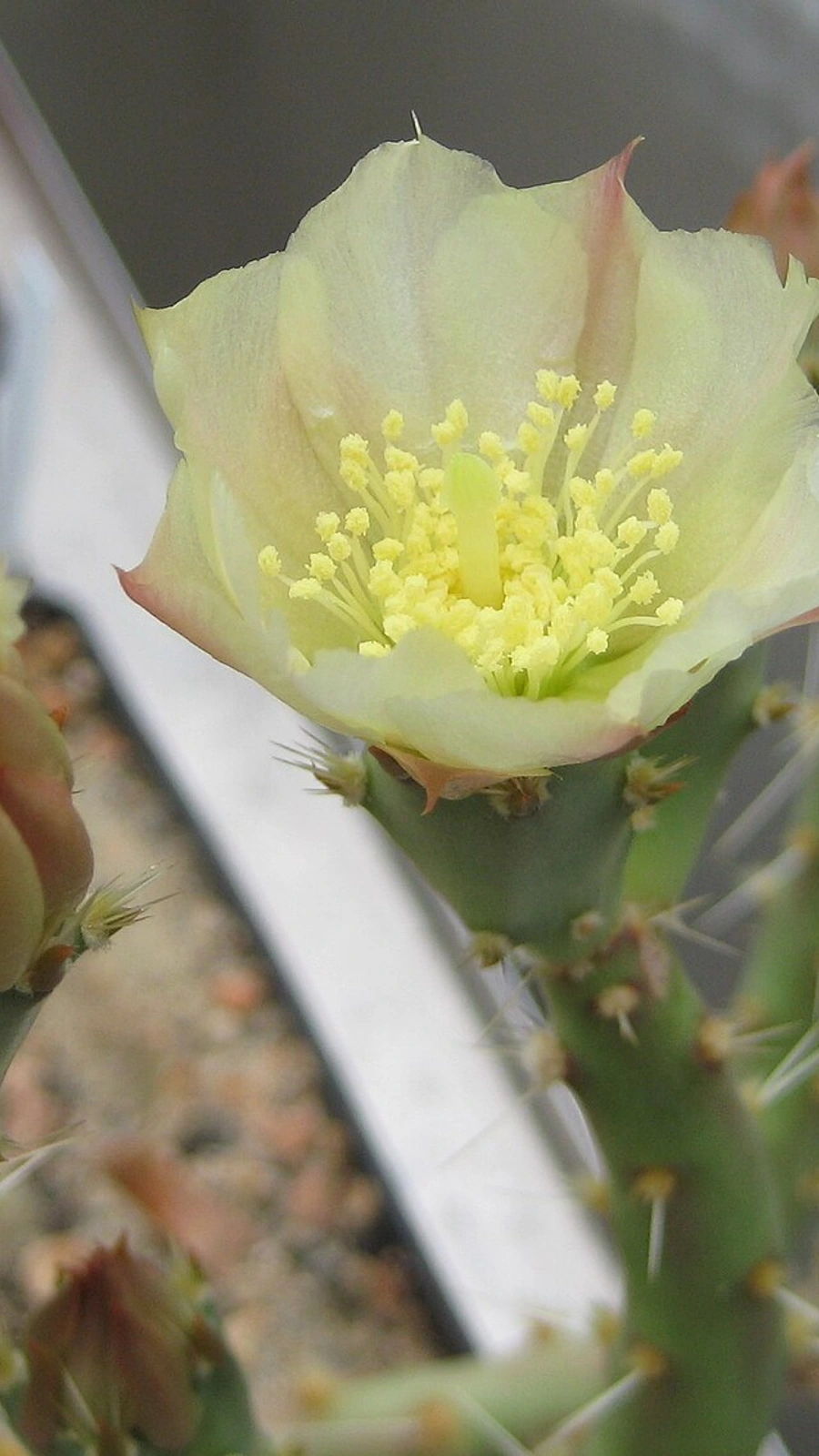
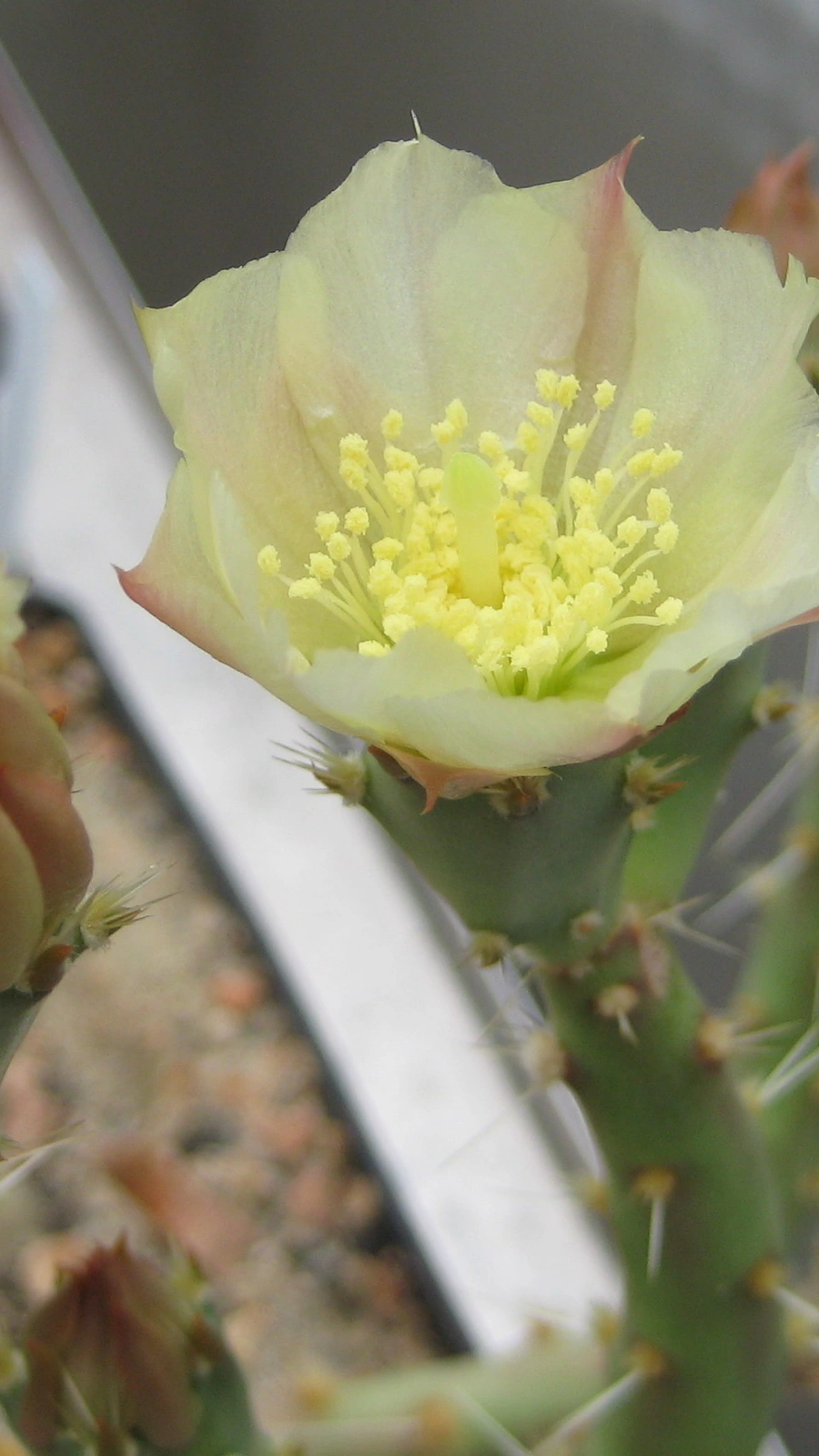 Reference image
Chaffey's Club Cactus
Opuntia chaffeyi is an extraordinarily rare and unusual species of geophytic cactus within the family Cactaceae, characterized by its prominent tuberous root system and deciduous aerial stems 1. Unlike common thick-pad prickly pears, this species features thin, cylindrical stems that may die back to the ground during severe winters or extreme droughts.
The species was first described in 1913 by American botanists Nathaniel Lord Britton and Joseph Nelson Rose 2. Named after Dr. Elswood Chaffey, who collected the type specimen in Zacatecas, Mexico, it occupies an evolutionary distinct niche within the genus Opuntia due to its tuberous growth habit.
Endemic to the high-elevation semi-desert regions of north-central Mexico, particularly in Zacatecas, Durango, San Luis Potosí, Querétaro, and Guanajuato 1. It grows in calcareous soils, rocky plains, and dry scrublands. Due to agricultural expansion, urban development, and overgrazing, its wild population is severely fragmented, placing it under Critically Endangered status 3.
The most defining feature is its large underground tuber, which can measure up to 15 cm in diameter. The above-ground stems are slender, grayish-green, 5 to 15 cm long, and only about 0.5 cm thick. The areoles bear fine white spines and tiny, irritating glochids. It produces pale yellow or yellowish-white flowers during the late spring.
In cultivation, Opuntia chaffeyi requires specialized care. It must be grown in a highly porous, gritty, and mineral-based potting medium. Watering should be thorough but infrequent during the spring and summer. During the winter dormancy, the soil must be kept completely dry to prevent tuber rot.
The most prevalent issue is overwatering during winter, which leads to immediate root and tuber rot. Additionally, insufficient sunlight causes the new shoots to stretch (etiolate), becoming weak and atypical of their natural habitat.
Requires full sun to filtered intense sunlight to maintain its natural compact growth.
Water only when the medium is thoroughly dry in summer; suspend watering entirely in winter.
Prefers a mineral-rich, highly porous soil mix containing pumice, sand, and limestone.
Possesses tiny, easily detached glochids (barbed hairs). Handle with tongs or thick gloves.
Highly sensitive to moisture; recommended for experienced succulent growers.
Native to the dry highlands of north-central Mexico, where it thrives in gravely, limestone-rich soils. The species has evolved its underground tuber to survive extreme droughts and seasonal cold spells in its native desert habitat.
