
Light
Full Sun
Requires full sun, ideally 6+ hours of direct sunlight daily to maintain compact growth.
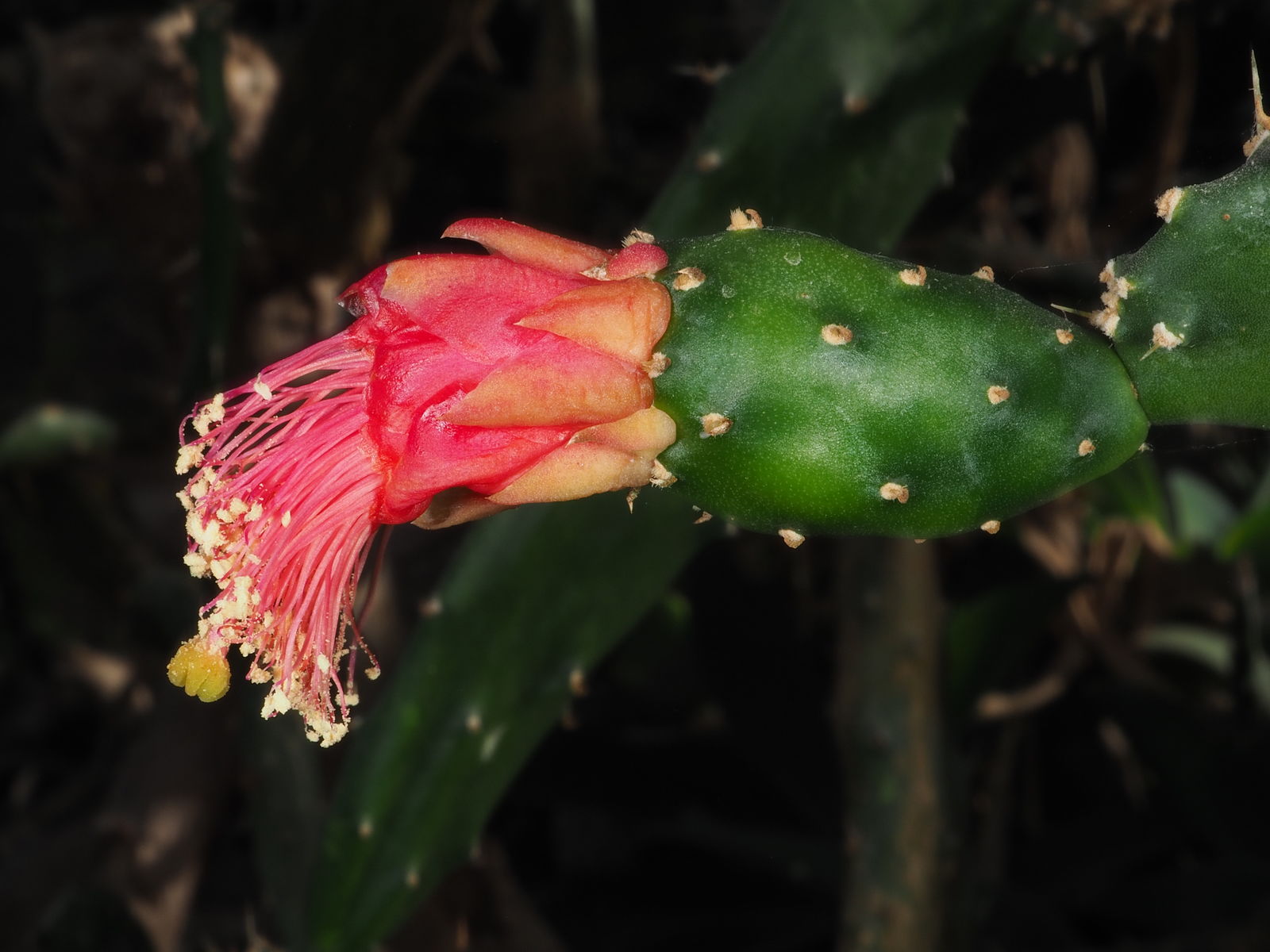 Reference image
Deject Opuntia
Opuntia dejecta is a robust, tree-like or shrubby succulent species belonging to the family Cactaceae, characterized by its drooping branches and striking red-orange flowers.
This species was first described by the botanist Salm-Dyck 1. The specific epithet "dejecta" translates to "cast down" or "drooping," which directly refers to the plant's characteristic pendant or arching growth habit 2.
It is native to southern Mexico, the Yucatan Peninsula, and parts of the Caribbean, primarily thriving in seasonally dry tropical forests and coastal scrub ecosystems 1. It has also become naturalized in parts of Spain and several states in India.
Opuntia dejecta forms a small tree or large shrub reaching 1 to 2 meters in height. The joints (cladodes) are narrow, elongated, and light green. Its areoles bear yellowish, needle-like spines. The flowers are typically bright red or orange, giving rise to reddish-purple pear-like fruits.
In cultivation, this cactus requires full sun and exceptionally well-draining soil. It is drought-tolerant and highly suited for xeriscaping or container gardening in sunny patios. It is sensitive to prolonged frost.
Overwatering is the most critical threat, leading to immediate root and stem rot. Placing the plant in a shaded area causes etiolation, where the pads grow weak, pale, and unnaturally elongated.
Requires full sun, ideally 6+ hours of direct sunlight daily to maintain compact growth.
Water sparingly. Allow the potting mix to dry out 100% between watering sessions.
Use a mineral-rich cactus substrate amended with plenty of perlite, pumice, or grit.
Equipped with sharp spines and tiny irritating glochids. Keep away from pets and curious children.
Very easy to maintain, making it ideal for beginners who tend to forget watering.
Native to the dry tropical zones of Southern Mexico and the Caribbean. It has successfully naturalized in sunny Mediterranean microclimates and parts of the Indian subcontinent.
