
Light
Full Sun
Requires full sun, ideally 6 to 8 hours of direct sunlight daily for robust growth.
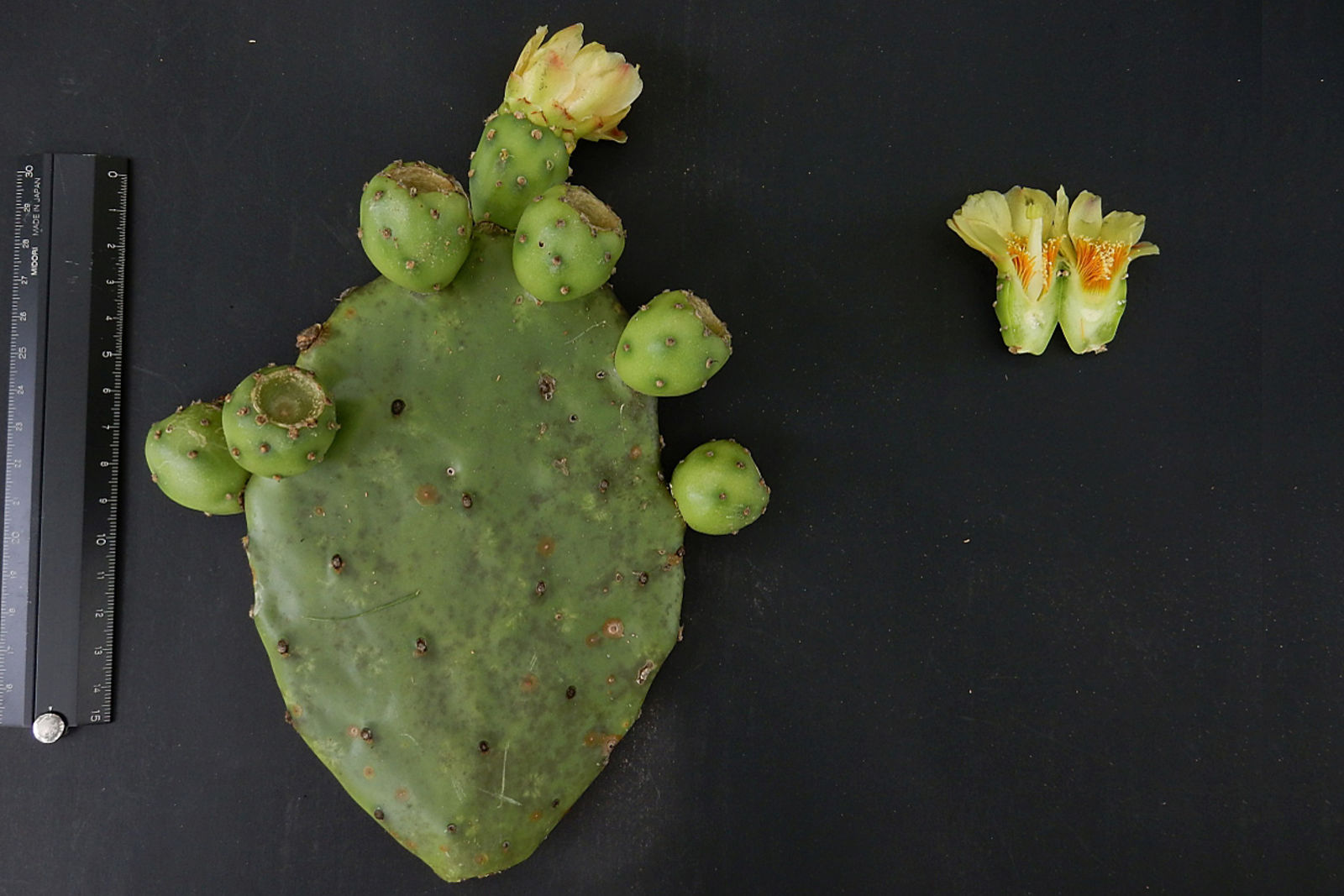 Reference image
Tall Prickly Pear
Opuntia excelsa is a majestic, tree-like cactus species belonging to the family Cactaceae. Unlike common prostrate or shrubby prickly pears, this species develops a distinct woody trunk and can grow into a magnificent specimen resembling a branching tree.
Scientifically described for its remarkable stature, the specific epithet "excelsa" translates from Latin to "tall" or "lofty" 1. Within the genus Opuntia, it is categorized under the subfamily Opuntioideae, showcasing the typical jointed stems but with an unusually robust arborescent growth habit.
This species is native to western and southwestern Mexico, primarily in states like Jalisco, Colima, Michoacán, and Guerrero 2. It thrives in tropical dry forests, deciduous shrublands, and semi-arid transitions, adapted to rocky slopes and highly drained terrains.
Opuntia excelsa can reach heights of up to 8-10 meters in its native habitat. It features a thick, brown, woody main trunk supporting a canopy of fleshy, obovate to circular green cladodes (pads). The pads are relatively smooth but bear areoles with fine glochids and occasional sharp spines. Its diurnal flowers open in shades of bright yellow or orange, followed by fleshy, reddish fruits.
In cultivation, it requires spacious outdoor settings in warm-temperate to tropical climates. It is highly drought-tolerant and demands full sun exposure to maintain its structural integrity. It must be planted in gritty, inorganic substrates to ensure rapid water runoff.
The most prevalent issue is waterlogging, especially during winter dormancy, which quickly induces root and stem rot 1. Keeping the plant in shaded positions leads to weak, elongated pad growth (etiolation) and diminishes its physical resilience.
Requires full sun, ideally 6 to 8 hours of direct sunlight daily for robust growth.
Water thoroughly only when the soil is completely dry. Keep dry in winter.
Prefers a gritty, mineral-heavy cactus mix with excellent drainage properties.
Equipped with tiny, irritating glochids. Keep out of reach of children and pets.
Very easy to maintain, provided it receives adequate sunlight and is not overwatered.
Endemic to the Pacific slopes of Mexico, specifically thriving in the dry deciduous forests and arid shrublands of Jalisco, Colima, Sinaloa, Michoacán, and surrounding states.
