
Light
Full Sun
Requires full, direct sun all day to develop and maintain its purple pigmentation.
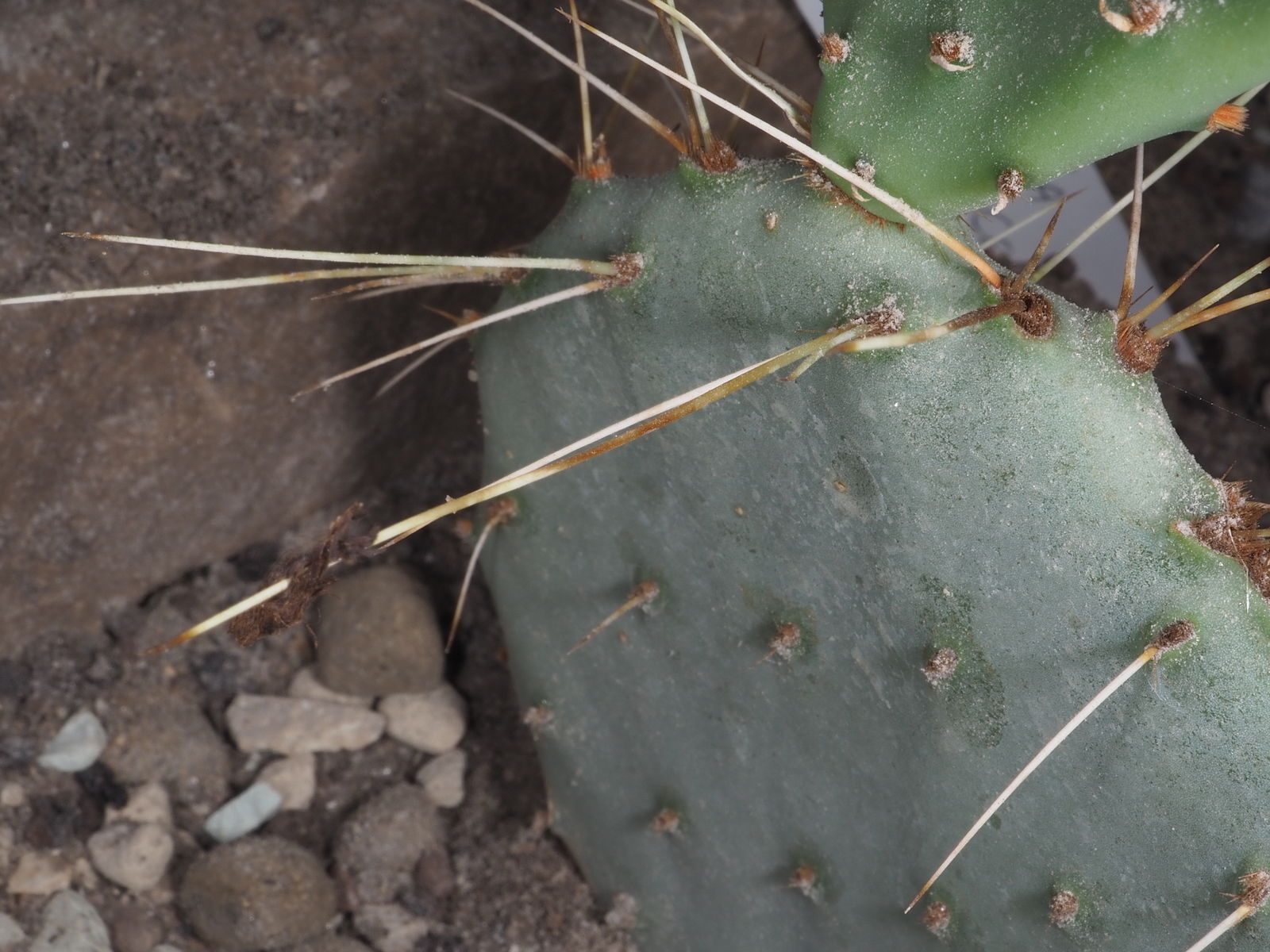 Reference image
Purple Prickly Pear
Opuntia macrocentra, commonly known as the purple prickly pear, is a visually striking and drought-tolerant member of the Cactaceae family. Celebrated for its unique capability to develop intensely purple-tinged pads under drought stress or cold winter temperatures 1, this species is highly favored in xeriscaping and container culture for its dramatic aesthetic.
Belonging to the genus Opuntia within the Cactaceae family, this species was formally described by George Engelmann in 1856. The specific epithet 'macrocentra' translates from Greek as 'large thorn' or 'long spine', accurately highlighting the exceptionally long, dark-colored spines that emerge primarily from the upper areoles of the pads 2.
This cactus is native to the arid regions of southwestern North America 1. It occurs naturally in the United States, including Texas, New Mexico, and Arizona, as well as northern Mexican states such as Chihuahua, Coahuila, and Durango. It thrives in desert environments, dry shrublands, and rocky hillsides at elevations ranging from 900 to 1,500 meters 2.
Opuntia macrocentra is a shrubby cactus reaching heights of 60 to 100 cm. Its flattened pads (cladodes) are obovate to round, showcasing a dusty blue-green color that shifts to rich violet-purple under environmental stress. Long, dark brown to black spines, reaching 5 to 10 cm in length, protrude from the areoles. Late spring brings beautiful yellow flowers with red centers, which later develop into purple-red, fleshy fruits.
This species performs best in poor, sandy, and sharply draining soils with full sun exposure. Watering should follow a 'soak and dry' method, allowing the medium to dry out completely. Cold hardy down to -12°C when kept dry, it requires almost no water during winter dormancy.
The most frequent error is overwatering, which quickly causes root rot in heavy, clay soils 1. Additionally, keeping the plant in inadequate light will result in green, stretched, and weakened pads that lose their signature purple coloration.
Requires full, direct sun all day to develop and maintain its purple pigmentation.
Water only after the substrate is completely dry. Keep dry in winter.
Highly porous, sandy or gravelly mineral mix with low organic content.
Equipped with sharp spines and irritating glochids; wear gloves. Mildly toxic to pets.
Very easy to maintain, forgiving of neglect, and extremely drought-resistant.
Inhabits the arid Chihuahuan Desert slopes, spreading across southern Arizona, New Mexico, western Texas, and northern Mexican states, where it survives in dry, gravelly plains and shrubby habitats.
