
Light
Full Sun
Requires full, direct sun for at least 6 hours daily; ideal for south-facing windows or outdoor rock gardens.
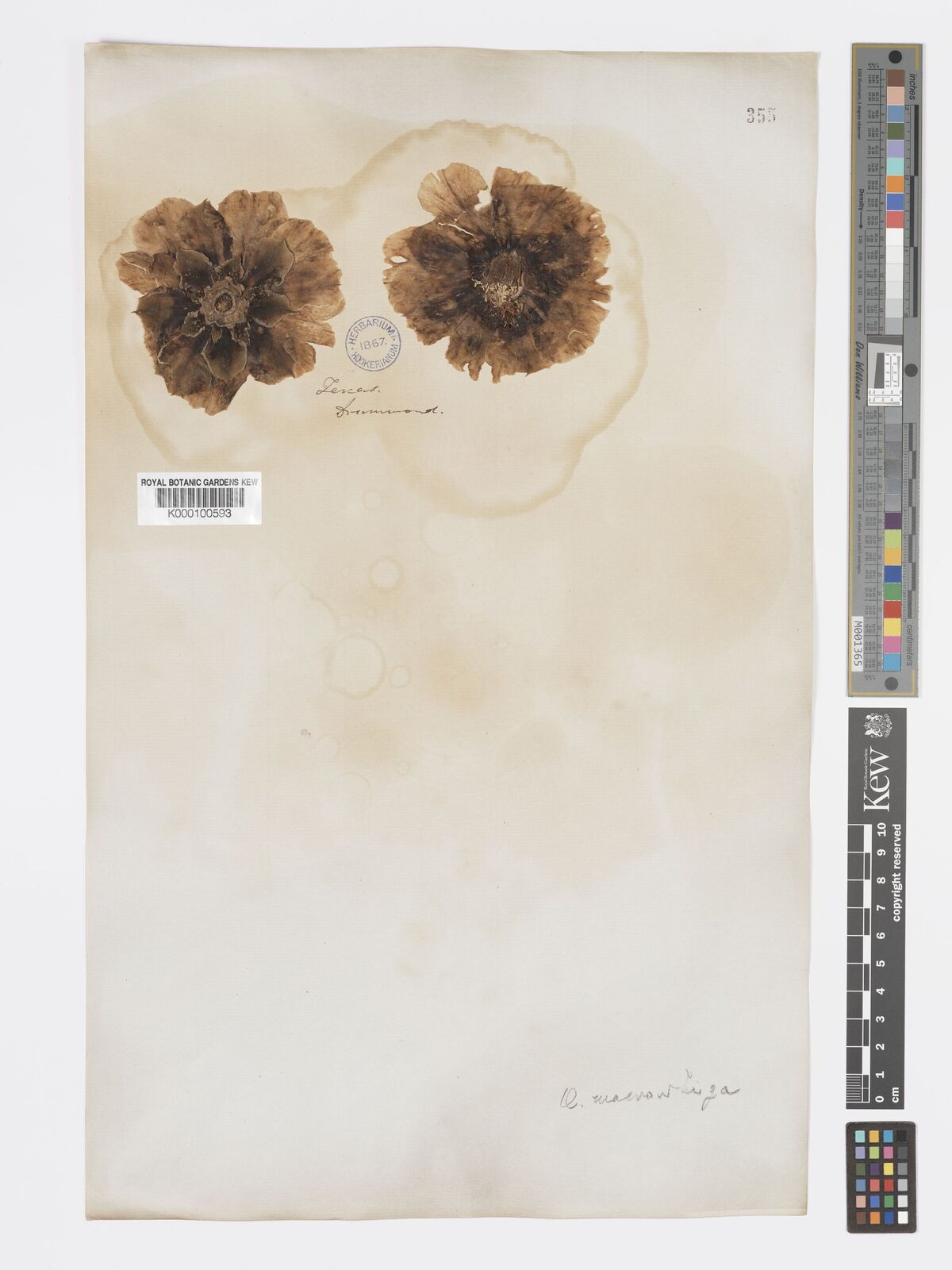 Reference image
Plains Prickly Pear
Opuntia macrorhiza, commonly known as the plains prickly pear or tuberous prickly pear, is a low-growing, spreading succulent species belonging to the Cactaceae family. It is highly valued for its exceptional cold hardiness and striking summer blooms 1.
First described by botanist George Engelmann in 1850, the species epithet macrorhiza combines the Greek words makros (large) and rhiza (root). This nomenclature directly highlights the plant's distinctive thickened, tuber-like root system which distinguishes it from many other prickly pears 2.
Native to a vast region of North America, its range extends from the Great Plains of the United States down to northern Mexico. It thrives in dry prairies, sandy hills, rocky slopes, and desert grasslands 1. It has also established naturalized populations in parts of Europe and the Caucasus due to its resilience.
This species forms low-spreading clumps of obovate to circular, green or bluish-green stem segments (pads). Areoles carry prominent yellowish-brown glochids and typically 1 to 6 main spines on the upper pads. In late spring to early summer, it produces showy, bright yellow flowers with reddish bases, followed by fleshy, purple-red edible fruits 2.
Opuntia macrorhiza requires full sun and highly porous, mineral-rich soil. It is incredibly drought-tolerant and adapted to survive extreme winter temperatures down to -25°C (-13°F) in outdoor gardens, provided the soil remains completely dry during the cold season 1.
The most prevalent issue is overwatering or utilizing heavy clay soils that retain moisture, which quickly leads to root and pad rot. Insufficient sunlight will cause weak, elongated growth (etiolation) and prevent flowering.
Requires full, direct sun for at least 6 hours daily; ideal for south-facing windows or outdoor rock gardens.
Allow the substrate to dry out 100% between waterings. Keep dry in winter.
Prefers a mineral-heavy mix with coarse sand, pumice, and perlite to prevent moisture retention.
Features painful glochids (micro-spines) that can irritate skin and eyes. Keep away from pets.
Very easy to maintain, boasting extreme frost tolerance and high resilience to neglect.
Widely distributed across the Great Plains and southwestern regions of North America, extending into northern Mexico. It has also successfully adapted and naturalized in various semi-arid, temperate zones of Europe and the Caucasus.
