
Light
Filtered Sun
Bright, filtered sunlight is preferred over intense, direct noon sun.
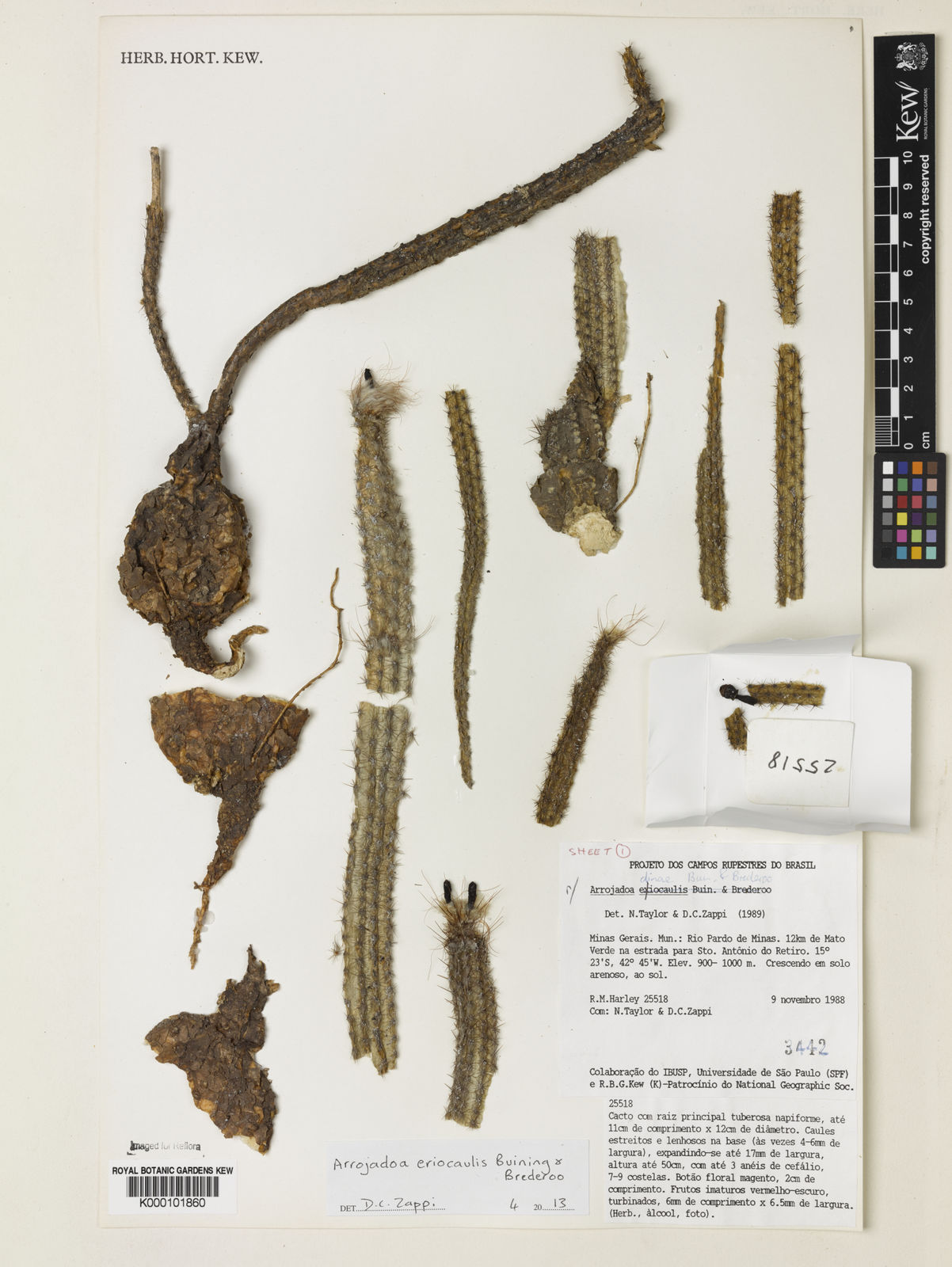 Reference image
Tuberous Arrojadoa
Arrojadoa eriocaulis is a rare, highly sought-after cactus species within the Cactaceae family, distinguished by its tuberous root system and slender, semi-scandent stems. Unlike typical desert cacti, it forms a fleshy subterranean caudex and exhibits a shrubby habit 1.
Belonging to the genus Arrojadoa, which was named in honor of Miguel Arrojado Lisboa, a Brazilian plant collector and railway engineer, this species is taxonomically distinct. The specific epithet 'eriocaulis' translates to 'wooly-stemmed', referring to the wooly nature of its fertile stem zones 2.
This species is endemic to eastern and southeastern Brazil, specifically found in states like Minas Gerais and Bahia. It thrives in seasonally dry tropical biomes, growing on rocky outcrops, sandy soils, and under the light shade of deciduous shrubbery 1.
The slender, cylindrical stems can grow upright or sprawling. Its most distinctive floral feature is the terminal cephalium—a wooly and bristly structure at the stem tips from which small, tubular pinkish-red flowers emerge. Underground, it develops a prominent, water-storing tuberous root 2.
In cultivation, Arrojadoa eriocaulis requires moderate care. It prefers bright, filtered light over direct, scorching sun. Due to its tuberous root system, it is highly susceptible to root rot, requiring an exceptionally porous, mineral-rich potting medium. Winter temperatures should remain above 10°C with almost no watering 1.
The most frequent error is overwatering during the winter dormancy period or using dense, water-retaining soil, which rapidly leads to tuber rot. Insufficient light can also cause etiolation, weakening the slender stems and preventing cephalium formation.
Bright, filtered sunlight is preferred over intense, direct noon sun.
Allow soil to dry out fully before watering; keep dry in winter.
Use highly porous, mineral-rich cactus soil with added pumice.
Features fine spines; non-toxic to pets but requires careful handling.
Moderate difficulty due to the sensitive underground tuberous system.
Found naturally in the seasonally dry tropical shrublands and rocky formations of eastern Brazil.
