
Light
Full Sun
A light-loving species; it prefers your brightest window indoors or direct morning sun outdoors.
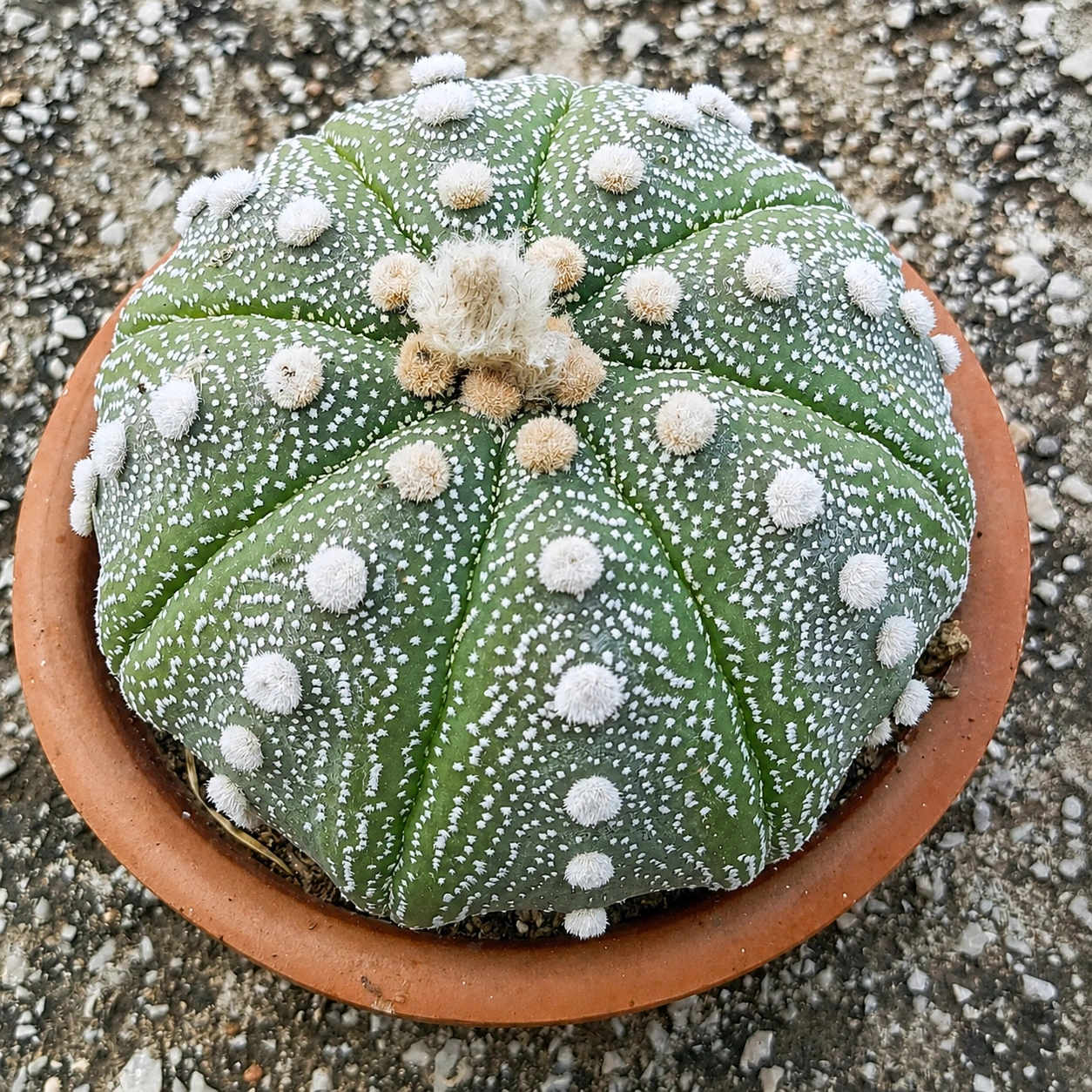
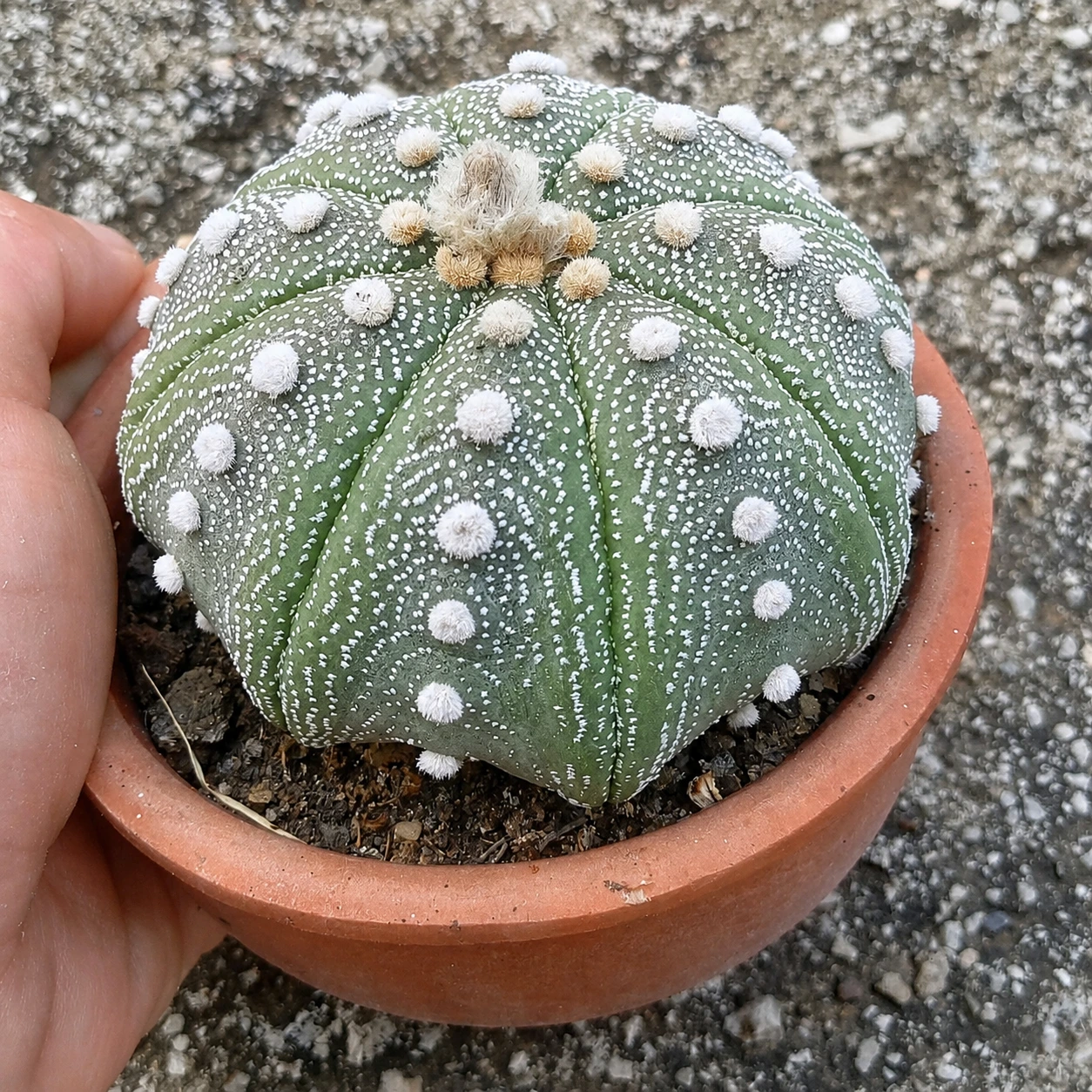
Astrophytum Asterias (Sand Dollar Cactus)
Astrophytum asterias, commonly known as the "Sand Dollar Cactus" or "Star Cactus," is a highly sought-after, spineless cactus species native to the arid regions of Mexico and Texas. Its diminutive size and distinctive flattened, spherical form have made it a favorite among cactus enthusiasts. This plant typically grows solitarily, reaching up to 15 cm in diameter and 2-6 cm in height. Its body is usually divided into eight prominent, flat ribs; however, variations with fewer or more ribs also exist.
These ribs are often adorned with striking clusters of tiny white hairs (trichomes) that give the plant a unique texture and pattern 1. Unlike many other cactus species, Astrophytum asterias is entirely spineless, which contributes to its smooth, almost velvety feel, making it pleasant to touch. Along the ridges of the ribs, woolly areoles are present, from which charming yellow flowers with reddish bases emerge, typically during the warmer months. These flowers are relatively large compared to the plant's size, often reaching 3-7 cm in diameter, and open during the day 2. Following pollination, fuzzy, pinkish-green fruits develop, containing distinctive helmet-shaped seeds.
Astrophytum asterias holds significant horticultural value and has given rise to numerous cultivars and hybrids, some exhibiting exaggerated rib patterns or unique coloration. In its natural habitat, Astrophytum asterias is classified as 'Vulnerable' on the IUCN Red List, primarily due to factors such as habitat loss, illegal collection, and overgrazing. Its preference for well-drained, gritty soils in open desert or shrubland environments underscores its excellent adaptation to arid conditions. The conservation of this unique plant is critically important to ensure its natural beauty and ecological role are preserved for future generations.
References:
A light-loving species; it prefers your brightest window indoors or direct morning sun outdoors.
Water thoroughly but infrequently when the soil is completely dry. Practically no watering in winter.
Use a specially formulated cactus mix, rich in minerals and extremely fast-draining.
This is a spineless species and is non-toxic to pets or children, making it a safe choice.
A moderate-difficulty cactus; the key is finding the right balance of light and watering.
Astrophytum asterias is indigenous to the arid and semi-arid regions of North America. Its natural range extends across several northeastern Mexican states, including Coahuila, Nuevo León, Tamaulipas, Zacatecas, San Luis Potosí, Querétaro, Guanajuato, Hidalgo, and Aguascalientes. It is also found naturally in parts of the southern U.S. state of Texas. These regions typically consist of desert or scrubland environments, to which the plant is perfectly adapted, thriving in hot and dry climatic conditions. It commonly grows in rock crevices or under the protection of larger plants, always in well-draining soils.
