
Scientific taxonomy article
Taxonomy record for Astrophytum.
Astrophytum
Taxonomy record for Astrophytum.
Taxonomy record for Astrophytum.
Astrophytum asterias
Astrophytum asterias, commonly known as the "Sand Dollar Cactus" or "Star Cactus," is a highly sought after, spineless cactus species native to the arid regions of Mexico and Texas. Its diminutive size and distinctive flattened, spherical form have made it a favorite among cactus enthusiasts. This plant typically grows solitarily, reaching up to 15 cm in diameter and 2 6 cm in height. Its body is usually divided into eight prominent, flat ribs; however, variations with fewer or more ribs also exist.
Astrophytum capricorne
Astrophytum capricorne is a succulent subshrub in family Cactaceae, native to northeastern Mexico. The current Kew backbone treats it as an independently accepted species. The standard and nudum commercial presentations in the catalog share one botanical and taxonomy identity; “nudum” is not a second accepted species here.
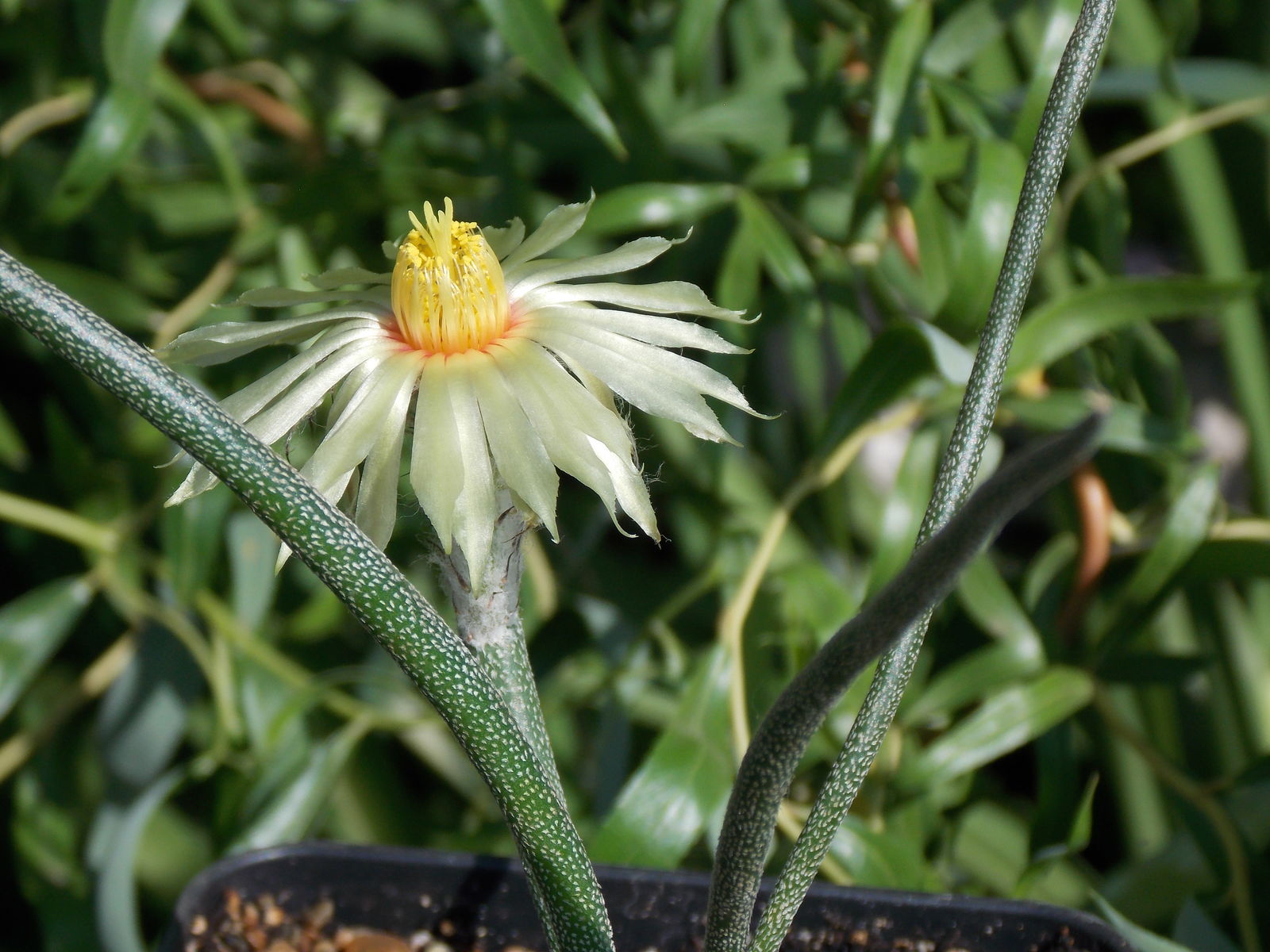
Astrophytum caput-medusae
Astrophytum caput medusae is one of the most remarkable and fascinating species in the Cactaceae family. Diverging from the traditional globose or columnar cactus forms, it is famous for its long, cylindrical tubercles that resemble the writhing snakes of Medusa's head. Discovered in 2002, it instantly became a sensation in the botanical world .
Astrophytum caput-medusae
Astrophytum caput medusae is one of the most remarkable and fascinating species in the Cactaceae family. Diverging from the traditional globose or columnar cactus forms, it is famous for its long, cylindrical tubercles that resemble the writhing snakes of Medusa's head. Discovered in 2002, it instantly became a sensation in the botanical world .
Astrophytum coahuilense
Astrophytum coahuilense is a species verified only from Coahuila that can resemble A. myriostigma through its flecked, usually spineless appearance but is accepted independently in the current backbone. The plant can resemble A. myriostigma through broad, usually spineless ribs, dense white epidermal flecks, and woolly areoles along the rib crests. The boundary is not based on vegetative appearance alone; a coloured throat in the yellow tepals, fruit dehiscence, seed characters, and provenance are evaluated together. A 2024 morphological study reported a complex combination of traits shared with A. capricorne and A. myriostigma rather than one fixed diagnostic character. Unlike the taxonomy article, the botanical dictionary layer explains the living plant's morphology, habitat context, and cultivation requirements.
Astrophytum myriostigma
Astrophytum myriostigma is a highly ornamental, spineless cactus species belonging to the Cactaceae family. It is commonly known as "Bishop's Cap Cactus" or "Bishop's Hat Cactus." Its name, derived from Greek "astro" (star) and "phyton" (plant), refers to the distinctive star shaped appearance of the plant's crown . This species is typically characterized by five prominent vertical ribs, which give it its unique star like or miter like shape. Some varieties may feature four or more ribs.
Astrophytum ornatum
Astrophytum ornatum is a natural species from north eastern Mexico to Veracruz, recognized by strong ribs and prominent spines and capable of becoming columnar with age. The species has one of the more distinctive appearances in the genus through a strongly ribbed stem that can elongate with age, prominent and usually strongly spined areoles along the rib crests, variable white flecking, and yellow flowers. Historical names such as glabrescens or mirbelii are not automatic identities for a modern potted plant. Unlike the taxonomy article, the botanical dictionary layer explains the living plant's morphology, habitat context, and cultivation requirements.
Green Bishop's Cap Cactus
Astrophytum myriostigma var. nudum is a cleaner green, reduced flecking form of Astrophytum myriostigma , the Bishop's Cap cactus. It should not be presented as Star Cactus; Star Cactus belongs to the Astrophytum asterias line.
Green Bishop's Cap Cactus
Astrophytum myriostigma var. nudum is a cleaner green, reduced flecking form of Astrophytum myriostigma , the Bishop's Cap cactus. It should not be presented as Star Cactus; Star Cactus belongs to the Astrophytum asterias line.
Star Cactus
Astrophytum asterias is a small, spineless, flattened cactus with a clean star like body and orderly woolly areoles. The product name “Star Cactus” or “Sand Dollar Cactus” is clear for buyers, while the botanical dictionary keeps the scientific basis: Astrophytum asterias (Zucc.) Lem. POWO/Kew treats the name as accepted and records a narrow native range from southern Texas to Nuevo León and Tamaulipas in Mexico. World Flora Online also reports the name as accepted in Cactaceae.
