
Scientific taxonomy article
Cacteae is a tribe-level taxonomy record identified as Cacteae.
Cacteae
Cacteae taxonomy record with classification context and related plant entries.
Cacteae is a tribe-level taxonomy record identified as Cacteae.

Ariocarpus agavioides
Ariocarpus agavioides is a slow growing Ariocarpus capable of holding its body close to the soil and developing a thickened root. Long narrow agave like tubercles, a small body and flowers emerging from the centre create a distinctive morphology. This does not indicate a need for continuous moisture; its native context combines intense light, mineral ground, airflow and rapid surface drying.
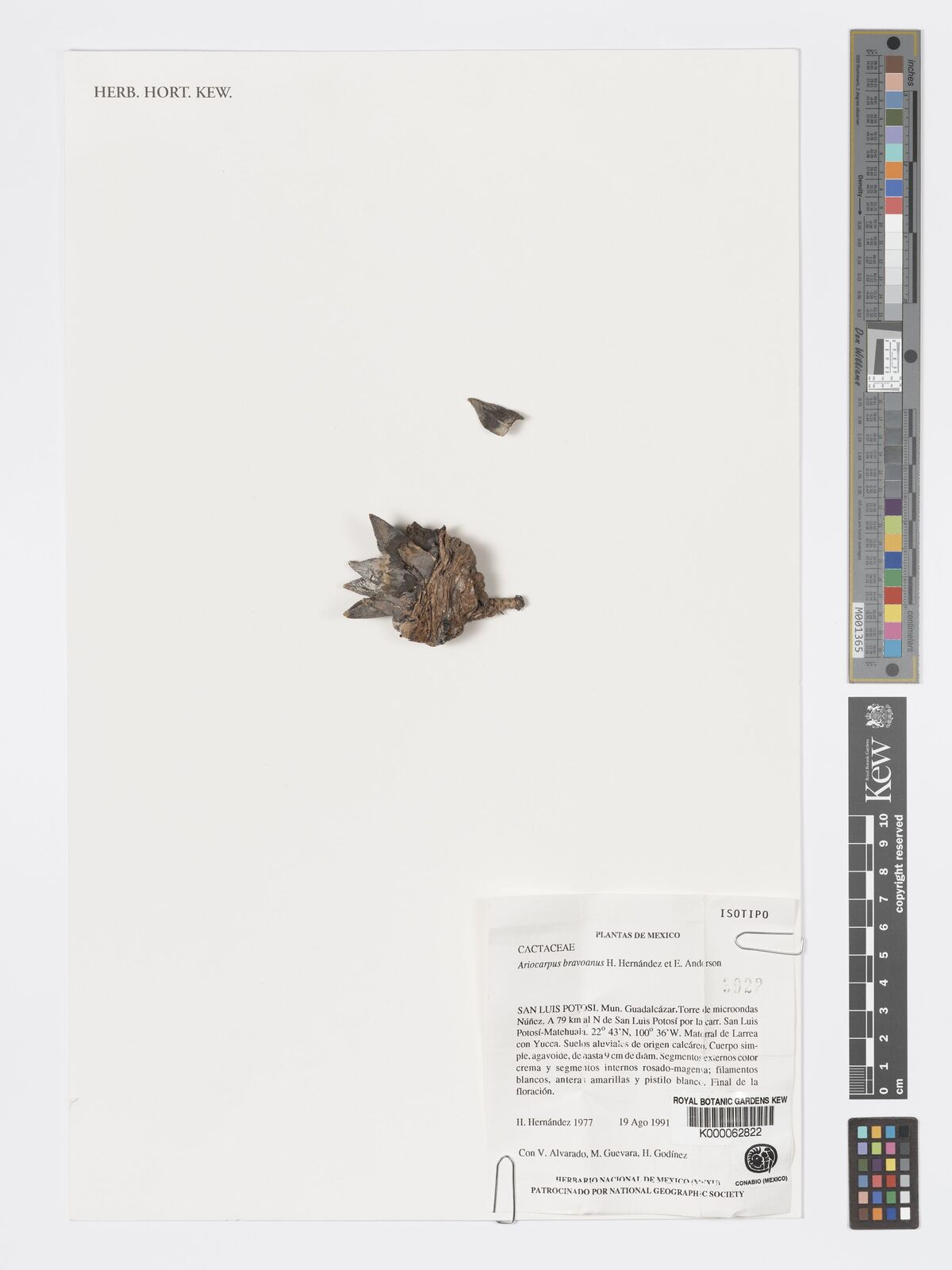
Ariocarpus bravoanus
Overview\n Ariocarpus bravoanus is an extremely slow growing, highly prized geophytic cactus known for its unique rosette shape. In habitat, it grows flush with the ground, making it difficult to spot .\n\n Taxonomy and naming\nBelonging to the genus Ariocarpus , this species was described in 1992 and named in honor of the prominent Mexican botanist Helia Bravo Hollis .\n\n Distribution and habitat\nEndemic to a very restricted area in San Luis Potosí, Mexico, it grows on limestone gravel slopes and plains within dry desert scrub ecosystems .\n\n Appearance\nThe plant has a flattened, greyish green subglobose stem with triangular, fissured tubercles. Central areoles are woolly, and vivid pink to magenta flowers emerge from the crown in autumn .\n\n Cultivation and care\nThis species is highly sensitive to excess moisture due to its large taproot. Cultivation requires a highly porous, purely mineral substrate and careful watering restricted to the active growing season.\n\n Common care mistakes$\nOverwatering during the winter rest period or using standard peat based potting soils will invariably lead to root rot and loss of the plant .\n\n References\n Anderson, E. F. (2001). The Cactus Family. Timber Press.\n Fitz Maurice, B & Fitz Maurice, W.A. (2013). Ariocarpus bravoanus. IUCN Red List.
Ariocarpus fissuratus
Ariocarpus fissuratus is a slow growing Ariocarpus capable of holding its body close to the soil and developing a thickened root. A broad flattened body, fissured looking triangular tubercles and woolly grooves create a cryptic, soil level habit. This does not indicate a need for continuous moisture; its native context combines intense light, mineral ground, airflow and rapid surface drying.

Ariocarpus kotschoubeyanus
Ariocarpus kotschoubeyanus is a slow growing Ariocarpus capable of holding its body close to the soil and developing a thickened root. A low body capable of remaining partly embedded, triangular tubercles and a woolly central groove or areole zone are characteristic; flowers emerge from the crown. This does not indicate a need for continuous moisture; its native context combines intense light, mineral ground, airflow and rapid surface drying.

Ariocarpus retusus
Ariocarpus retusus is a captivating species with a unique position among succulent cacti. Also known as the "Living Rock Cactus," this plant is remarkable for its flat, deeply fissured body that typically hides among rocks, close to the soil surface in its natural habitat. Belonging to the genus Ariocarpus within the Cactaceae family, this species is native to arid and semi arid regions stretching from southern Texas to central Mexico, particularly in the states of Coahuila, Nuevo León, and San Luis Potosí . Its slow growth rate and distinctive structure have made it highly popular among collectors.
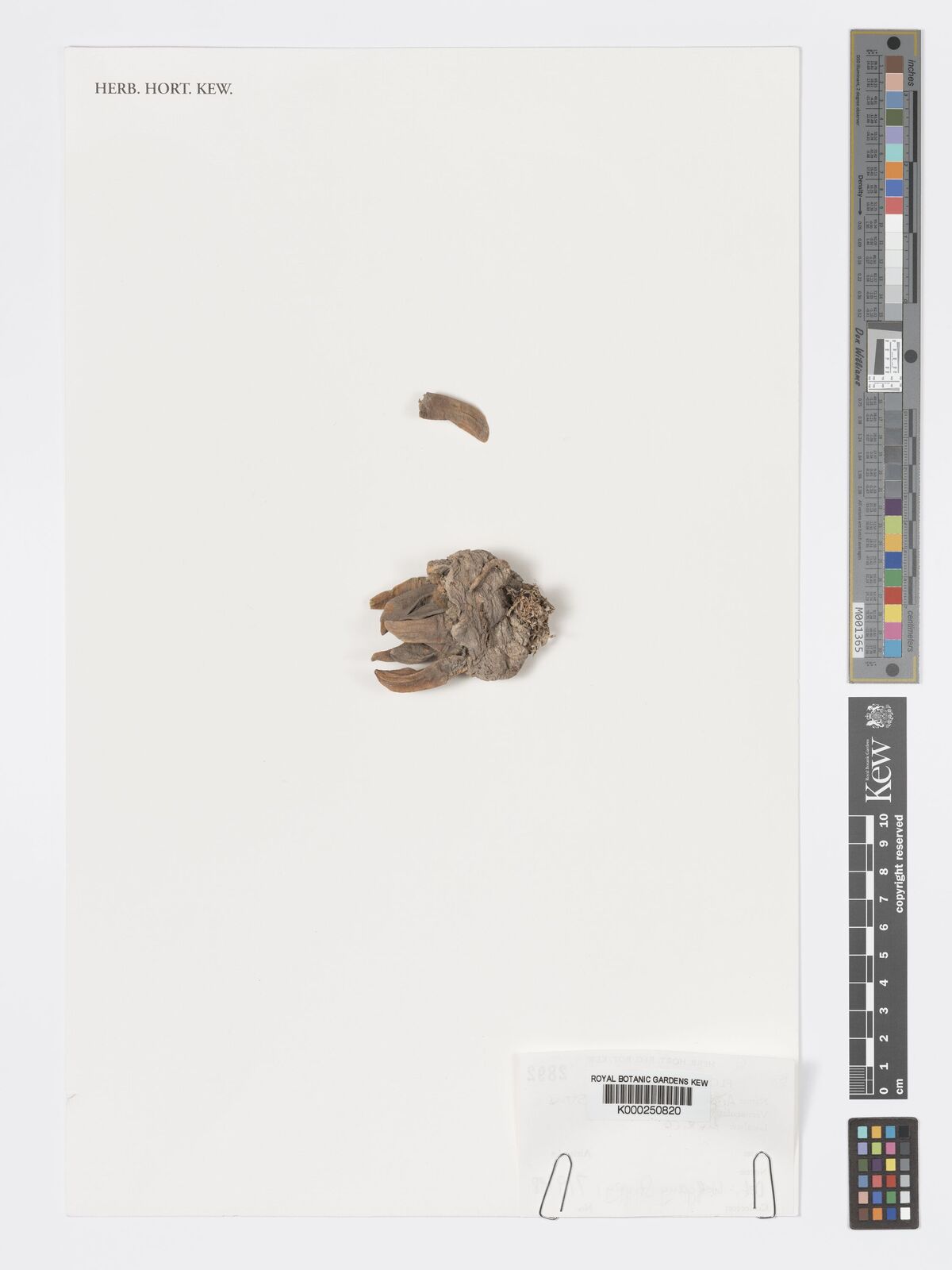
Ariocarpus scaphirostrus
Ariocarpus scaphirostrus (often spelled scapharostrus) is one of the rarest and most sought after species within the family Cactaceae. Highly prized by specialists, this slow growing geophytic cactus is severely threatened in its natural habitat due to illegal collection and environmental pressures .
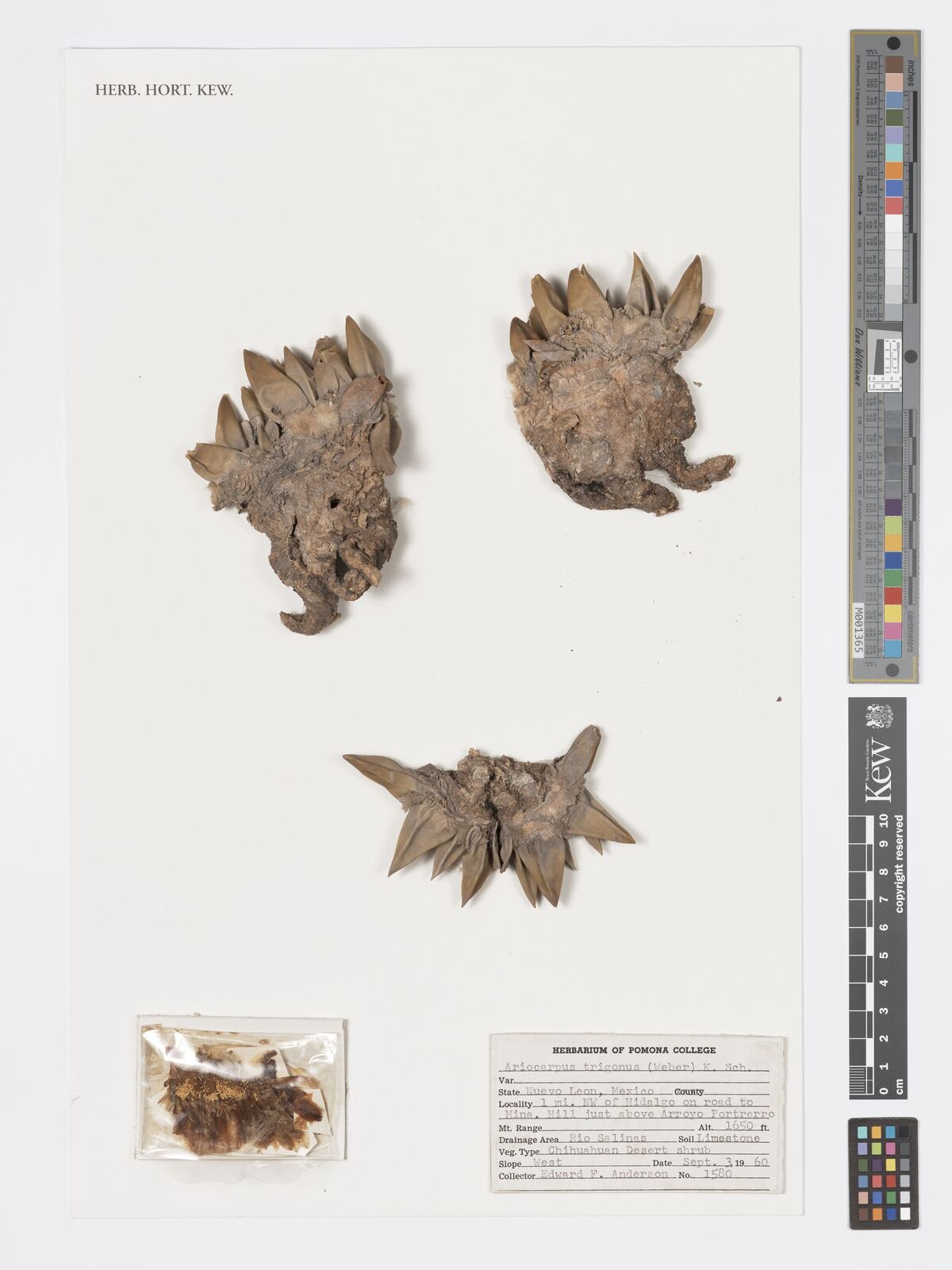
Ariocarpus trigonus
Ariocarpus trigonus is a highly sought after, extremely slow growing succulent subshrub in the family Cactaceae. Known for its rock like appearance in the wild, this geophytic cactus is a prized specimen among advanced collectors .
Ariocarpus × drabi
Ariocarpus × drabi is an exceptionally rare natural or artificial hybrid cactus within the Cactaceae family, generally understood to represent a cross between Ariocarpus kotschoubeyanus and Ariocarpus retusus . Highly prized by succulent connoisseurs, it is celebrated for its unique geometric aesthetics and extremely slow growth rate.
Ariocarpus × dubeniorum
Ariocarpus × dubeniorum is an extraordinary and highly prized geophytic cactus taxon within the family Cactaceae . Renowned for its exceptionally slow growth rate and unique rosette like morphology, this hybrid commands immense value among succulent and cactus enthusiasts globally. It requires expert level cultivation skills due to its delicate, moisture sensitive root system.
Ariocarpus × nelissae
Ariocarpus × nelissae is an extremely rare and highly prized natural hybrid within the iconic Ariocarpus genus of the family Cactaceae . Characterized by its geophytic habit and absence of traditional spines, this cactus mimics limestone rock formations.
Astrophytum asterias
Astrophytum asterias, commonly known as the "Sand Dollar Cactus" or "Star Cactus," is a highly sought after, spineless cactus species native to the arid regions of Mexico and Texas. Its diminutive size and distinctive flattened, spherical form have made it a favorite among cactus enthusiasts. This plant typically grows solitarily, reaching up to 15 cm in diameter and 2 6 cm in height. Its body is usually divided into eight prominent, flat ribs; however, variations with fewer or more ribs also exist.
Astrophytum capricorne
Astrophytum capricorne is a succulent subshrub in family Cactaceae, native to northeastern Mexico. The current Kew backbone treats it as an independently accepted species. The standard and nudum commercial presentations in the catalog share one botanical and taxonomy identity; “nudum” is not a second accepted species here.
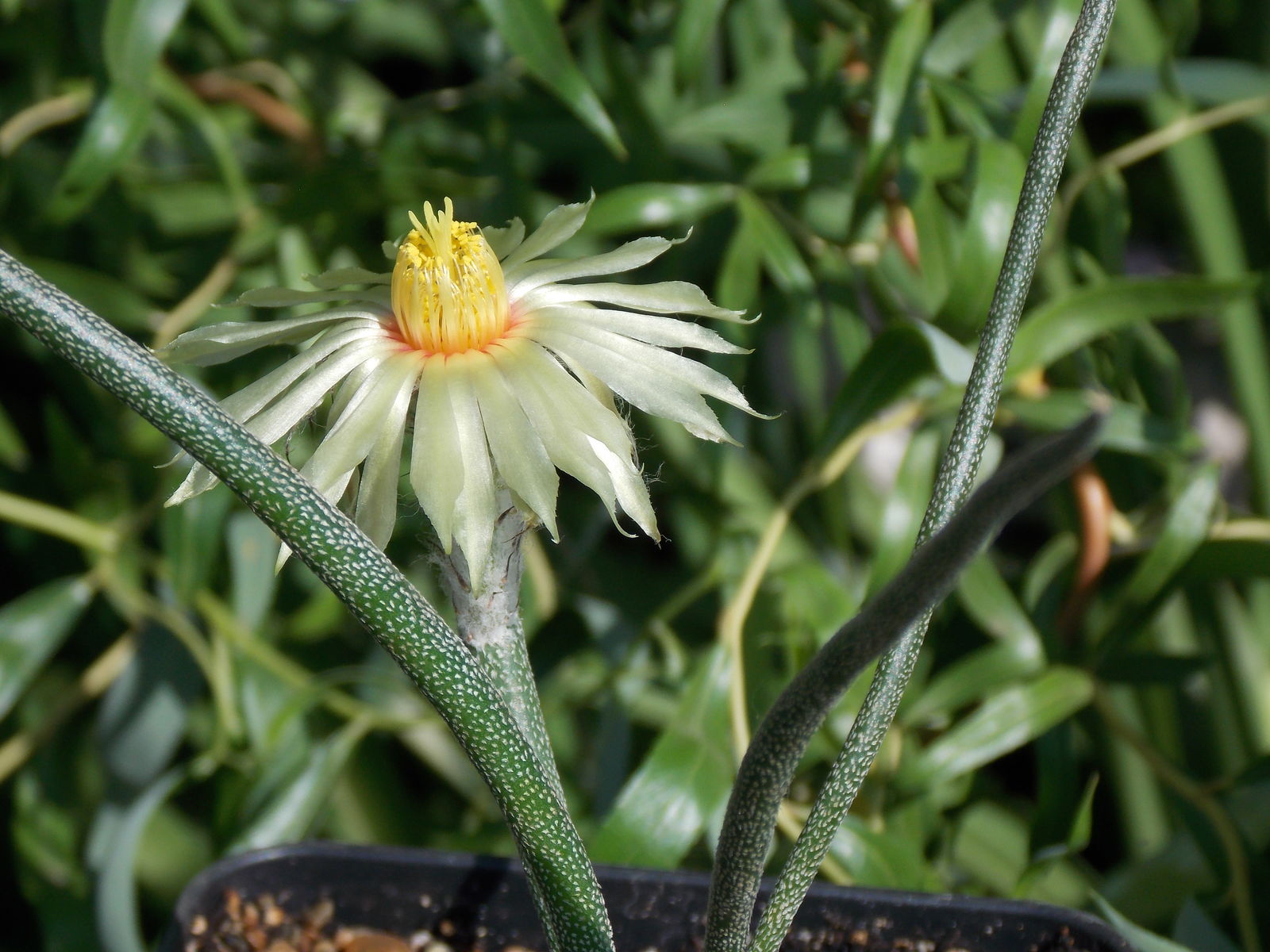
Astrophytum caput-medusae
Astrophytum caput medusae is one of the most remarkable and fascinating species in the Cactaceae family. Diverging from the traditional globose or columnar cactus forms, it is famous for its long, cylindrical tubercles that resemble the writhing snakes of Medusa's head. Discovered in 2002, it instantly became a sensation in the botanical world .
Astrophytum caput-medusae
Astrophytum caput medusae is one of the most remarkable and fascinating species in the Cactaceae family. Diverging from the traditional globose or columnar cactus forms, it is famous for its long, cylindrical tubercles that resemble the writhing snakes of Medusa's head. Discovered in 2002, it instantly became a sensation in the botanical world .
Astrophytum coahuilense
Astrophytum coahuilense is a species verified only from Coahuila that can resemble A. myriostigma through its flecked, usually spineless appearance but is accepted independently in the current backbone. The plant can resemble A. myriostigma through broad, usually spineless ribs, dense white epidermal flecks, and woolly areoles along the rib crests. The boundary is not based on vegetative appearance alone; a coloured throat in the yellow tepals, fruit dehiscence, seed characters, and provenance are evaluated together. A 2024 morphological study reported a complex combination of traits shared with A. capricorne and A. myriostigma rather than one fixed diagnostic character. Unlike the taxonomy article, the botanical dictionary layer explains the living plant's morphology, habitat context, and cultivation requirements.
Astrophytum myriostigma
Astrophytum myriostigma is a highly ornamental, spineless cactus species belonging to the Cactaceae family. It is commonly known as "Bishop's Cap Cactus" or "Bishop's Hat Cactus." Its name, derived from Greek "astro" (star) and "phyton" (plant), refers to the distinctive star shaped appearance of the plant's crown . This species is typically characterized by five prominent vertical ribs, which give it its unique star like or miter like shape. Some varieties may feature four or more ribs.
Astrophytum ornatum
Astrophytum ornatum is a natural species from north eastern Mexico to Veracruz, recognized by strong ribs and prominent spines and capable of becoming columnar with age. The species has one of the more distinctive appearances in the genus through a strongly ribbed stem that can elongate with age, prominent and usually strongly spined areoles along the rib crests, variable white flecking, and yellow flowers. Historical names such as glabrescens or mirbelii are not automatic identities for a modern potted plant. Unlike the taxonomy article, the botanical dictionary layer explains the living plant's morphology, habitat context, and cultivation requirements.
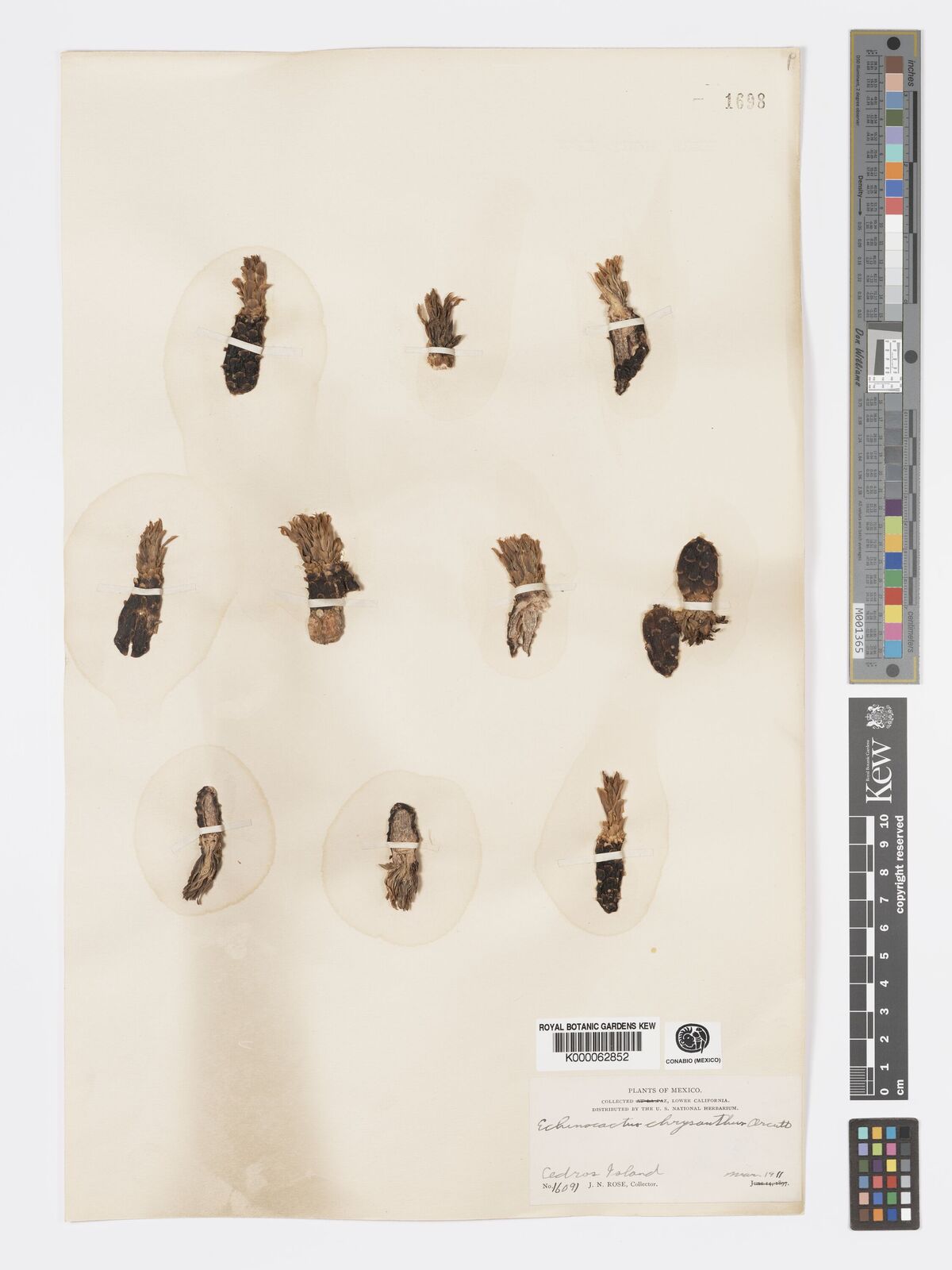
Ferocactus chrysacanthus
Overview\nFerocactus chrysacanthus is a slow growing, highly ornamental globose to cylindrical cactus belonging to the family Cactaceae. Famed for its dense, golden yellow armor of heavy spines, it is a highly sought after species among succulent and cacti enthusiasts .\n\n Classification and Nomenclature\nThe species was classified under the genus Ferocactus, which comprises the robust barrel cacti of North America. The specific epithet 'chrysacanthus' derives from the Ancient Greek words 'chrysos' (gold) and 'akantha' (spine), directly referencing its brilliant yellow spination .\n\n Natural Distribution and Habitat\nThis cactus is endemic to Mexico, specifically restricted to Cedros Island and the San Benito Islands off the west coast of Baja California. It thrives on steep, rocky coastal cliffs and windswept desert slopes, highly adapted to maritime fogs and arid conditions .\n\n Appearance\nTypically solitary, it begins as a globose stem and matures into a cylindrical body reaching up to 1 meter in height. It features around 21 prominent ribs covered in dense clusters of rigid, ringed, and slightly curved central spines that range from pale yellow to deep golden red. The funnel shaped flowers appear at the crown in summer, bearing yellow to orange hues .\n\n Cultivation and Care\nIn cultivation, it requires full sun exposure and an exceptionally porous mineral substrate to prevent water retention. Water thoroughly only when the growing medium is completely dry, and suspend watering almost entirely during the winter dormancy. It exhibits moderate frost tolerance if kept absolutely dry .\n\n Common Cultivation Errors\nOverwatering and poor soil drainage are the primary causes of root rot. Lack of sufficient direct sunlight leads to etiolation, loss of its compact shape, and duller, weaker spine development.\n\n References\n Plants of the World Online (POWO), Royal Botanic Gardens, Kew. \n IUCN Red List of Threatened Species, Ferocactus chrysacanthus Conservation Status.

Ferocactus diguetii
Ferocactus diguetii is one of the most spectacular and massive species within the Cactaceae family. Known for its towering barrel like form, it represents a remarkable evolutionary adaptation to island desert environments .

Ferocactus echidne
Ferocactus echidne, commonly known as the Sonora barrel cactus, is a robust, globose to cylindrical cactus species belonging to the Cactaceae family. Highly appreciated for its fierce golden spines and resilience, this species is a classic representative of the dry land flora of North America .
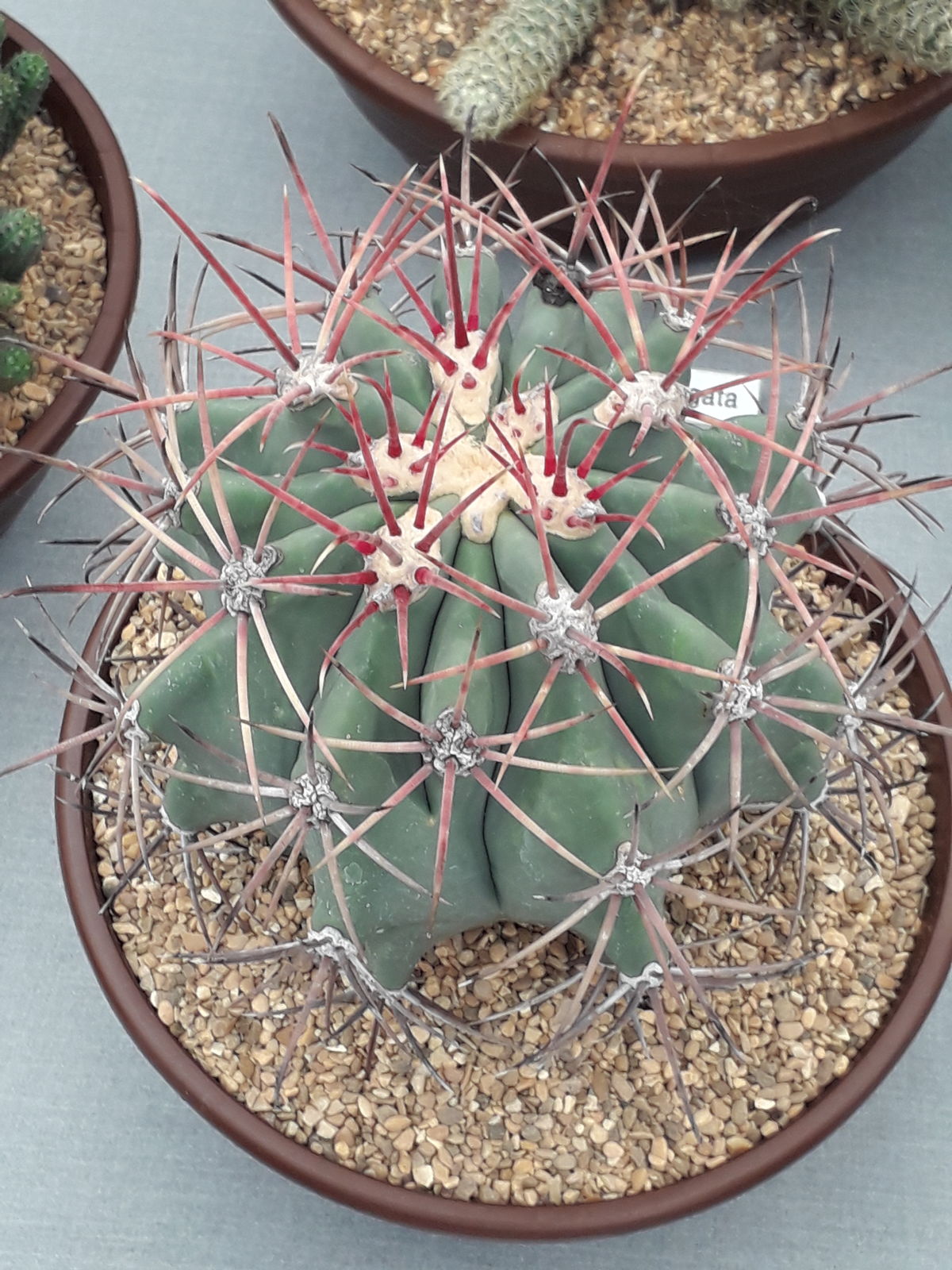
Ferocactus emoryi
Ferocactus emoryi, commonly known as Emory's barrel cactus, is an iconic, heavily spined member of the Cactaceae family . Adapted beautifully to harsh desert conditions, this slow growing succulent shrub is highly prized for its structural shape and longevity.

Ferocactus flavovirens
Ferocactus flavovirens is a clumping, succulent subshrub belonging to the family Cactaceae. Unlike many other solitary barrel cacti, this species is highly social, forming dense, multi headed mounds over time.
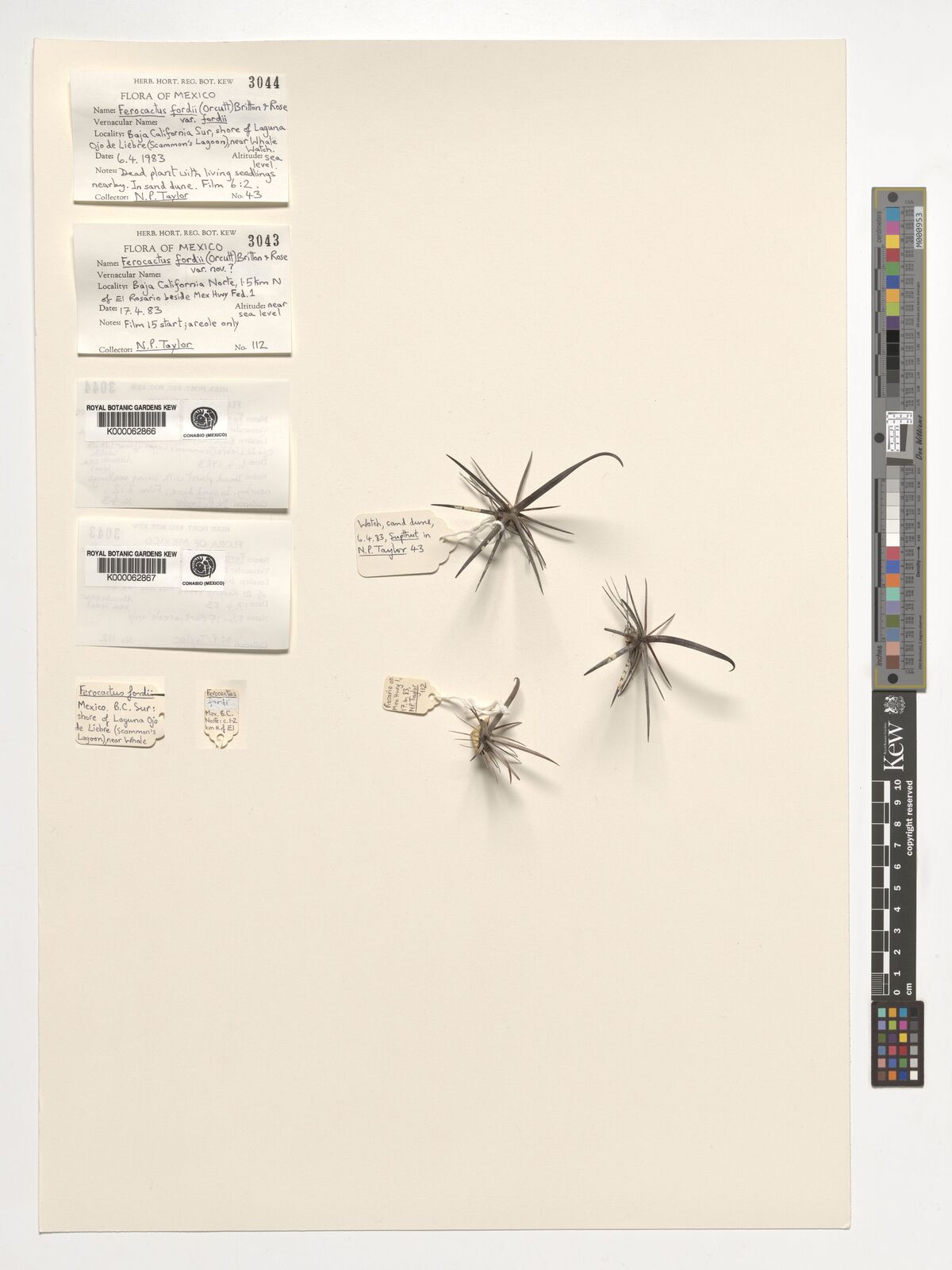
Ferocactus fordii
Ferocactus fordii is a distinctive, slow growing globose cactus within the Cactaceae family, highly prized by succulent enthusiasts for its stout, curved central spines and beautiful magenta blooms . It is well suited for xeriscaping and container cultivation.

Ferocactus glaucescens
Ferocactus glaucescens, commonly known as the Blue Barrel Cactus, is a highly sought after succulent subshrub famed for its glaucous blue green stem and contrasting bright yellow spines . It offers an iconic architectural shape ideal for xeriscaping.
