
Light
Direct Sun
Loves direct sunlight, but in very hot climates, it might benefit from protection from intense midday sun.
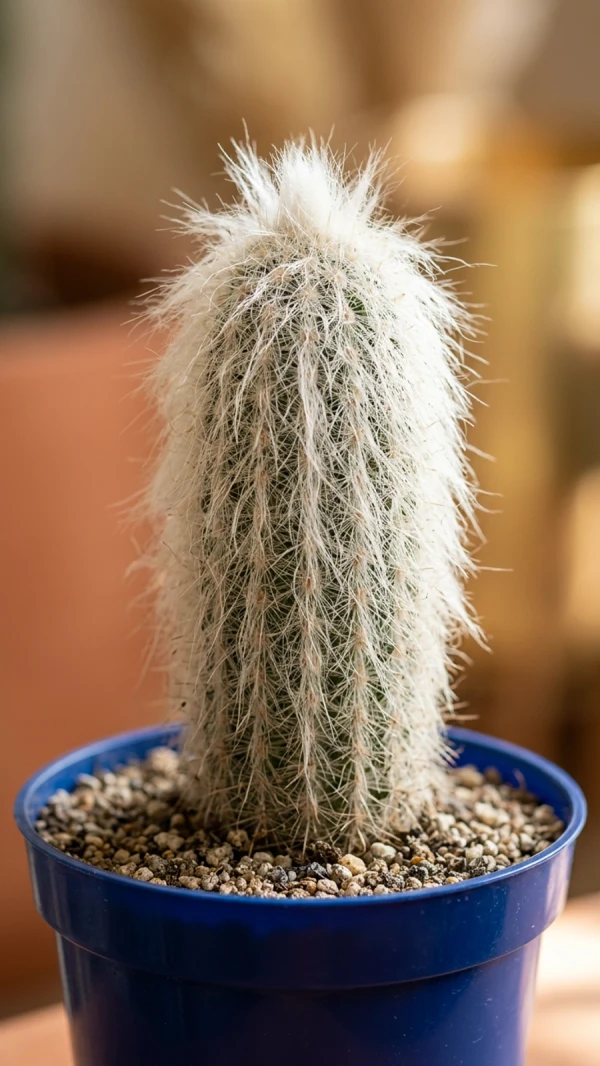
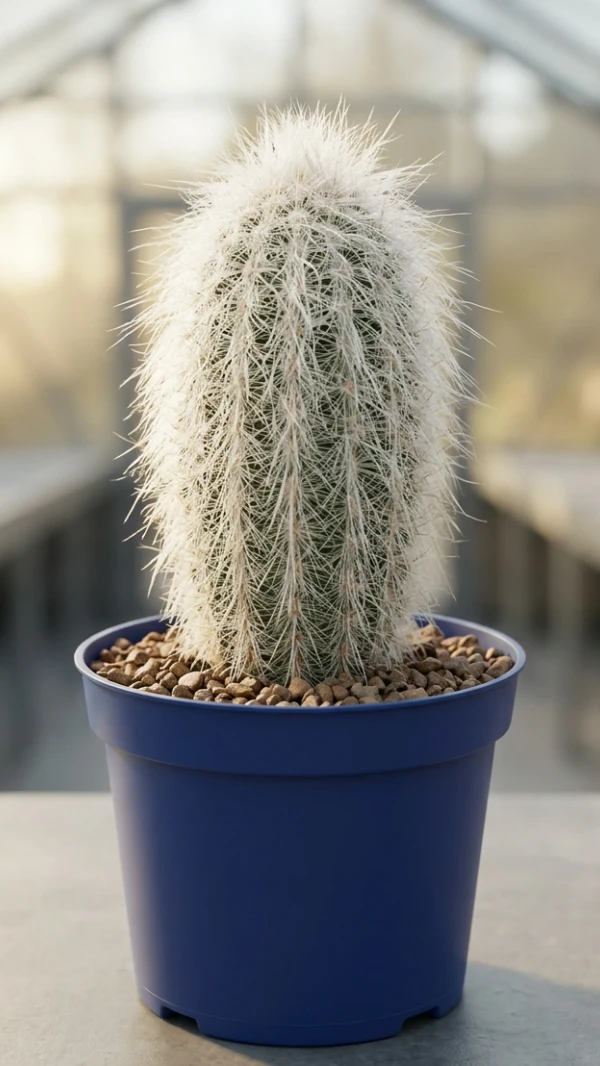
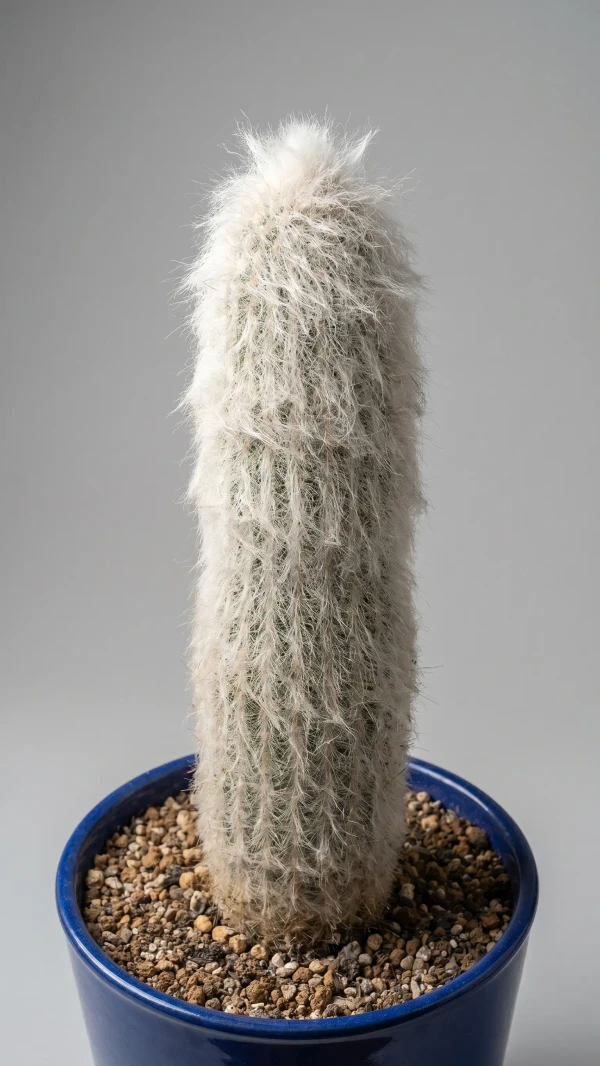
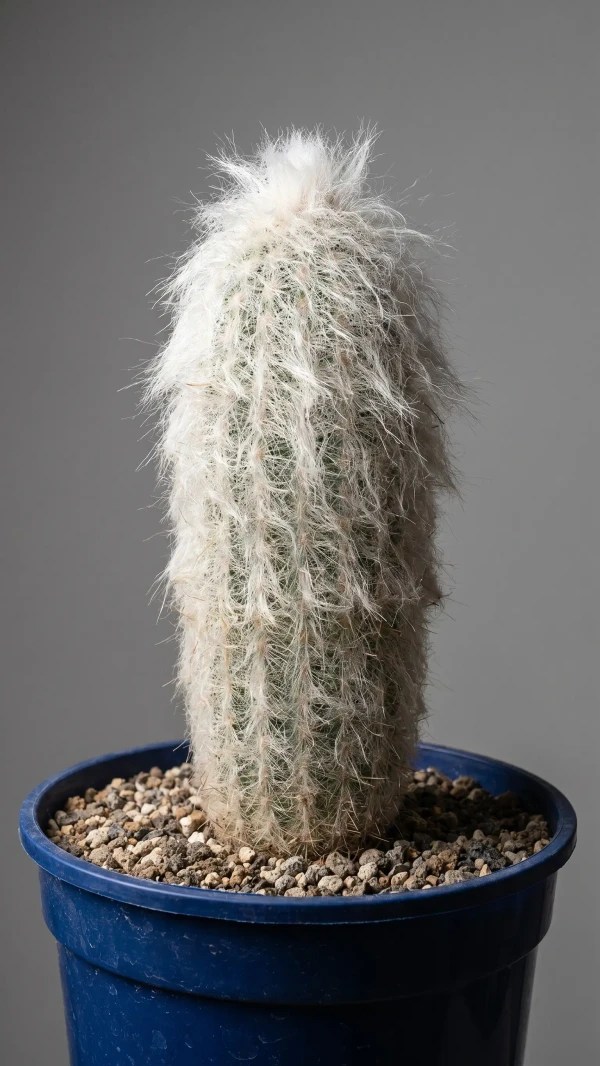
Old Man Cactus
The Cephalocereus senilis, commonly known as the Old Man Cactus, is an iconic and highly recognizable member of the cactus family (Cactaceae). It derives its name from the dense covering of long, white, hair-like bristles that resemble an old man's beard. Native to the arid regions of Mexico, this species exhibits a columnar growth habit and can reach impressive heights of up to 15 meters (50 feet) in its natural environment 1.
Cephalocereus senilis typically forms a single, erect stem, but it can also develop multiple stems branching from the base. The stem is heavily cloaked in thick white hairs, which serve to protect the plant from harsh UV radiation and help trap atmospheric moisture. Beneath these white bristles, short, yellowish spines are present on prominent ribs. While the hairs may be less pronounced on younger plants, their density increases significantly with age, contributing to the plant's distinctive 'hairy' appearance.
Mature Old Man Cacti produce tubular flowers, typically blooming at night, which can range in color from pink to red. These flowers emerge from a specialized flowering structure at the apex of the stem, known as a 'cephalium' 2. In their native habitat, they are pollinated by bats. The fruits that follow the flowers are small and edible, and the seeds play a vital role in the plant's natural propagation.
This cactus thrives in semi-arid and arid regions of Mexico, particularly in states like Hidalgo, Guanajuato, and Queretaro, often found on calcareous, rocky slopes and valleys. In its natural range, it coexists with other succulents and xerophytic shrubs. Unfortunately, Cephalocereus senilis is classified as Endangered (EN) on the IUCN Red List. The primary threats include habitat loss, illegal collection for the ornamental trade, and destruction of its natural areas due to agricultural expansion. Conservation efforts are crucial to secure the future of this unique species. When cultivated at home, with well-draining soil and ample sunlight, it can be a long-lived and striking companion.
References:
Loves direct sunlight, but in very hot climates, it might benefit from protection from intense midday sun.
Water when the soil is completely dry; overwatering leads to root rot. Almost no watering in winter.
Use a fast-draining, mineral-rich soil mix specifically formulated for cacti and succulents.
While not chemically toxic, handle with caution due to its long, sharp spines. Keep away from children and pets to prevent injury.
Considered moderately difficult to care for. Finding the right balance of light and watering is crucial for its health.
The Old Man Cactus is native to the semi-arid and arid regions of central Mexico. It naturally grows on limestone-based rocky slopes and in valleys, particularly across the states of Hidalgo, Guanajuato, Queretaro, San Luis Potosi, and Zacatecas. The dry climate and mineral-rich soils in these areas provide ideal conditions for this cactus to thrive. It is commonly found at elevations between 1000 and 2000 meters, coexisting with other desert vegetation.
