
Light
Direct Sun
A very bright position with gradually introduced direct sun supports strong, balanced columnar growth.
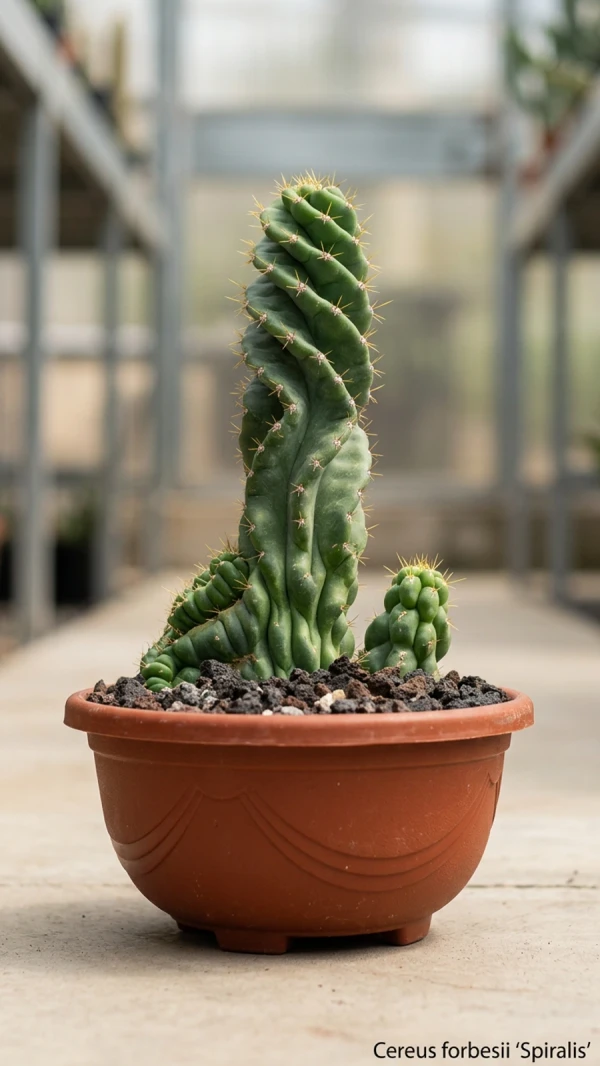
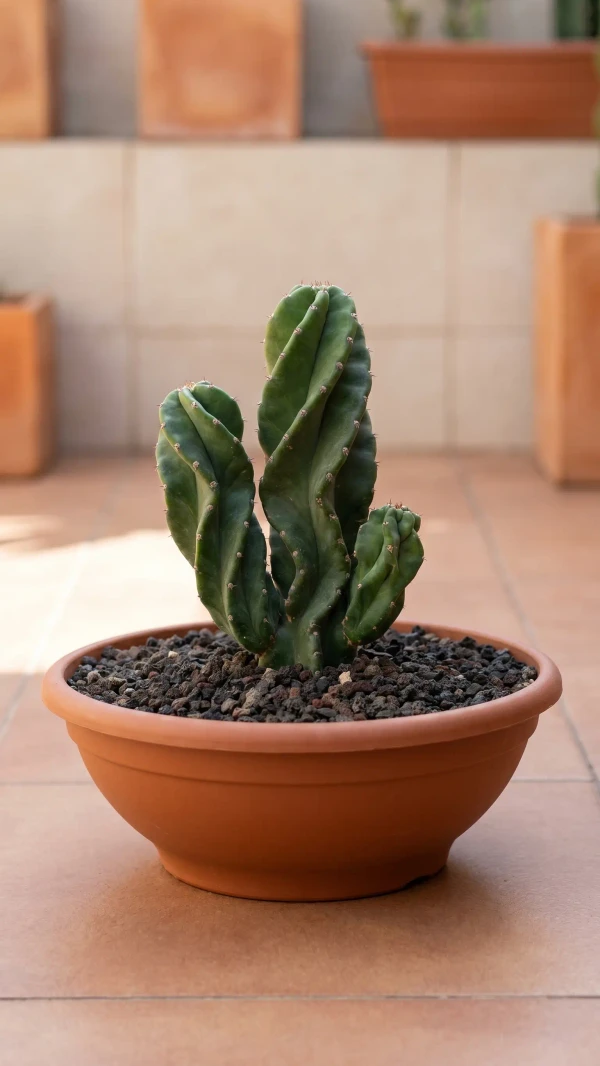
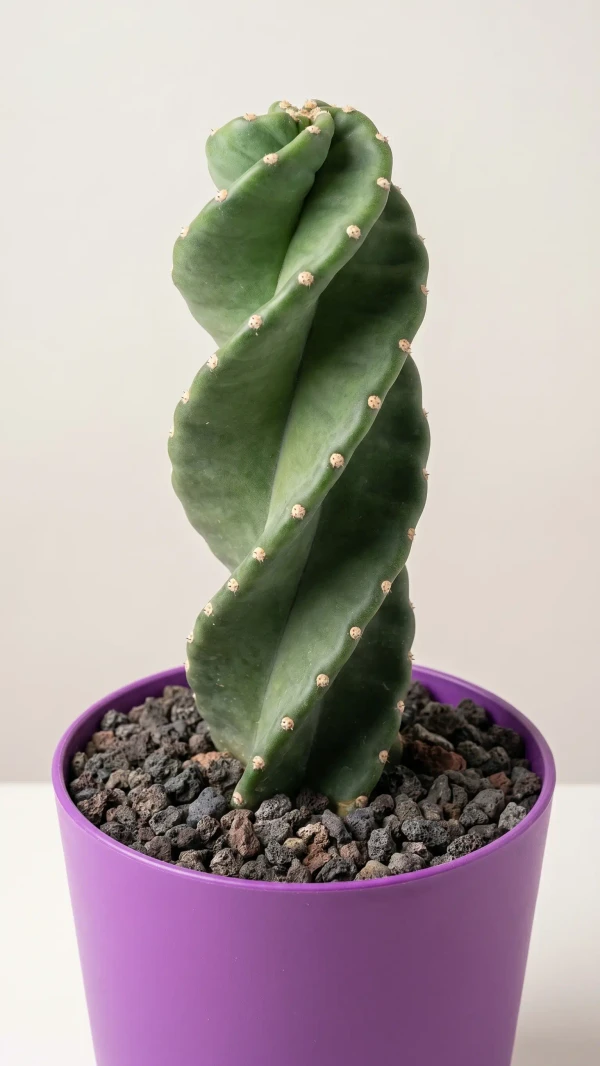
Blue Columnar Cactus
Cereus forbesii is a tree-like columnar cactus native from Bolivia and Paraguay into north-central Argentina. The wild species is treated as a tree-like columnar Cereus of South American desert and dry shrubland, with green to bluish stems and pronounced ribs. Species identity cannot be inferred from straight or spiral growth alone; flowers, fruit, areoles, and provenance also matter. Unlike the taxonomy article, the botanical-dictionary layer explains the living plant's morphology, habitat context, and cultivation requirements.
The verified native range is Bolivia, Paraguay, and north-eastern to north-western Argentina.1 POWO describes the species as a succulent tree of desert or dry-shrubland biomes. Its broad but dry-region distribution supports high air movement and rapid drying in cultivation rather than persistent moisture. Cultivation should not imitate a landscape as decoration; it should provide fast oxygen return to the root zone, a controlled wet-dry cycle, and strong light.
A very bright position with gradually introduced direct sun supports strong, balanced columnar growth. A tall plant raised under lower light should not be moved abruptly into harsh sun; increase exposure over several weeks. Wet roots during cool weather are generally more dangerous than controlled dry coolness.
Do not use a fixed-day calendar. During active growth, water thoroughly only after the mix has dried throughout and let every excess drain away. Drying slows during cool or low-light periods, so watering naturally becomes less frequent. Use a coarse, mineral-forward, airy, fast-draining mix and verify that the lower layers of a large pot do not remain wet.
Spiral stem growth is a conspicuous horticultural selection, but it is not a species, subspecies, variety, or synonym in the Kew backbone. Wild-species identity and the production identity of a particular spiral clone belong to separate content layers. Stem colour, branching, spine density, and flowering time vary among living specimens; a product photograph alone is neither a scientific diagnosis nor a record of a wild population.
The best-supported household concern is mechanical injury from the spines rather than a claim of chemical toxicity. Tall columnar plants also require protection against tipping and weight-related injury. The LC assessment is published by IUCN under Cereus hankeanus, a name treated by Kew as a synonym, rather than under the accepted name itself. Metadata will retain that assessed-name distinction; commercial stock is not evidence of wild-population status.
A very bright position with gradually introduced direct sun supports strong, balanced columnar growth.
Do not use a fixed calendar. Water deeply after complete drying and reduce frequency during cool or low-light periods.
A coarse, mineral-forward, airy cactus mix that dries rapidly even in a large container.
Spines present a mechanical injury risk. The LC assessment is published by IUCN under *Cereus hankeanus*, a name treated by Kew as a synonym, rather than under the accepted name itself. Metadata will retain that assessed-name distinction; commercial stock is not evidence of wild-population status.
It is manageable with fast drainage and strong light; hidden moisture in large pots, tipping, and mistaking growth form for taxonomy are the main risks.
Bolivia, Paraguay, and north-eastern to north-western Argentina.[^1] [^1]: Plants of the World Online. “Cereus forbesii.” Accessed: 2026-08-04. https://powo.science.kew.org/taxon/urn:lsid:ipni.org:names:130203-1
