
Light
Bright Indirect Light
Prefers bright indirect light or filtered sun for at least 6 hours daily.
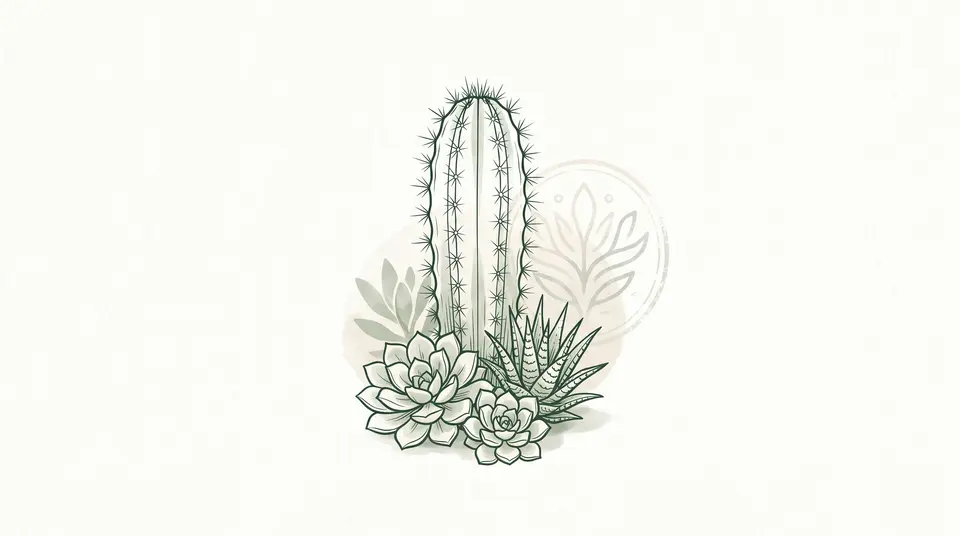 Reference image
Cereus subulifer is a rare and highly specialized columnar cactus species belonging to the Cactaceae family 1. It remains an intriguing species among collectors due to its distinct, stiff spine structure and classical columnar growth form.
Classified under the genus Cereus, its specific epithet subulifer is derived from Latin, meaning "bearing awl-shaped spines" 2. This refers to the stiff, needle-like central spines protruding from its areoles.
While its precise natural distribution is poorly documented, it is believed to originate from the semi-arid, rocky slopes of South America, matching the habitat of closely related columnar cacti 1.
This species features erect, cylindrical stems that may branch from the base with age. The stems have prominent ribs lined with fuzzy woolly areoles. These areoles bear strong, awl-shaped greyish-brown spines 2. It produces nocturnal white or cream-colored flowers designed to attract nocturnal pollinators like moths.
In cultivation, it requires highly porous, mineral-rich gritty soil and plenty of bright indirect light. Water only when the potting mix is thoroughly dry, and reduce watering drastically during winter dormancy.
The most prevalent error is overwatering in dense, clay-heavy soils, which inevitably causes root rot 1. Lack of air circulation in high-humidity areas can also promote fungal infections.
Prefers bright indirect light or filtered sun for at least 6 hours daily.
Water only when the substrate is fully dry. Keep almost dry in winter.
Requires highly porous, grit-heavy soil mix with pumice and sand.
Equipped with sharp, awl-shaped spines. Keep away from pets and children.
Moderately easy if overwatering is avoided and drainage is perfect.
It is believed to inhabit dry, rocky terrains and scrublands in South America.
