
Light
Bright Indirect Light
Requires bright indirect light or partial direct sun; protect from scorching midday summer heat.
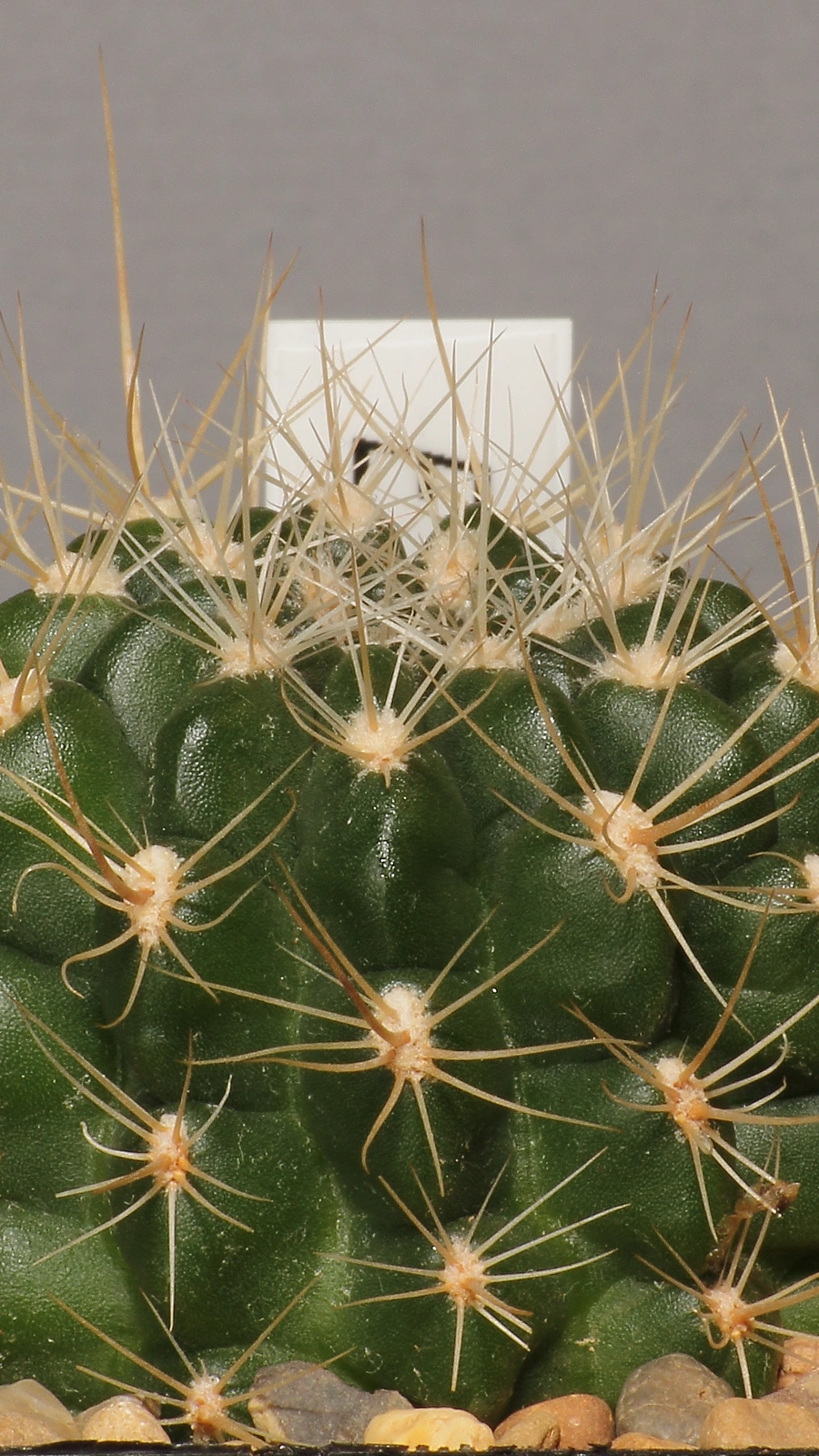 Reference image
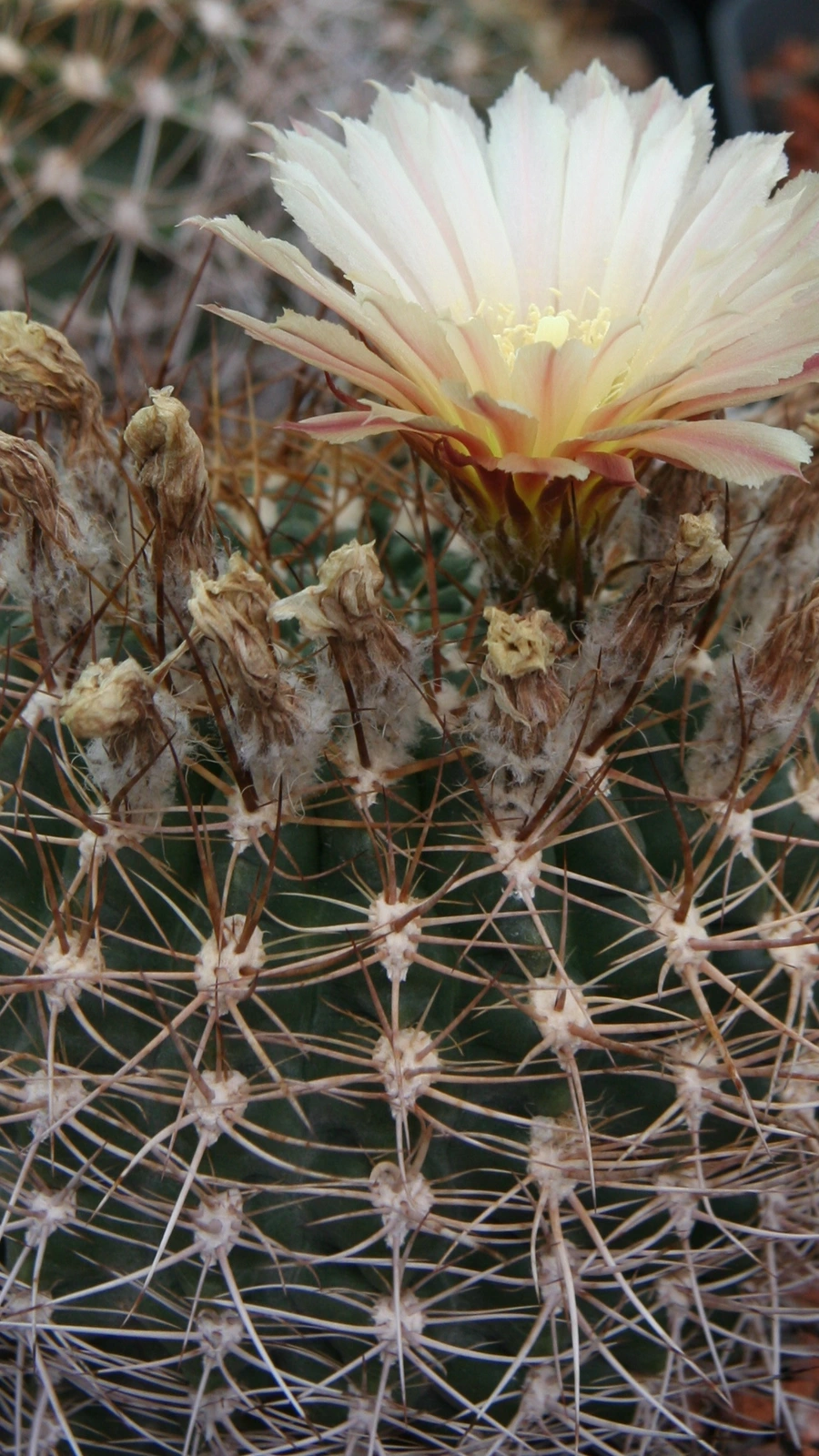 Reference image
Eriosyce aspillagae is a rare, slow-growing, globose cactus species belonging to the family Cactaceae. In its native habitat, it displays a geophytic tendency, often remaining semi-buried in the soil to endure extreme dry periods 1.
Classified under the diverse genus Eriosyce, this species has historically been placed in Neoporteria and Pyrrhocactus. The specific epithet 'aspillagae' honors the prominent Aspillaga family of Chile, who supported botanical and agricultural exploration 2.
This species is strictly endemic to the central coastal region of Chile. It inhabits Mediterranean-type dry shrublands and rocky coastal slopes, growing in well-drained, nutrient-poor mineral soils 1.
The stem is solitary, flattened-globose, and dark green to greyish-green. It features pronounced, tuberculate ribs adorned with dense, curved, dark-colored spines. The funnelform flowers arise from the woolly apex, displaying shades of pale yellow, cream, or light pinkish-yellow 2.
In cultivation, Eriosyce aspillagae requires excellent drainage and low humidity. It thrives under bright, filtered sunlight with ample fresh air. Water should be applied sparingly during the growing season and suspended almost entirely in winter to prevent root damage 1.
The most prevalent issue is root rot triggered by overwatering or dense, organic-rich potting soils. Insufficient light leads to etiolation, stretching the natural globose form of the cactus into an unnatural pale shape.
Requires bright indirect light or partial direct sun; protect from scorching midday summer heat.
Allow the substrate to dry out entirely between waterings. Restrict watering in winter.
Highly porous mineral substrate containing pumice, gravel, and minimal organic compost.
Spines are sharp and rigid. Non-toxic to pets, but physical contact should be avoided.
Moderate to difficult due to sensitive roots that rot easily under excessive moisture.
Endemic to the coastal hills of central Chile, adapted to survive in dry, rocky soils under a Mediterranean-type climate.
