
Light
Full Sun
Requires at least 6 hours of direct sun daily. Insufficient light leads to unsightly stretching.
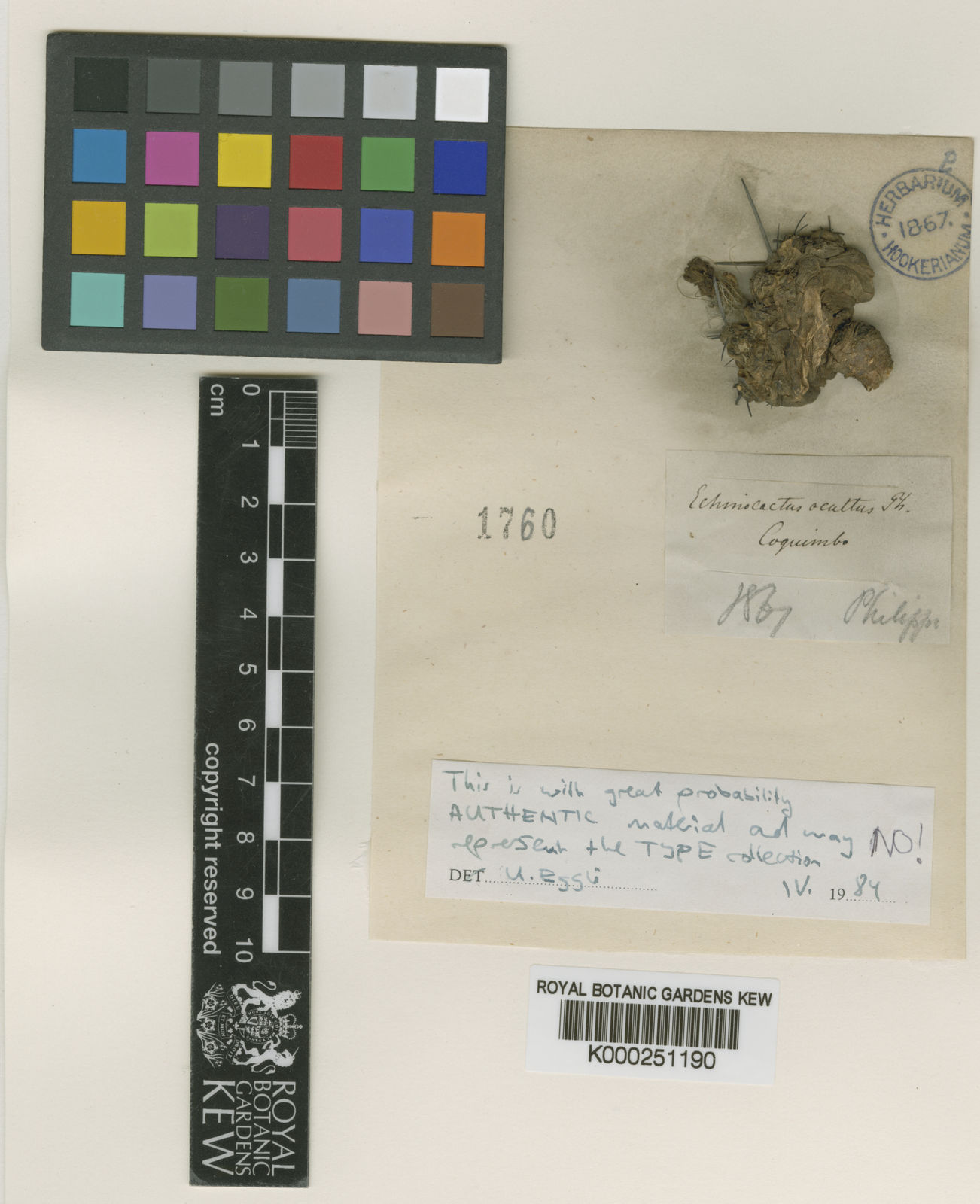 Reference image
Heinrich's Eriosyce
Eriosyce heinrichiana is a small, highly decorative cactus species in the family Cactaceae, native to the arid coastal regions and valleys of Chile 1. Formerly classified under the genera Neoporteria or Pyrrhocactus, it is prized by succulent enthusiasts for its dark-pigmented stem and elegant blooms.
The species belongs to the diverse genus Eriosyce, which groups South American cacti adapted to extreme coastal fog and hyper-arid desert environments 2. It honors the German botanist Heinrich.
This cactus is distributed across the Atacama, Coquimbo, and Valparaíso regions of Chile. It inhabits rocky slopes, gravelly coastal hills (lomas), and dry shrublands, often thriving in pockets of poor, mineral soil.
It features a globose to short-cylindrical stem, ranging in color from olive green to dark grayish-brown or nearly black. The prominent ribs hold small areoles with dark, needle-like spines. In spring and summer, it produces funnel-shaped flowers that vary from pale yellow and greenish-cream to copper-red.
In cultivation, Eriosyce heinrichiana requires maximum light exposure and extremely porous, mineral-based soil. It tolerates brief light frost (down to -2°C) if kept completely dry in winter 2. Watering should be sparse and strictly confined to the active growing season.
The most frequent mistake is overwatering, especially during winter dormancy, which quickly causes root rot 1. Insufficient sunlight leading to etiolation (stretching) and poor air circulation also weaken the plant.
Requires at least 6 hours of direct sun daily. Insufficient light leads to unsightly stretching.
Water thoroughly only when the soil is dry. Suspend watering entirely during winter.
Use a highly mineral mix with at least 50% grit, pumice, or perlite for optimal drainage.
Armed with sharp spines; keep out of reach of children and curious pets.
Moderate. Demands careful water management and cool, dry wintering conditions.
Endemic to the coastal hills and semi-desert terrains of northern and central Chile, particularly in the Atacama and Coquimbo regions.
