
Light
Full Sun
Requires full, direct sun. Best placed in south-facing windows, greenhouses, or outdoor patios.
 Reference image
 Reference image
Islaya Cactus
Eriosyce islayensis is a slow-growing, highly xerophytic, and coveted globose cactus species belonging to the Cactaceae family 1. It is well-regarded for its dense spination and bright yellow apical flowers.
Originally described as Echinocactus islayensis, it was later placed under the genus Islaya. Modern phylogenetic studies have consolidated it under the diverse genus Eriosyce 2. The specific epithet islayensis refers to its discovery site in the Islay province of Peru.
It is native to the coastal cliffs and dry hills of southern Peru and northernmost Chile, thriving in the hyper-arid coastal Atacama desert 1. This extreme habitat relies almost entirely on the dense coastal fog locally known as 'camanchaca' for atmospheric moisture.
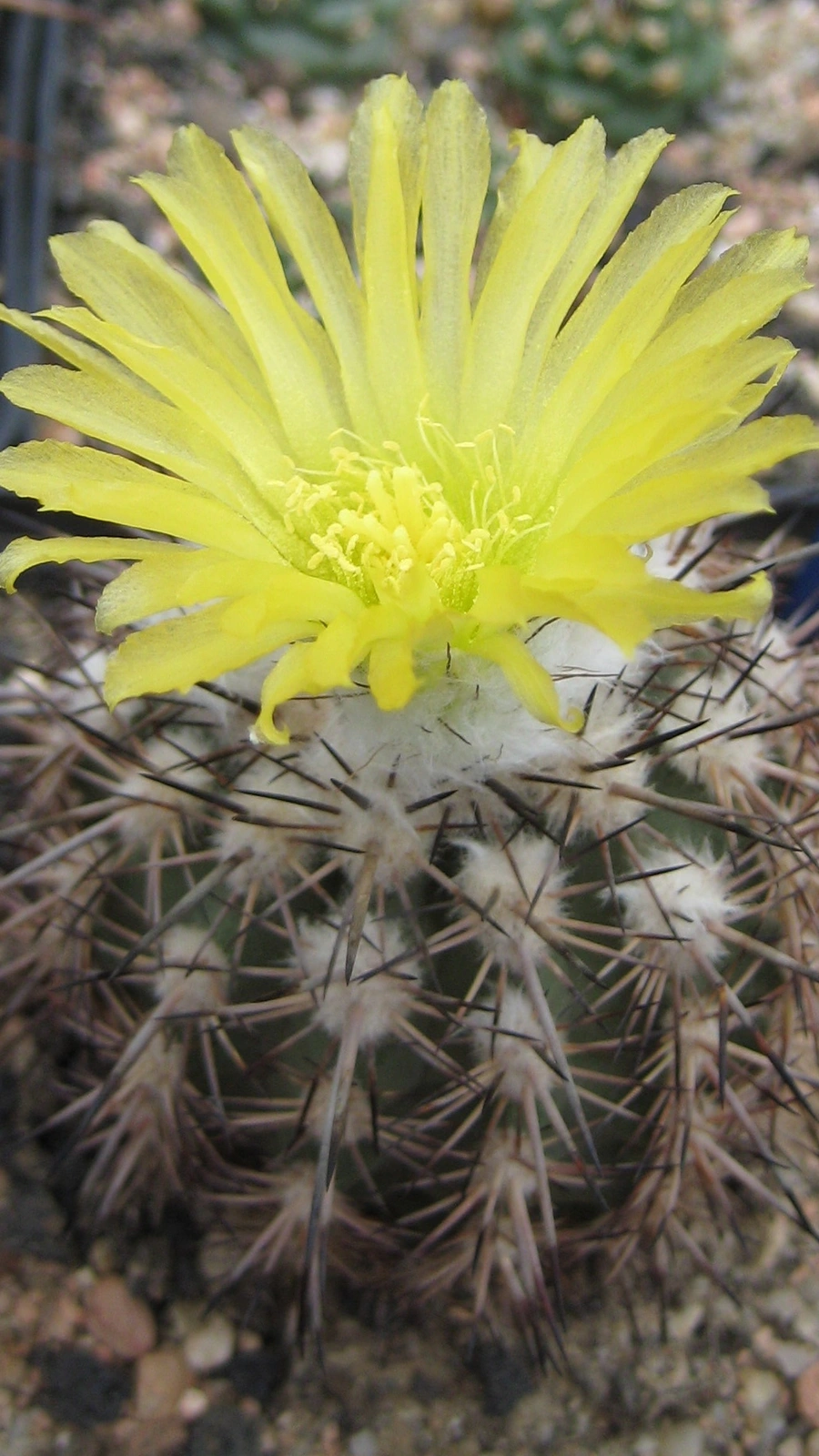
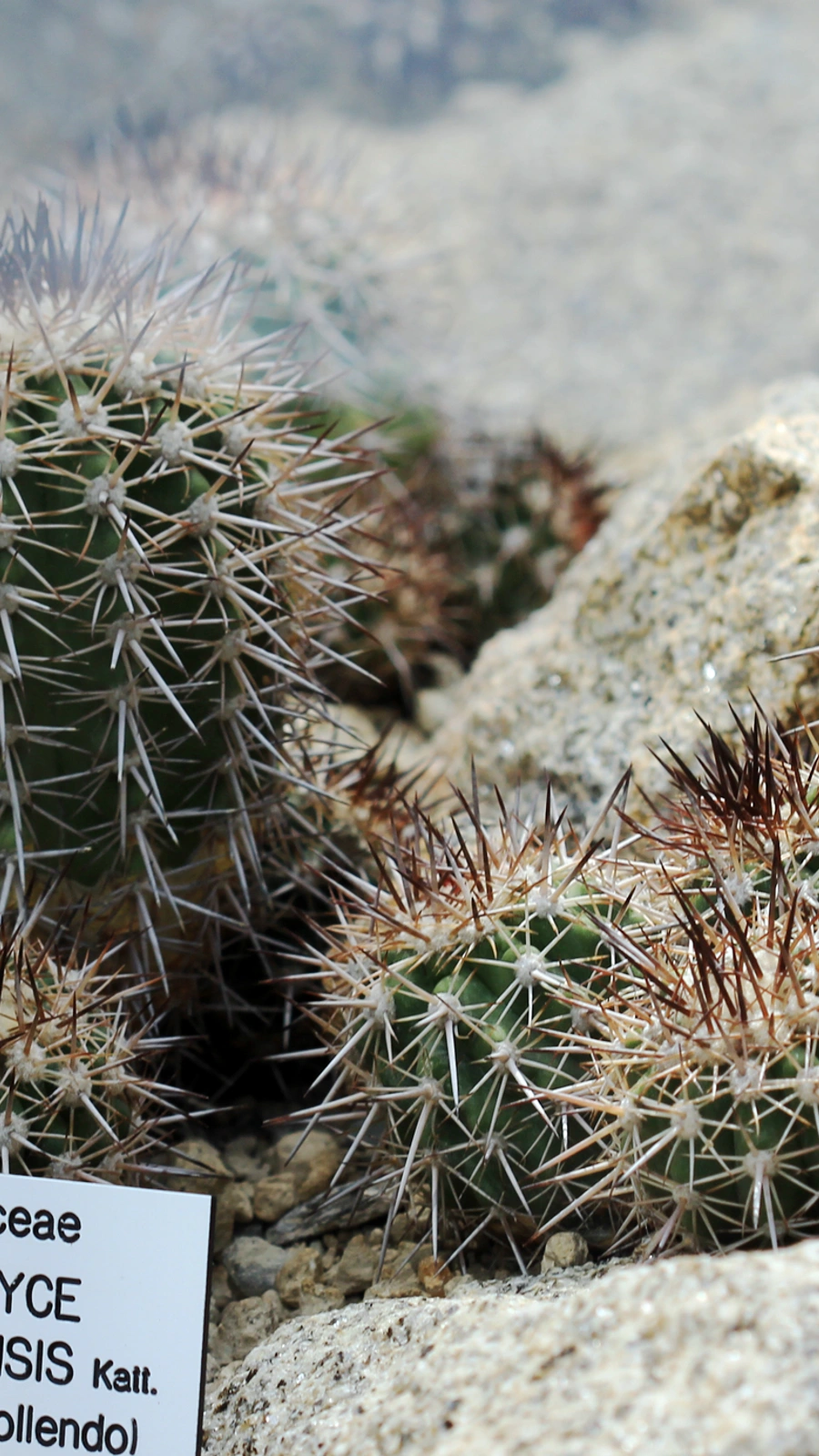
The plant has a globose to short cylindrical body, covered in a dense network of greyish-yellow to blackish-brown radial and central spines. The apex features a heavily felted, woolly crown. During summer, funnel-shaped, sulfur-yellow flowers emerge from this woolly apex, followed by decorative, hollow, pinkish-red balloon-like fruits.
Replicating its wild habitat in cultivation is challenging. It demands full sun exposure, excellent ventilation, and a strictly mineral substrate. Due to its highly sensitive taproot, moisture management is critical.
The most prevalent failure is using organic peat-rich soils and watering during winter dormancy, which inevitably triggers root rot 2. Lack of direct sunlight will also cause etiolation, ruining its compact form.
Requires full, direct sun. Best placed in south-facing windows, greenhouses, or outdoor patios.
Water minimally during spring and summer only after the soil dries out completely. Absolutely dry in winter.
Must be potted in a 90% mineral mix of pumice, grit, and clay, with virtually no organic matter.
Non-toxic, but the extremely dense and stiff spines can cause painful punctures. Handle with thick gloves.
High difficulty due to extreme sensitivity to overwatering and root rot.
Naturally distributed along the arid coastal cliffs of Southern Peru and Northern Chile. It survives in one of the driest places on Earth by absorbing water droplets from the dense marine fog that rolls over the coastal hills.
