
Light
Full Sun
Requires full sun to maintain dense spine structure and deep colors.
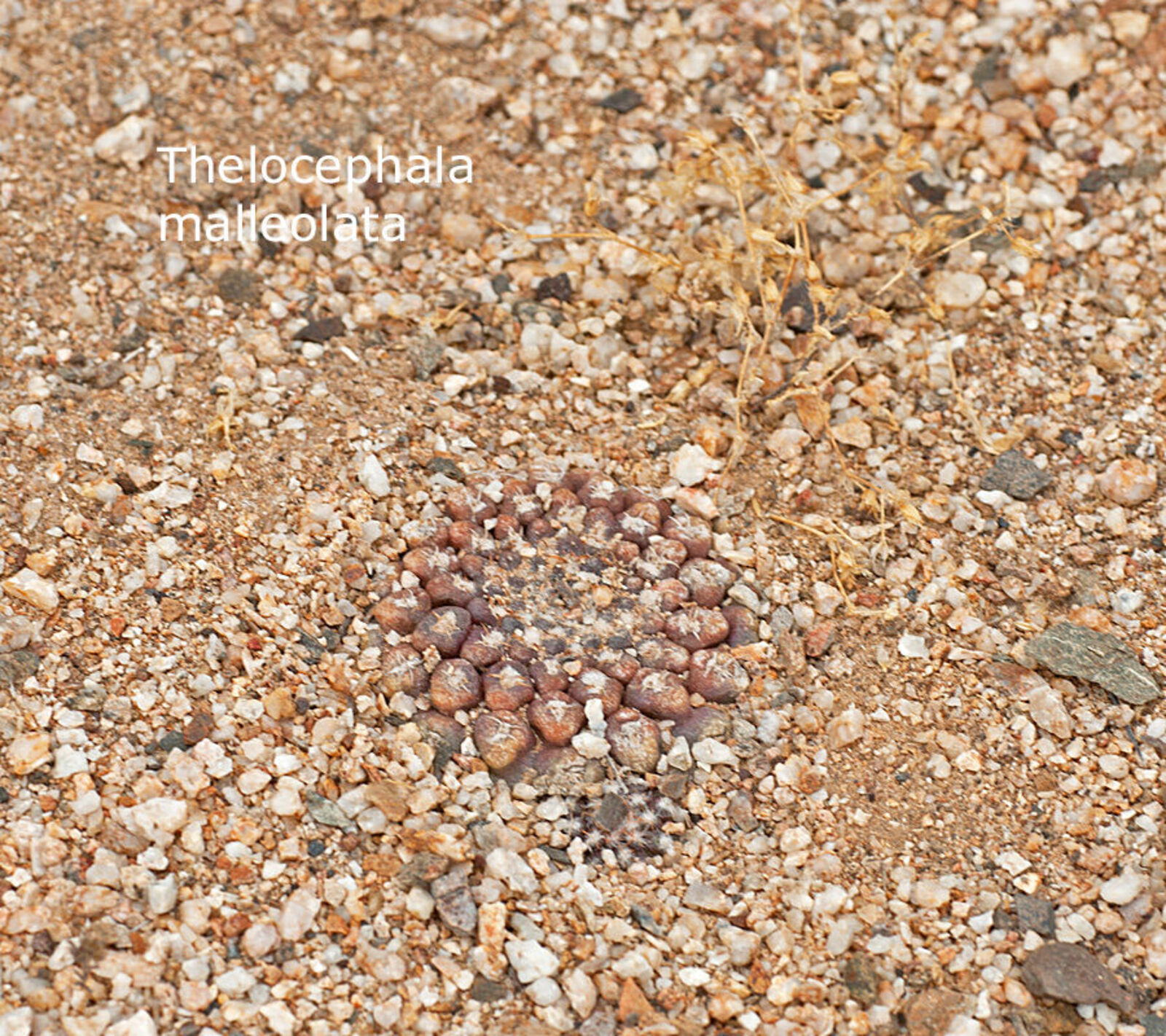 Reference image
Eriosyce malleolata is a highly specialized, slow-growing succulent subshrub belonging to the Cactaceae family. Native to the arid landscapes of Chile, this species is admired by succulent enthusiasts for its distinct dark-pigmented epidermis and robust spination 1.
Positioned within the diverse genus Eriosyce, it has historically been grouped under Neoporteria and Pyrrhocactus. The specific epithet "malleolata" translates to hammer-like or mallet-shaped, pointing towards the physical attributes of its tubercular structure and heavy spines 2.
This species is restricted to the coastal deserts and high-altitude rocky slopes of northern and central Chile 1. It thrives in environments characterized by extreme aridity, surviving on minimal rainfall supplemented by dense coastal fogs known locally as camanchaca.
The stem is solitary, globose to briefly cylindrical, presenting a dark grey-green to purplish hue. Sharp, rigid, often curved dark spines emerge from distinct woolly areoles. The diurnal flowers emerge at the apex, showing shades of pale yellow, cream, or light pink 2.
In cultivation, it demands a strictly mineral substrate with superb drainage. Bright, direct sunlight is essential for maintaining its natural compact form and dense spination. During its winter dormancy, it should be kept entirely dry, where it can tolerate cool temperatures near freezing.
Using peat-heavy, water-retentive organic soils and watering during winter dormancy are the most common causes of root rot and plant loss.
Requires full sun to maintain dense spine structure and deep colors.
Strictly soak and dry; completely dry in winter.
Highly mineral substrate with very low organic content.
Non-toxic, but sharp spines require careful handling and placement away from pets and children.
Moderate; susceptible to overwatering, but very hardy under dry conditions.
Found on gravelly and rocky mountain slopes of northern Chile, where it survives in dry conditions by relying on morning condensation.
