
Light
Full Sun
Full, direct sun. Insufficient light causes the plant to stretch and lose its characteristic flat shape.
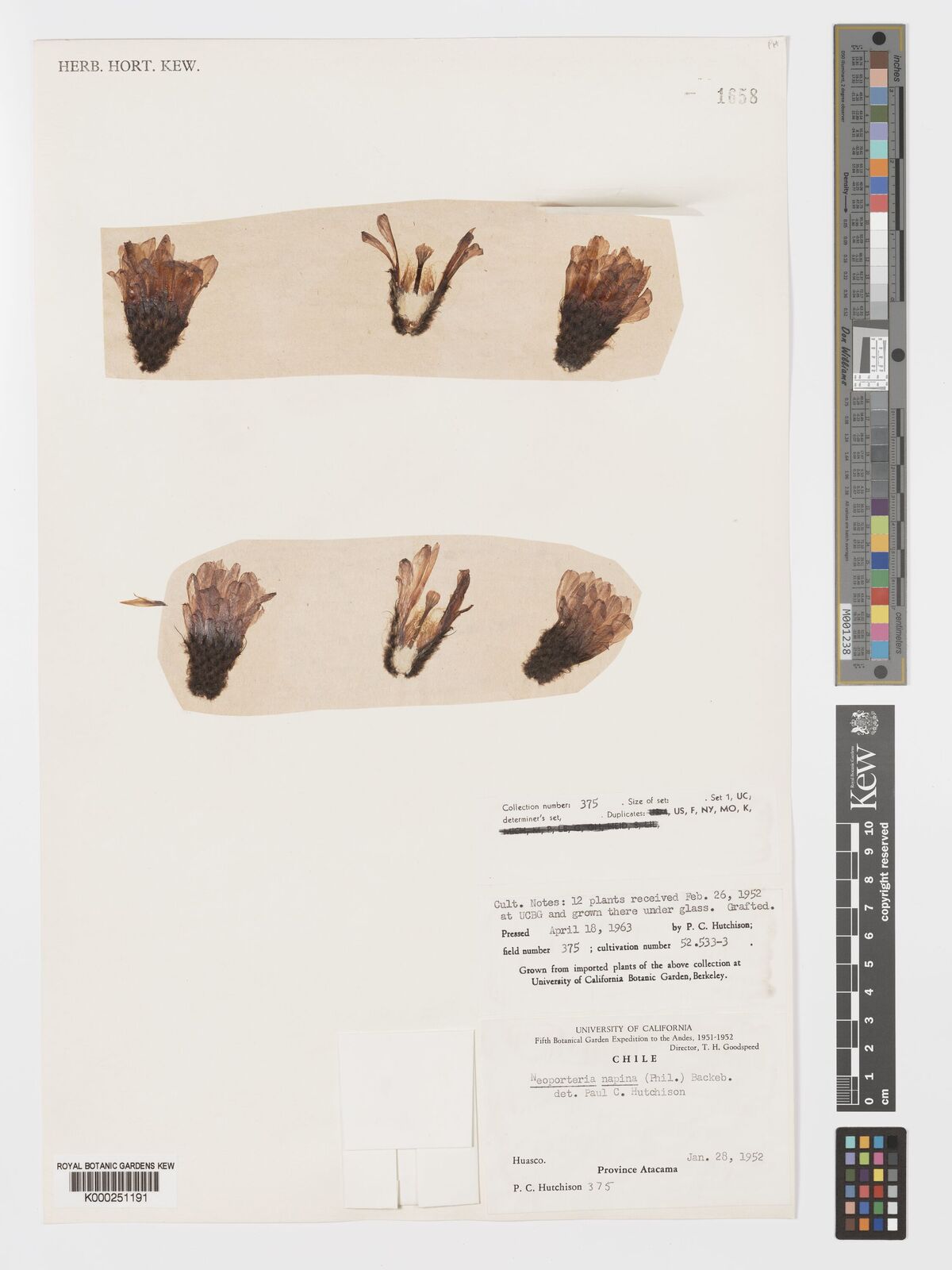 Reference image
Eriosyce napina is a highly specialized, slow-growing geophytic cactus from the family Cactaceae. Known for its remarkable adaptation to extreme drought, this species naturally grows almost completely flush with the surrounding soil, making it a highly sought-after specimen among succulent collectors due to its dark, geophytic stem and massive taproot.
Originally described by Rudolph Amandus Philippi as Echinocactus napinus, the species was later transferred to the genus Eriosyce during the extensive monograph revision by Fred Kattermann 1. The specific epithet napina translates to "turnip-like" in Latin, a direct reference to the plant's large, fleshy, water-storing napiform taproot 2.
This cactus is strictly endemic to the coastal hills of the Atacama Desert in Chile, particularly around the Huasco province 3. It grows in very arid conditions at elevations between 50 and 300 meters above sea level, surviving in gravelly, quartz-rich soils. The primary moisture source in this hyper-arid environment is the coastal fog, locally known as camanchaca. Due to habitat degradation, it is classified as Vulnerable (VU).
The solitary stem is subglobose to flattened, measuring 2 to 6 cm in diameter, with a distinctive greyish-green, olive-green, or almost blackish-brown epidermis. The areoles are small, bearing tiny, blackish, appressed spines that hug the tubercles closely. During spring, it produces large, attractive funnelform flowers at the apex, which vary from yellow and bronze to pale pink.
In cultivation, water management is paramount. The plant is extremely susceptible to root rot. It requires a strictly mineral-based substrate with exceptional drainage. Water should be applied sparingly during spring and summer only when the substrate is completely dry, and withheld entirely during the winter dormancy 4. Adequate ventilation and intense sunlight are mandatory.
Cultivating this species in standard, peat-heavy commercial potting soils is a common mistake. High organic matter retains moisture too long, leading to rapid rot of the taproot. Lack of sufficient sunlight will cause etiolation, ruining its flat-topped, compact wild morphology.
Full, direct sun. Insufficient light causes the plant to stretch and lose its characteristic flat shape.
Water only during active growth when the soil is bone dry. Keep bone dry in winter.
Highly mineralized, loam-free substrate consisting mainly of pumice, lava rock, and coarse sand.
Spines are tiny and harmless. Non-toxic to cats, dogs, and humans.
Requires moderate care due to strict watering needs and root rot sensitivity.
Endemic to the extremely arid coastal slopes of the Atacama Desert in northern Chile, particularly around the Huasco province. The species is highly adapted to thrive in gravelly soils where moisture is almost exclusively provided by dense, rolling coastal fog.
