
Light
Full Sun
Requires full sun or very bright direct light to retain strong spines and form.
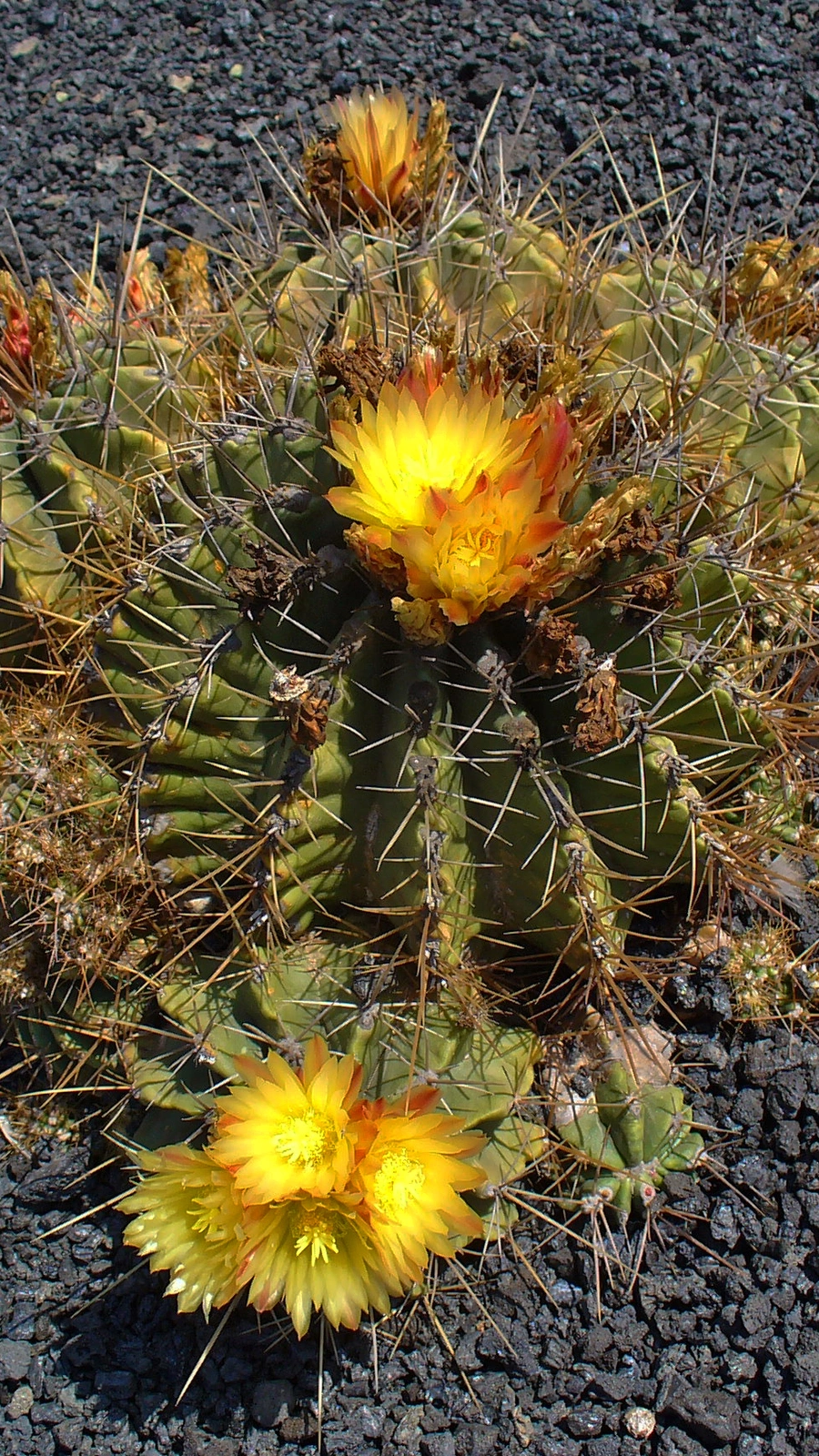 Reference image
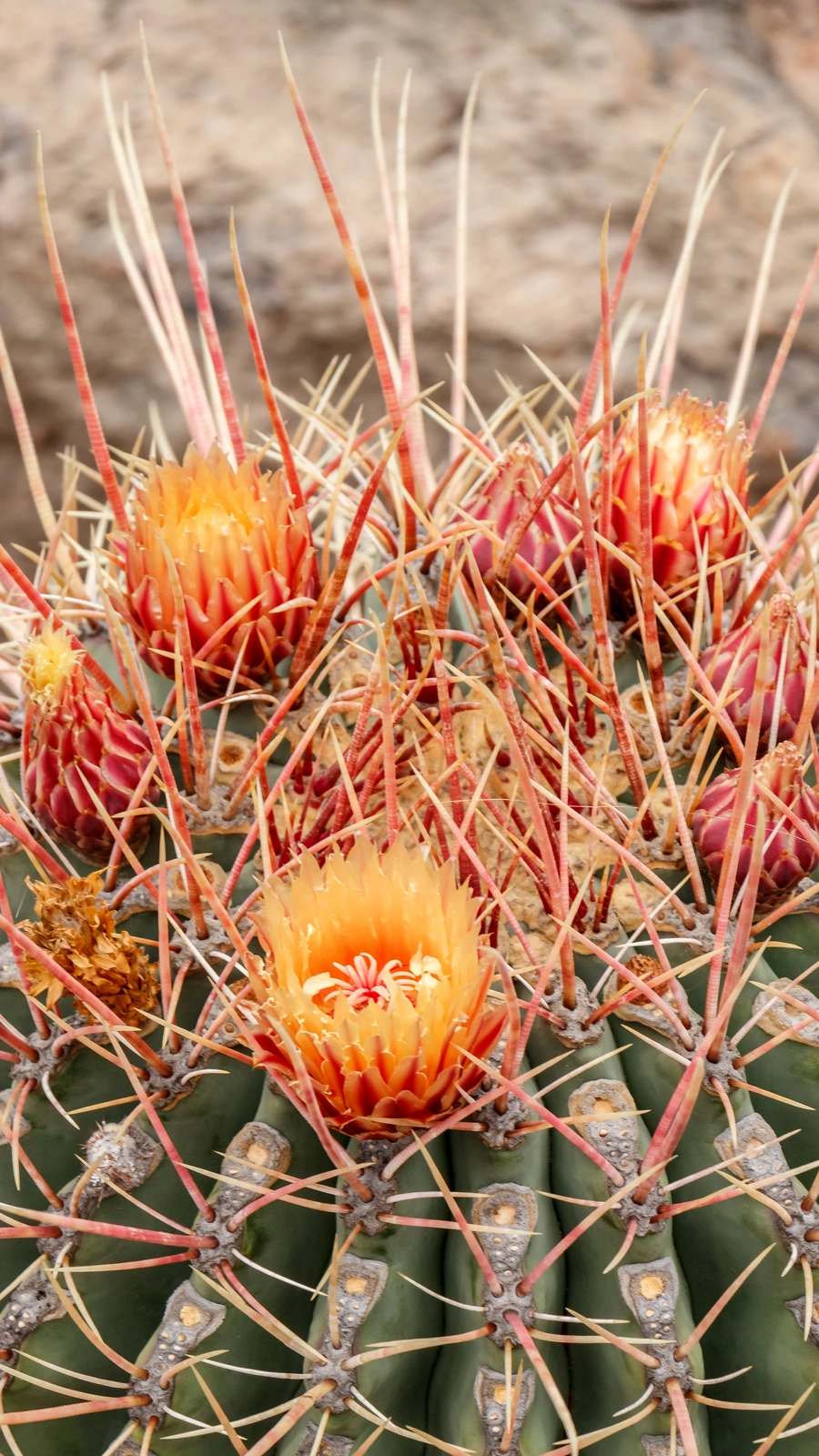 Reference image
Sonora barrel cactus
Ferocactus echidne, commonly known as the Sonora barrel cactus, is a robust, globose to cylindrical cactus species belonging to the Cactaceae family. Highly appreciated for its fierce golden spines and resilience, this species is a classic representative of the dry-land flora of North America 1.
The species was originally described in 1834 by Augustin Pyramus de Candolle under the name Echinocactus echidne. It was later placed in the genus Ferocactus by Britton and Rose. The specific epithet 'echidne' is derived from Greek, meaning 'viper' or 'hedgehog', referencing the sharp, defensive spination 2.
Ferocactus echidne is native to northern and central Mexico, particularly occurring in states like Guanajuato, Hidalgo, Querétaro, San Luis Potosí, and Tamaulipas 1. It thrives on limestone hills, rocky slopes, and dry shrublands at elevations ranging from 1,000 to 2,000 meters above sea level.
This plant grows as a solitary, spherical stem that elongates over time to form a cylinder up to 30-40 cm high. It features 13 to 21 prominent, well-defined ribs. The areoles bear yellow to brownish, stiff spines. Its flowers are funnelform, bright yellow or orange-red, emerging at the apex during summer 2.
In cultivation, Ferocactus echidne requires maximum sunlight to maintain its dense spination and compact shape. A highly porous mineral substrate is vital. Water thoroughly but allow the medium to dry out completely between waterings. Protect from frost and keep dry in winter.
The most frequent issue is root rot due to overwatering or poorly draining soil. Inadequate light leads to etiolation, causing the stems to stretch and weaken.
Requires full sun or very bright direct light to retain strong spines and form.
Allow soil to dry out completely. Reduce watering to a minimum in winter.
Use a specialized fast-draining mineral cactus mix with ample pumice.
The stiff, needle-like spines can cause injury; keep away from children and pets.
Very easy to care for, provided it is not overwatered.
Endemic to the semi-arid zones of Guanajuato, Hidalgo, Querétaro, San Luis Potosí, and Tamaulipas, where it grows on steep limestone cliffs and gravely desert plains.
